Your score dipped after applying for credit, and now you’re wondering why that one check mattered when others didn’t seem to.
If you’ve checked your own credit score lately, browsed preapproval offers, or applied for a car loan, you’ve probably run into the terms hard inquiry and soft inquiry. They sound similar, but they don’t work the same way — and knowing the difference can save you from unnecessary damage to your credit score.
Credit checks show up in more places than most people expect. A landlord might pull your credit before approving your apartment. A bank checks it when you apply for a new card. Your current credit card company might even look at it behind the scenes when deciding whether to raise your limit. The key is that not every one of those checks counts against you.
What Separates a Hard Inquiry from a Soft Inquiry?
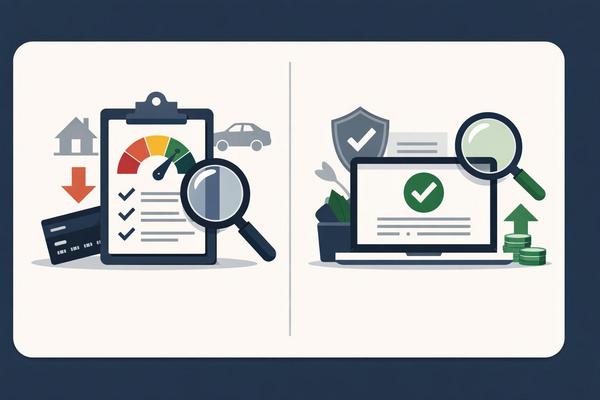
A hard inquiry happens when you’re actively applying for new credit. A soft inquiry happens when your credit is reviewed without a new borrowing decision attached to it. Hard inquiries are connected to applications that could increase your debt. Soft inquiries are informational.
Common examples of a hard inquiry include:
- Applying for a credit card
- Applying for an auto loan
- Applying for a mortgage
- Applying for a personal loan
- Sometimes applying for an apartment or certain utility accounts
Common examples of a soft inquiry include:
- Checking your own credit score or report
- Getting prequalified or preapproved offers
- An employer reviewing your credit with your permission
- Your current lender reviewing your account
- Background screening that includes a credit review but no borrowing decision
Think of it this way: a hard inquiry says, “This person may be taking on new debt.” A soft inquiry says, “We’re just taking a look.”
Why Hard Credit Pulls Can Affect Your Score
Credit scoring models are built to measure risk. When you apply for new credit, lenders see it as a possible sign you’re about to borrow more money — and that can make you look a little riskier in the short term.
For most people, one hard inquiry might shave off just a few points. It’s not usually a disaster on its own. The bigger issue is when several hard inquiries pile up in a short period, especially across different types of borrowing. That can make it look like you’re scrambling for credit.
If your score is already on the edge, even a modest drop can matter — whether you’re trying to lock in a good rate on a car loan, pass a landlord’s screening, or get approved for a new card. Hard inquiries stay on your credit report for up to two years, though their impact on your score fades much sooner. In most cases, they’re most influential during the first several months.
Soft Inquiries Don’t Hurt Your Score
A soft inquiry does not lower your credit score, which is why checking your own credit is a smart habit — not something to be afraid of.
A lot of people avoid looking at their own credit because they think any pull will hurt them. That’s not how it works. When you check your own report, use a score app, or browse prequalified offers, you’re triggering a soft pull. No score damage. Keeping an eye on your credit helps you catch fraud, spot reporting errors, and time your applications better — which beats finding out about a problem after you’ve already submitted a loan application.
When You’re Rate Shopping, the Rules Are Different
Credit scoring models generally recognize that shopping around for the same type of loan is different from opening a bunch of unrelated accounts. If you’re applying for a mortgage or auto loan, multiple hard inquiries within a short window are often grouped together for scoring purposes. That means you can compare lenders without getting dinged over and over the way you would if you applied for three credit cards and a personal loan in the same weekend.
The exact window depends on the scoring model, but a common rule of thumb is to keep your rate shopping tight — usually within 14 to 45 days. Do your comparison shopping in one concentrated stretch instead of dragging it out over months.
Everyday Situations Where People Get Tripped Up
Most confusion comes from situations that don’t feel obvious in the moment. Here are a few common ones:
- You fill out a full credit card application instead of a prequalification form, and that triggers a hard inquiry.
- You let store card offers tempt you during holiday shopping, and each application adds another hard pull.
- You apply for financing at multiple dealerships over several weeks instead of rate shopping in one short window.
- You assume a rental application is harmless, but the landlord runs a hard credit check.
- You avoid checking your own score thinking it’ll hurt you, even though it usually won’t.
None of this means you should be scared of credit checks. It just means it’s worth knowing what you’re agreeing to before you hand over your information.
How to Avoid Unnecessary Score Damage
You don’t need to obsess over every inquiry. You just need a decent filter before applying.
- Check your own credit regularly so you know where you stand before applying for anything.
- Look for prequalification or preapproval tools first — they often use soft pulls.
- Ask whether an apartment, utility, or financing application uses a hard or soft inquiry before you submit it.
- Bundle mortgage or auto loan shopping into a short time frame.
- Don’t apply for multiple credit cards just to see what sticks.
- Give your score time to recover before making another major credit application if you’ve already had a few hard pulls recently.
Also keep the big picture in mind. Payment history, credit utilization, and the age of your accounts matter more than a single inquiry. A hard pull is usually a small hit, not a financial emergency — but small hits add up when you’re not paying attention.
The Bottom Line
Not all credit checks are equal, and once you know which ones can actually affect your score, you can stop worrying about the wrong things and focus on the ones that matter. Hard inquiries are tied to new credit decisions and can lower your score a little. Soft inquiries are informational and don’t hurt your score at all. That difference gives you real control — you can check your own credit without fear, shop smarter before applying, and ask one extra question before handing over your information.
If this clicked, the next thing worth understanding is how credit utilization can move your score faster than most people realize.