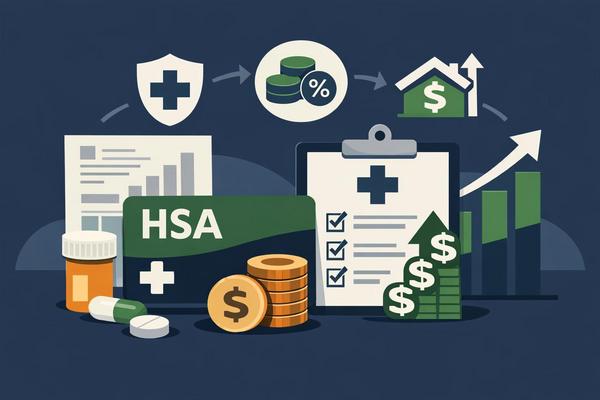
You’re probably paying your medical bills with after-tax money right now — and there’s a better option most people with the right health plan never bother to use.
What an HSA Actually Is
An HSA, or health savings account, is a special account for people with a qualifying high-deductible health plan that lets you save and spend money on medical costs with major tax breaks. That’s the plain-English version.
You put money in, the money can be invested, and you can use it later for qualified medical expenses — deductibles, copays, prescriptions, dental work, vision care, and a lot more. If you’ve ever paid for glasses, braces, therapy, an urgent care visit, or a prescription straight out of your checking account, this is the account designed to make that less painful.
The catch is you can’t just open one because you want one. You generally need to be enrolled in an HSA-eligible high-deductible health plan, often called an HDHP. That’s why a lot of people miss it — they see the high deductible, get nervous, and never look closely at what the HSA can actually do.
The Triple Tax Advantage Most People Never Use
An HSA is the only account in America that gives you a triple tax advantage. That phrase gets thrown around a lot, but here’s what it actually means in real life.
- You get a tax break when money goes in.
- Your money can grow without being taxed along the way.
- You can take the money out tax-free for qualified medical expenses.
With a traditional 401(k), you usually get a tax break on contributions and tax-deferred growth, but withdrawals are taxed later. With a Roth IRA, you contribute after-tax money, then get tax-free growth and tax-free withdrawals if you follow the rules. An HSA combines the best parts of both — but only for medical spending. You avoid taxes going in, avoid taxes while it grows, and avoid taxes coming out if you use it for eligible healthcare costs.
That’s also why it’s surprising how many eligible people never open one, or treat it like a simple pass-through account instead of a long-term asset.
Why This Account Exists
HSAs were built around a basic tradeoff. You take on a higher deductible with your insurance plan, and in exchange you get access to a tax-advantaged account to help cover those costs. The idea was to give people more direct control over routine medical spending — instead of everything running through insurance first, you build your own healthcare cash reserve with tax perks attached.
That matters because healthcare costs don’t show up once and disappear. A prescription refill here, an ER bill there, a dental crown when you least need the expense, maybe physical therapy after a bad back flare-up. Even if you’re healthy now, odds are good you won’t stay at zero medical spending forever. An HSA works because healthcare is one of the most predictable unpredictable expenses in American life.
Who Can Actually Open One
You can generally contribute to an HSA if you’re covered by an HSA-eligible high-deductible health plan and aren’t enrolled in certain other coverage that makes you ineligible. The exact rules can change, so it’s worth checking current IRS guidance or your employer’s plan details.
In practical terms, this usually comes up during open enrollment at work or when you’re shopping for insurance on your own. If you see an HDHP option, that’s your cue to ask one question before moving on: does this plan make me HSA-eligible? That one question can change how you handle healthcare costs for years.
Two Ways People Actually Use It
Most people use HSAs one of two ways, and both are legitimate depending on your situation.
Use It as a Medical Checking Account
You contribute money, then use it to pay current qualified medical expenses. That alone is helpful because you’re not spending fully taxed dollars from your bank account. If your employer offers payroll deductions, you may also avoid some payroll taxes on contributions, which makes the math even better. If a deductible or prescription bill would otherwise go on a credit card, using pre-tax HSA money is a cleaner move.
Treat It Like a Long-Term Asset
Some people pay current medical costs out of pocket, leave their HSA money invested, and let it grow over time — then save receipts for qualified expenses and reimburse themselves later if they want to. That strategy isn’t right for everyone, since you need enough cash outside the HSA to cover today’s costs. But this is where the account becomes more than a healthcare spending tool. If you can afford not to drain it every year, an HSA can quietly become one of the most tax-efficient accounts you own.
What People Get Wrong
A lot of the confusion comes from treating the HSA like a use-it-or-lose-it account. That’s not an HSA — people mix it up with an FSA, which has different rules. In most cases, HSA money rolls over year after year. You keep it. It doesn’t vanish because the calendar changed.
Another mistake is assuming the high-deductible plan is automatically a bad deal. Sometimes it is a poor fit, especially if you have high ongoing medical costs. But sometimes the lower premium plus employer HSA contribution plus tax savings makes it a smarter choice than people expect. You have to compare the whole picture:
- Monthly premium
- Deductible and out-of-pocket maximum
- Employer contributions to the HSA
- Your expected medical use for the year
- The tax benefit of your own contributions
Looking only at the deductible and ignoring the HSA is like judging a paycheck by the gross number and skipping the rest of the stub.
How to Put This to Work
If you’re eligible for an HSA, the first move is simple: don’t ignore it. Check whether your health plan qualifies. If it does, decide how you want to use the account based on your cash flow.
- If money is tight, use the HSA to cover current qualified medical expenses with pre-tax dollars.
- If money is stable, contribute consistently and invest at least part of the balance for the long term.
- If your employer contributes to your HSA, pay attention to that during open enrollment — it’s part of your total compensation.
- Keep records of qualified expenses if you plan to reimburse yourself later.
You don’t need a perfect strategy on day one. You just need to stop leaving one of the best tax breaks in the system unused. A lot of households will spend hours researching credit card rewards and completely ignore an account that cuts taxes now, grows tax-free, and covers a category of spending nearly everyone will face.
The smartest takeaway is this: if you qualify, an HSA deserves the same attention you give your 401(k) — because for healthcare spending specifically, the tax treatment is arguably even better.
If this made sense, the next thing worth understanding is how a high-deductible health plan actually compares to a PPO when you look at total yearly cost instead of just the monthly premium.