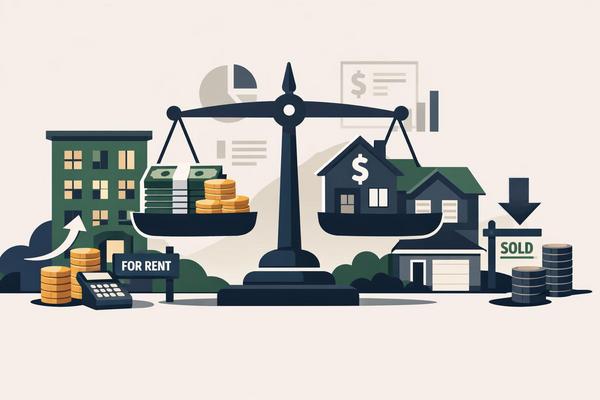
Your rent check stings every month, but the thought of buying a house right now feels even riskier — and you’re not wrong to feel that way.
You’ve probably heard some version of the same line for years: renting is throwing money away.
That sounds smart until you actually run the numbers.
For a lot of people — especially with today’s home prices, mortgage rates, insurance costs, and property taxes — renting vs. buying isn’t a clear win for ownership. Renting can be the more financially solid move.
That doesn’t mean buying is bad. It means the old idea that owning automatically wins is one of the most persistent financial myths in America.
Why This Feels So Confusing
Homeownership has been sold as the responsible adult choice for generations. You buy a place, build equity, and one day you own it free and clear. That story isn’t totally wrong. It’s just incomplete.
A house is part place to live, part forced savings account, and part expensive debt commitment.
When people compare renting to buying, they usually compare a monthly rent payment to a monthly mortgage payment. That’s the wrong comparison. The real comparison is rent versus the full cost of ownership — and that includes a lot more than principal and interest.
- Property taxes
- Homeowners insurance
- HOA fees, if there are any
- Repairs and maintenance
- Closing costs
- Opportunity cost of your down payment
- The risk that home prices don’t rise the way you expected
Once you add all that in, renting doesn’t look like wasted money. It looks like paying for shelter without taking on the extra costs and risks of ownership.
When Renting Makes More Financial Sense
There are specific situations where renting isn’t just easier — it’s smarter.
You Probably Won’t Stay Put Very Long
If you might move within the next three to seven years, buying often works against you. Buying and selling a home is expensive. You can lose a big chunk of money to closing costs, agent commissions, moving expenses, and maintenance before you ever come out ahead.
Early in a mortgage, most of your payment goes toward interest, not equity. That means you could own the place for a few years and still not build much real wealth from it. If your job might change, your family situation is still evolving, or you just don’t know where you want to be long term, renting gives you flexibility without trapping your cash in a house.
The Monthly Cost of Owning Is Way Higher Than Your Rent
In a lot of cities, buying the same kind of place you’re renting costs dramatically more each month. Not a little more — a lot more.
When ownership stretches your budget, renting leaves room for everything else your money needs to do: paying down credit cards, building an emergency fund, putting money into your 401k or IRA, covering childcare, or just staying afloat without constant stress.
A house can help build wealth over time. It can also eat up your cash flow and leave you house poor. If renting lets you save and invest consistently while buying would wipe you out every month, renting may actually put you in a stronger financial position.
You’d Be Draining Your Savings to Make It Work
A down payment isn’t the only cash you need for a home. You also need reserves for repairs, higher utility bills, moving costs, furniture, and the random stuff that breaks at the worst possible time — water heater, roof leak, HVAC going out in August.
If buying a house would leave you with barely anything in the bank, you’re not really financially ready to buy. That’s not a moral failure. It’s just math. Renting gives you time to build real savings instead of rushing into ownership with no margin for error.
Equity Matters — But It’s Not Magic
A lot of the pressure to buy comes from the word equity. And yes, equity matters. Part of each mortgage payment can increase your ownership stake over time. That’s real.
Still, equity doesn’t mean every dollar you spend on a house comes back to you. You never get back mortgage interest. You never get back property taxes or homeowners insurance. You usually don’t get back repair costs dollar for dollar either. Owning builds wealth slowly, and only if you can hold the home long enough and carry the costs along the way.
Meanwhile, rent isn’t money disappearing into a black hole. It buys you a place to live, predictable monthly responsibility, and protection from a lot of large surprise expenses. That has real value.
What the Real-Life Math Looks Like
Say your rent is $2,000 a month. A comparable home might come with a $2,400 mortgage payment, plus $500 in property taxes and insurance, plus maintenance that averages a few hundred dollars a month over time. Your true ownership cost could easily hit $3,100 or more — and that doesn’t even include tying up a big down payment that could’ve stayed in savings or investments.
If renting saves you $1,000 a month and keeps your emergency fund intact, that difference adds up fast. If you actually invest part of that gap instead of spending it, renting can leave you better off than buying in some markets and time periods. Buying isn’t the only path to building wealth. It’s just one path.
How to Decide Without Getting Trapped by the Myth
You don’t need a perfect forecast of the housing market. You need an honest look at your own life and numbers.
- How long are you likely to stay in one place?
- Can you comfortably afford the full monthly cost of ownership?
- Would buying wipe out your cash savings?
- Are you ready for repairs and unpredictable costs?
- Could you use the monthly difference between renting and buying to pay off debt or invest?
If the honest answers point toward flexibility, lower risk, and better cash flow, renting isn’t a financial mistake. It may be the smarter move for this stage of your life.
Personal finance is personal. The best housing choice isn’t the one your parents made, your friends brag about, or social media treats like the only adult option. It’s the one that fits your budget, your timeline, and your actual life.
The idea that renting is wasted money falls apart once you stop treating homeownership like an automatic win and start treating it like a financial tradeoff. If this made sense, the next thing worth understanding is how mortgage rates change what a house actually costs you month to month.