Your cards are near the limit, the interest keeps piling up, and it feels like you’re working just to stand still.
Credit card debt feels personal, but the trap is mostly math. A high APR can turn a manageable balance into something that hangs around for years, even when you’re making payments every month. That doesn’t mean you’re bad with money — it means the system is built to make expensive debt stick around unless you attack it on purpose.
If you’re trying to figure out how to pay off credit card debt, you don’t need a perfect budgeting spreadsheet or a dramatic life overhaul. You need a plan you can actually follow when rent is due, groceries cost more than they used to, and life keeps happening.
Why Credit Card Debt Gets Out of Hand So Fast
Credit cards are useful right up until the balance starts carrying over. Once that happens, interest starts doing the heavy lifting against you. A card with a 24% or 29% APR isn’t small background noise — it’s a serious drag on your cash flow every single month.
Your minimum payment usually isn’t designed to get you out of debt quickly. It’s designed to keep the account current while interest keeps accruing. That means you can send money every month and still barely see the balance move, which is the part that wears people down.
Then real life adds pressure. A car repair hits. Your utility bill jumps. You put groceries or gas on the card because payday is still four days away. Now the balance grows again, and it feels like you’re undoing your own progress. That cycle is common, and it usually needs structure more than willpower.
A Payoff Plan Beats Motivation Every Time
The biggest mistake is spreading extra money evenly across every card. It feels fair, but it’s usually slow and discouraging. A better move is to pay the minimum on all your cards and throw every extra dollar at one target card at a time. Once that card is gone, you roll that payment into the next one. That’s how momentum starts.
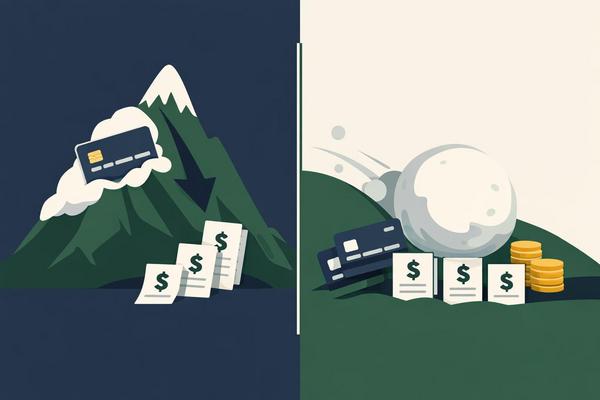
This is where most people run into the avalanche vs. snowball question. Both methods work. Neither one is magic. The real difference is what they optimize for — one saves more on interest, the other gives you faster wins.
The Avalanche Method: Pay Less Interest Overall
With the debt avalanche method, you pay off the card with the highest interest rate first. You still make the minimum payment on every other card, and all your extra cash goes to the balance with the worst APR. After that card is gone, you move to the next highest rate.
This approach makes the most sense on paper because high-interest debt is the most expensive debt. If one card is charging 29% and another is charging 18%, the 29% balance is doing more damage every month. A simple example looks like this:
- Card A: $2,000 balance at 29% APR
- Card B: $900 balance at 22% APR
- Card C: $500 balance at 16% APR
Using avalanche, you’d target Card A first because it’s costing you the most. If your goal is pure efficiency, this method usually wins.
The Snowball Method: Get Wins Early
With the debt snowball method, you pay off the smallest balance first, no matter the interest rate. You make minimum payments on everything else and send extra money to the smallest debt. Once it’s gone, you move to the next smallest.
This method works because personal finance isn’t just math — it’s behavior. When you wipe out a $300 or $500 balance quickly, you feel progress. You have one less bill to think about, one less minimum payment, and one more reason to keep going. Using those same balances above, snowball would start with Card C, then Card B, then Card A. If seeing quick progress keeps you engaged, snowball can be the better choice for real life.
Which One Should You Pick?
Pick the method you’ll actually keep using three months from now. If you’re disciplined and motivated by numbers, go with avalanche. If you’re overwhelmed or have several small balances dragging on your brain, snowball may fit you better. You don’t get extra credit for choosing the more technically efficient method if you quit halfway through. Consistency matters more than optimization when you’re climbing out of debt.
How to Start This Month
You can set this up in under an hour. Get all the balances, minimum payments, and APRs in one place — a notes app, legal pad, or basic spreadsheet is enough.
- List every card balance, APR, and minimum payment
- Decide whether you’re using avalanche or snowball
- Choose one target card
- Set up automatic minimum payments on the others if you can
- Send every extra dollar to the target card
Then find the extra dollars, because your plan needs fuel. Maybe that means pausing some nonessential spending for a few months. Maybe it means using a tax refund, side gig money, or overtime pay. You don’t need to become a minimalist, but you do need a temporary gap between what comes in and what goes out.
There’s another piece people skip: stop adding new debt while you’re paying off the old debt. If the balances keep growing, your payoff method won’t get traction. That may mean using debit for a while, deleting saved cards from shopping apps, or leaving one card at home so it stops being your default backup plan.
If Your Budget Is Already Stretched Thin
An extra $25 or $50 a week still matters. The point is to build a repeatable system, not wait for some future month when life suddenly gets cheaper. For most people, that month never shows up. If your minimum payments are becoming hard to cover, the first priority is protecting your cash flow and avoiding missed payments — but even then, the basic logic holds. You need a target, a method, and a routine.
The Part Worth Holding Onto
Paying off credit card debt is less about finding the perfect trick and more about picking a method and sticking with it. Avalanche saves more money. Snowball gives you faster wins. Either can work if you stop the balances from growing, keep making minimum payments, and focus every extra dollar on one card at a time.
If this made sense, the next thing worth understanding is how credit utilization affects your credit score while you’re paying balances down.