Your grocery bill is up, your rent went up, and now you’re staring at a credit card balance that’s going nowhere — six months feels like forever when your score is stuck.
If you’re trying to figure out how to improve your credit score fast, the frustrating part is that credit doesn’t respond to effort right away. You can do the right things this month and still not see much movement for a few billing cycles.
That doesn’t mean you’re stuck. A lot can change in six months if you focus on the few moves that actually affect your score instead of chasing random credit hacks you saw online.
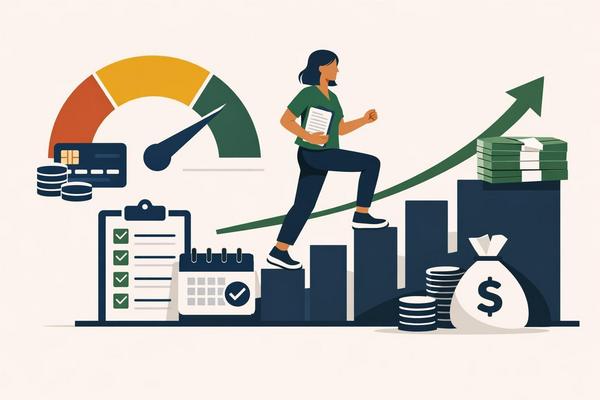
Credit scores don’t change overnight, but with the right moves, six months is enough to make a real difference.
Why Your Score Moves Slower Than You Want
Credit scores are built from patterns, not promises. The scoring models want proof that you pay on time, keep balances under control, and don’t look desperate for new debt. That’s why paying off a card today may help, but the update usually doesn’t hit until your card issuer reports the new balance.
Late payments can also keep hurting you long after the bad month that caused them. Your score is basically a snapshot of how you’ve been using credit — not how motivated you are to fix it.
For most people, the biggest factors come down to a short list: paying every bill on time, keeping card balances low compared to your limits, letting older accounts stay open when possible, avoiding too many new applications in a short stretch, and making sure your credit report is accurate.
The fastest path isn’t flashy. It’s mostly about removing damage, lowering balances, and avoiding new mistakes for a solid stretch of time.
What Actually Works Within Six Months
Start with the moves that can show up the fastest on your credit report.
Get Every Account Current and Keep It That Way
If you’re behind on anything, this is the first fire to put out. A current account won’t erase an old late payment, but continuing to miss payments keeps digging the hole deeper. Bring past-due accounts current as fast as you can and set up autopay for at least the minimum payment.
If autopay makes you nervous because your checking balance runs tight, set calendar reminders a week before each due date and pay manually. The key is simple: no new late payments — not on your credit card, not on your car loan, not on a personal loan. One 30-day late payment can do real damage, especially if your score started out decent.
Attack Credit Card Utilization Before Anything Else
Utilization is the percentage of your available credit you’re using. If you have a $1,000 limit and a $700 balance, your utilization on that card is 70%. That’s high, and high utilization can drag your score down even if you’ve never missed a payment.
For many people, lowering card balances is the fastest legitimate way to raise a score in a matter of months. Try to get each card below 30% of its limit. Getting below 10% is even better if you can manage it without draining your emergency cash.
Paying down one maxed-out card can help more than spreading small payments across every card, because individual card utilization matters too — not just your overall number. If money is tight, pay minimums on every card, then put extra cash toward the card with the highest utilization. After that drops, move to the next worst one.
One more thing: try to make a second payment before your statement closes if you can. Issuers usually report statement balances, not whatever your balance happens to be on the due date. If you charge groceries, gas, and streaming bills all month and wait until the due date, the reported balance may still look high.
Check Your Credit Reports for Mistakes
You don’t need a credit repair company to do this. Review your reports yourself and look for accounts that aren’t yours, balances that look wrong, duplicate accounts, or late payments that were reported incorrectly. An error doesn’t just annoy you — it can cost you points you should never have lost.
If you find a mistake, dispute it with the credit bureau and with the lender reporting it. Keep records, upload documents, and be specific. When a real error gets fixed, it can help faster than almost anything else.
A Few More Moves — With Some Common Sense Attached
Thinking About Opening a New Card?
A new card can lower your overall utilization by increasing your available credit, which can help if you’re disciplined and don’t add more spending. Still, applying triggers a hard inquiry, and a brand-new account can slightly lower the average age of your credit. Use this move only if it solves a utilization problem — not because you’re hoping for a quick trick.
Keep Older Accounts Open If They Aren’t Costing You
Closing a card can reduce your total available credit and push your utilization up overnight. If an old card has no annual fee and you’re not tempted to run it up, keeping it open often helps more than closing it. Use it once in a while for something small — a tank of gas or a subscription — then pay it off.
Collections and Charge-Offs Need a Realistic Plan
If you have collections or old charge-offs, your six-month progress may be slower. You can still improve your score, but this is usually less about a quick rebound and more about stopping ongoing damage. Make sure the debt is actually yours, understand the age of the account, and avoid rushing into payments without confirming how the account will be reported afterward. The biggest win here is often getting current on active accounts and lowering card balances while older negatives age off.
What the Next Six Months Should Actually Look Like
You don’t need a complicated credit plan. You need a boring one you can stick to. Month one: pull your credit reports, find errors, list all due dates, and get current on anything overdue. Month two: set up autopay or reminders and start paying down your highest-utilization card. Month three: keep balances low through statement closing dates, not just due dates. Month four: recheck reported balances and watch for score movement. Month five: avoid new applications unless there’s a clear reason. Month six: keep everything on time and measure progress against where you started.
The people who see the best six-month improvement usually aren’t doing anything magical. They’re just stacking on-time payments and lower balances long enough for the credit system to notice.
The Part Nobody Likes Hearing
There isn’t a safe shortcut that replaces time. If someone promises a huge score jump in a couple of weeks, be skeptical. Real credit improvement is usually uneven — your score might jump after a balance update, sit flat for a while, then move again. That’s normal.
Six months is enough to make a real difference, but only if your actions line up with how credit scoring actually works. Focus on the pieces you control: never miss a payment, cut utilization hard, fix reporting errors, and don’t create fresh damage while you’re trying to recover. That’s how to improve your credit score fast in the real world.
If this made sense, the next thing worth understanding is how credit card interest quietly keeps people stuck even when they’re making payments every month.