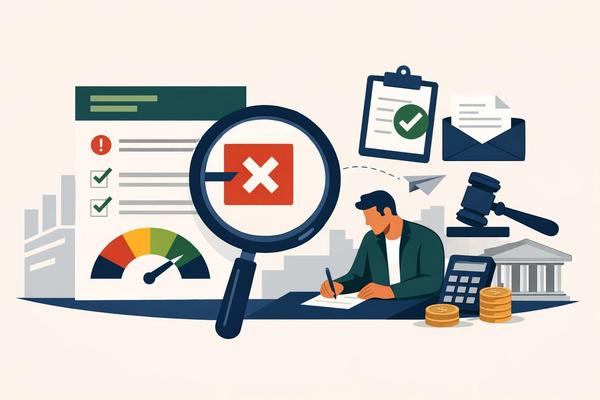
Your credit score dropped, a lender said no, and now you’re staring at information on your report that isn’t even yours.
That’s not a small thing. When your credit report has wrong information, it can affect way more than a number on a screen. It can push your credit card rates higher, make it harder to rent an apartment, and turn a routine car loan into a whole ordeal.
One in five credit reports has an error — which means this is common, and fixing it can meaningfully improve your score.
Why Credit Report Errors Happen More Than You’d Think
Credit reports are built from data sent in by lenders, debt collectors, and other companies. That sounds clean and automatic, but in real life it’s messy. Accounts get mixed up between people with similar names. A paid debt still shows as unpaid. An old late payment hangs around longer than it legally should. You might even see a collection account tied to medical debt that your insurance was supposed to cover.
The credit bureaus usually don’t create the error from scratch — they repeat bad information they were given. That matters because fixing the problem usually means challenging both the credit bureau and the company that reported it in the first place.
The three main bureaus are Equifax, Experian, and TransUnion. They don’t always show the same information, which is why you need to check all three.
What Actually Counts as an Error Worth Disputing
Not every ugly item on your report is a mistake. If you missed a payment and it’s accurately reported, disputing it won’t make it disappear. What you’re looking for is information that’s wrong, incomplete, duplicated, or too old to still be there.
Common credit report errors include:
- Accounts that don’t belong to you
- Wrong payment statuses, like a bill marked late when you paid on time
- Incorrect balances or credit limits
- The same debt listed more than once
- Closed accounts reported as open
- Fraudulent accounts from identity theft
- Negative items that should have aged off your report
- Personal information errors that may be causing file mix-ups
If the bad information is inaccurate, you have a real shot at getting it corrected or removed.
The Step-by-Step Process to Fix Incorrect Information
Start by pulling all three credit reports
Before you dispute anything, get your reports from Equifax, Experian, and TransUnion. Read each one line by line — don’t just look at the score. The details matter more than the number right now. Highlight every item that looks off and make a simple list with the account name, account number, what’s wrong, and which bureau is showing the error. Vague disputes are easy to brush aside, so the more specific you are, the better.
Gather proof before you send anything
This part feels tedious, but it’s where you get leverage. Collect anything that backs up your position — bank statements, credit card statements, payment confirmation emails, loan payoff letters, screenshots from your account portal, police reports or FTC identity theft reports, or letters from insurers or medical providers. Keep copies, not originals, and name your files clearly if you’re uploading them online. The easier you make the paper trail to follow, the better your odds of a fast correction.
File a dispute with each bureau showing the error
You can dispute online, by mail, or sometimes by phone, but written disputes create the strongest record. For each bureau reporting the error, include your full name and current address, date of birth and the last four digits of your Social Security number, the account you’re disputing, a short explanation of what’s wrong, a clear request to correct or remove the item, and copies of your supporting documents.
Keep the tone plain and factual. Something like: “This account does not belong to me,” or “This loan was paid in full on March 12, 2024, but is still reported as past due.” Clear, boring, and documented usually works better than emotional.
Also dispute directly with the company that reported it
This is the step most people skip, and it’s often the one that matters most. If a bank, card issuer, or debt collector sent bad information to the bureaus, contact them too. Ask them to investigate and correct the data they furnished, and send the same evidence. If they update their records, that correction can flow back to the bureaus. When both the bureau and the furnisher get the dispute, it’s a lot harder for the error to keep bouncing around.
Track deadlines and save everything
Credit bureaus generally have 30 days to investigate after receiving your dispute. Save confirmation numbers, screenshots, letters, and mailing receipts. If you mailed your dispute, certified mail helps you prove it was received. Keep one folder for the whole process — if the dispute drags on or gets denied unfairly, your records become your best weapon.
What If the Bureau Says the Information Is Correct?
This happens all the time, even when the item still looks wrong. A rejection doesn’t always mean the bureau did a thorough investigation — sometimes it just means the furnisher verified the same bad data. When that happens, you’ve got options: send a new dispute with stronger evidence, ask the furnisher for the exact documents they used to verify the account, add a consumer statement to your report explaining the situation, or file a complaint with the Consumer Financial Protection Bureau. If identity theft is involved, place a fraud alert or consider freezing your credit to stop new accounts from opening. A denied dispute is frustrating, not final.
How a Correction Can Actually Move Your Score
Not every fix will send your score soaring, but some errors have an outsized impact. Say your card actually has a $300 balance but it’s reported as $2,300 — that makes your credit utilization look way worse than it really is. Or a paid collection is still showing as active. Cleaning that up may not just help your score; it can make your whole credit file look less risky to lenders, which matters when you’re applying for a mortgage, refinancing a car, or even setting up utilities.
The point of disputing errors isn’t to game the system — it’s to make sure the system is judging you on facts.
Keep It from Becoming a Repeat Problem
Once you’ve fixed the error, check your reports a few times a year, especially before applying for major credit. Watch for surprise collections, wrong addresses, and account statuses that change for no clear reason. If you’ve been through identity theft before, stay extra alert. Catching mistakes early can save you real money and a lower score down the road.
The bottom line: if incorrect information is hurting your credit, disputing it is worth your time — one in five reports has errors, and a successful correction can raise your score in a meaningful way.
If this made sense, the next thing worth understanding is how credit utilization affects your score month to month.