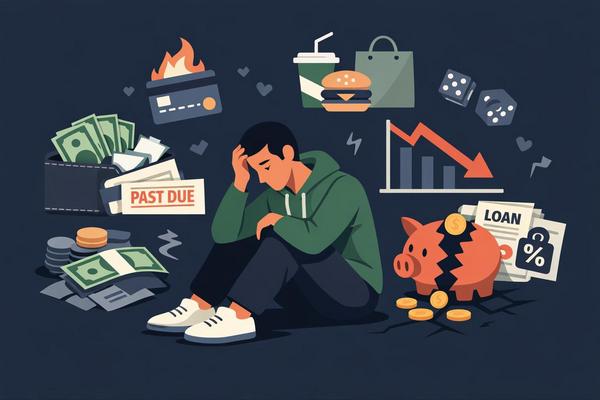
Your paycheck lands, your bills clear, and somehow you’re still wondering where the money went.
You probably don’t have a money problem because you’re lazy, careless, or just unlucky.
You probably have a handful of financial habits that quietly drain your progress over and over again.
That’s why it can feel like you’re working hard and still not getting ahead. It’s not always one huge mistake — more often, it’s a bunch of small choices that seem harmless in the moment. A few takeout orders. A late fee here. Letting a credit card balance ride. Ignoring your bank account because checking it stresses you out. None of that looks dramatic by itself. Together, repeated hundreds of times, it can keep you stuck for years.
Why This Keeps Happening Even When You’re Trying
A lot of personal finance advice makes it sound like people struggle because they don’t know the rules. Usually, that’s not the real issue. You already know you should save more, spend less, and avoid debt.
The problem is that daily life in the US makes bad money habits easy. Rent is high. Groceries cost more than they used to. Credit cards make overspending frictionless. Subscriptions hide in the background. Your phone can separate you from $40 in about ten seconds.
Modern money problems are often behavior problems shaped by convenience, stress, and repetition. That matters because it changes the fix. You don’t need a totally new personality — you need to catch the habits that keep resetting your progress.
The Habits That Quietly Keep You Broke
You Spend First and Check Later
This is one of the most common habits that stall financial progress. You swipe your card, tap your phone, order what you need, and tell yourself you’ll sort it out on payday. Then payday comes and most of your money is already spoken for. When you spend without looking at what’s left, every purchase feels manageable. The total only becomes real after the damage is done.
How to change it:
- Check your account balance before you spend, not after.
- Decide on a weekly spending number for groceries, gas, and random purchases.
- Move savings or bill money out first so your checking account shows what’s actually available.
This doesn’t need to be complicated. Even a two-minute check-in can interrupt mindless spending.
You’re Treating Credit Like Extra Income
Credit cards can be useful — they can also create a fake sense of breathing room. When you’re short on cash, it’s easy to tell yourself the card is helping you get by. Sometimes it is, especially in a real emergency. What gets dangerous is when credit becomes part of your normal monthly budget. Then you’re not solving a cash flow problem. You’re pushing today’s spending into next month with interest attached.
Once credit card debt becomes routine, your future paycheck starts arriving already behind.
How to change it:
- Stop using credit for everyday spending if you can’t pay the full balance this month.
- Pick one card balance and attack it with every extra dollar you can find.
- Keep a small cash buffer in checking so minor surprises don’t go straight on a card.
This is less about willpower and more about honesty. If a card is covering a lifestyle your income can’t support, that’s the real problem to solve.
Your “Little” Expenses Aren’t Actually Little
People love to argue about small purchases. No, buying coffee won’t ruin your life — that’s not the point. The point is that repeated spending you barely notice can eat up a shocking amount of money. A $12 lunch doesn’t feel huge. Neither does a streaming service, a delivery fee, a convenience store stop, or impulse buys from Target. Stack enough of those together and you’ve built yourself a serious leak.
How to change it:
- Look at the last 30 days of transactions and circle the spending you barely remember making.
- Choose one category to cut back — not ten at once.
- Build in a small fun-money limit so you don’t swing from careless spending to total restriction.
You don’t need to stop enjoying your life. You need your spending to be intentional enough that it actually matches what you care about.
What Getting Unstuck Looks Like in Real Life
A lot of people think financial progress starts when they earn way more money. Higher income helps, obviously. Still, plenty of people get raises and stay broke because their habits scale up with their paycheck — they spend more because they can, then wonder why nothing changed.
The goal isn’t just to make more money. It’s to stop leaking the money you already have. That usually means building a few boring systems that make good choices easier.
- Automate bills so late fees stop stealing from you.
- Set up an automatic transfer to savings, even if it’s small.
- Use one main card or account for weekly spending so it’s easier to track.
- Review your transactions once a week without avoiding them.
- Pause 24 hours before non-essential purchases over a set amount.
None of this is flashy. That’s exactly why it works. You’re not trying to win one perfect month — you’re trying to make fewer bad money decisions on repeat.
When Stress Is the Real Problem
Money habits are rarely just about numbers. A lot of bad financial behavior comes from stress and exhaustion. If you’re drained, convenience wins. You order food because you’re tired. You ignore bills because you’re overwhelmed. You buy something small because it feels like relief. That doesn’t make you irresponsible — it makes you human.
Still, habits driven by stress can keep you broke just as effectively as habits driven by carelessness. Shame doesn’t fix that. What helps is reducing the number of decisions you have to make when you’re already worn out. Prep cheap meals you actually like. Put due dates on your calendar. Keep a small emergency cushion so every surprise doesn’t turn into a crisis. Make the better choice easier before the stressful moment shows up.
The Shift That Actually Moves You Forward
If you’ve felt stuck for a long time, it’s tempting to wait for one big breakthrough — a raise, a side hustle, a perfect budget. Those things can help. But the deeper shift is simpler than that. You have to stop thinking of money as something that only changes when life changes. It also changes when your repeated choices change.
Most financial problems aren’t caused by bad luck. They’re caused by small habits repeated hundreds of times. That’s frustrating, because it means some of the problem is on you. It’s also good news, because habits can be changed. Pick the one habit doing the most damage. Interrupt it. Then do it again next week. That’s how people actually start making real financial progress.
If this made sense, the next thing worth understanding is how lifestyle inflation keeps eating your raises before they ever improve your life.