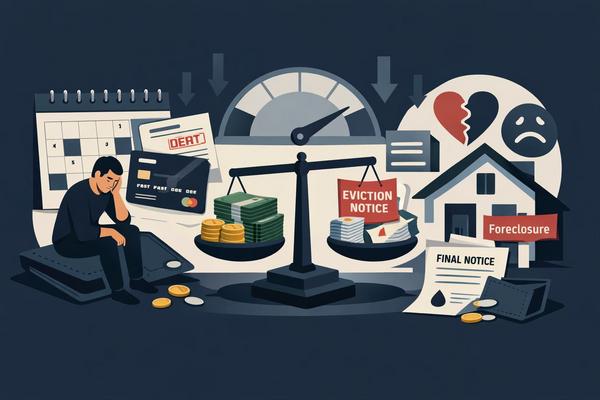
Your rent, groceries, gas, and minimum payments clear your account almost as fast as your paycheck hits — and that cycle is costing you more than you realize.
You already know living paycheck to paycheck feels bad. What gets missed is that it doesn’t just create stress — it quietly makes your life more expensive.
When you have no savings buffer, every surprise turns into a fee, a balance, a late charge, or a bad money decision you wouldn’t have made if you had even a little room. That’s the part a lot of personal finance advice skips. People talk about budgeting like the whole issue is discipline, but for a lot of households, the real problem is that one flat tire, one copay, one school expense, or one slow workweek can throw off the entire month. And when that happens, you don’t just lose peace of mind — you lose actual dollars.
Why Having No Cushion Costs More Than You Think
If every dollar from your paycheck already has a job, there’s nowhere for a surprise expense to go. That means you start paying for flexibility in the most expensive ways available.
You put the car repair on a credit card and carry the balance. You overdraft checking because rent hit before your transfer cleared. You pay a late fee on the electric bill because your kid needed new shoes that week. You miss out on cheaper options because you can’t afford the upfront cost. Being broke is expensive because lack of cash forces you into higher-cost choices. That’s not a character flaw — it’s how the math works. If you had a few hundred dollars set aside, the same problem would still be annoying. It just wouldn’t snowball.
Where the Extra Costs Show Up
- Bank overdraft fees and returned payment fees
- Credit card interest from covering basic emergencies
- Late fees on rent, utilities, phone bills, or insurance
- Higher grocery and household costs because you can’t buy in bulk
- More expensive borrowing when your credit score takes a hit
- Rush decisions, like using food delivery or convenience stores because you’re out of time and energy
None of these costs look huge on their own. Together, they can eat up a shocking amount of money over a year.
The Emotional Toll Has a Price Tag Too
Money stress doesn’t stay neatly inside your bank account. It follows you to work, home, and every random Tuesday afternoon when your phone buzzes with a bill reminder. When you don’t have a savings buffer, your brain stays on alert — constantly calculating. Can this card clear? Can I wait until Friday? What if the pharmacy bill is more than I think?
That constant pressure makes it harder to make calm, low-cost decisions. Stress narrows your options mentally before it narrows them financially. You might avoid opening bills because you already feel behind. You might put off car maintenance and end up with a bigger repair later. You might grab whatever solves today’s problem fastest, even if it creates a more expensive problem next month. That’s not carelessness — it’s what happens when you’re running on financial fumes all the time.
Why This Keeps Happening Even When You’re Trying
A lot of Americans hear the same message on repeat: spend less, save more, be responsible. That sounds fine until you look at the actual numbers. Housing takes a bigger cut of income than it used to. Groceries cost more. Insurance costs more. Child care can feel like a second rent payment. Wages may have gone up some, but not always enough to create breathing room after essentials.
When your budget is already tight, there isn’t much difference between “getting by” and “one problem away from falling behind.” That’s why two people can both be working hard and still have very different outcomes depending on whether they have a buffer. The person with savings gets hit with an expense and moves on. The person without savings gets hit with the same expense and starts paying interest, fees, and stress for months. Same event. Completely different cost.
A $400 Problem Rarely Stays a $400 Problem
Say your car needs a $400 repair. If you have $400 in savings, it’s frustrating but contained — you pay it, rebuild over a few paychecks, and move on. If you don’t have that money, the chain reaction looks very different: you put it on a credit card and pay interest, you overdraft trying to cover other bills, you pay one bill late because the repair came first, and you spend weeks stressed about making the minimums work. Now that $400 repair may really cost $500 or $600 when you count fees, interest, and the mess it creates everywhere else. That’s the hidden cost of living paycheck to paycheck.
What Actually Helps in Real Life
If you’re stuck in this cycle, the answer usually isn’t a dramatic life overhaul. It’s creating a little space wherever you can, then protecting it. Your first goal isn’t a perfect budget — it’s a small buffer that breaks the fee-and-debt cycle. Not three to six months of expenses right away. Not some huge number that feels impossible. Just enough cash to stop one minor emergency from turning into a financial fire.
Start With Damage Control
- Pick one starter savings target — $250, $500, or enough to cover one bare-minimum bill cycle
- Keep that money in a separate savings account so it doesn’t get mixed into everyday spending
- Automate a small transfer on payday, even if it’s modest
- Cut the specific expenses that trigger fees or interest first, not just random spending categories
- If bills are due at awkward times, call and ask to move due dates closer to payday
This is less about optimization and more about reducing fragility. You’re trying to make your money life less easy to knock over.
Focus on the Leaks That Punish You Most
Some expenses are just annoying. Others are actively keeping you trapped. If you’re paying overdraft fees, credit card interest, repeated late fees, or expensive convenience costs, that’s where your attention should go first. Every fee you stop paying is a tiny raise you gave yourself. You’re not saving just to be virtuous — you’re saving to stop getting charged extra for being short on cash.
The Bottom Line
Living paycheck to paycheck isn’t only hard because it feels unstable. It’s hard because instability has a price tag. No savings buffer means surprises get financed through fees, debt, stress, and rushed decisions. Having even a small emergency cushion can save you real money long before it ever earns meaningful interest. The goal isn’t to become perfect with money overnight — it’s to stop paying the extra cost of always being one problem away from behind.
If this clicked, the next thing worth understanding is how emergency funds work when your income is inconsistent.