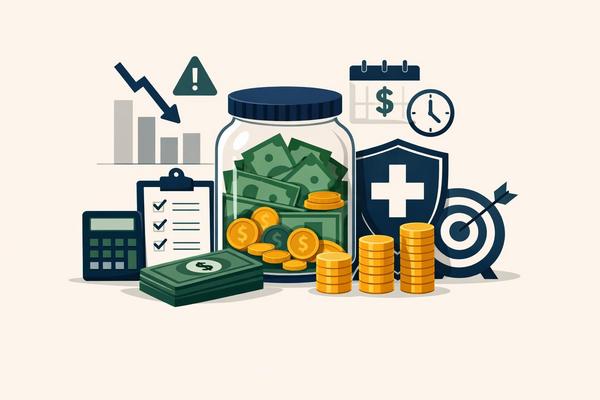
Your car needs new tires, rent is due, and your job suddenly feels a lot less secure than it did last month. That’s not a math problem — that’s a timing problem. And an emergency fund is the only thing that keeps bad timing from turning into a financial mess.
An emergency fund isn’t the same thing as general savings. It’s not money for Christmas gifts, a beach trip, or a nicer couch. It’s the cash buffer that stands between you and the worst possible timing. A lot of people hear the usual advice — save three to six months of expenses — and stop there. That’s a useful rule of thumb, but it doesn’t help much if your income swings, your rent eats half your paycheck, or you’re carrying debt and can barely save $50 at a time. You need a number that fits your actual life.
What Counts as an Emergency Fund?
An emergency fund is money set aside for expenses you didn’t choose and couldn’t comfortably cash-flow. Think job loss, a medical bill, a surprise vet visit, a busted water heater, or a car repair that gets in the way of getting to work. Those are different from predictable non-monthly expenses like holiday shopping, annual insurance premiums, back-to-school costs, or routine car maintenance. Those should eventually live in separate savings buckets if you can manage it.
That distinction matters because people drain their emergency fund on stuff that isn’t really an emergency, then find out too late they had no protection against bad timing. If your paycheck hits on Friday and your transmission dies on Tuesday, the issue isn’t just the bill — it’s the timing. Without cash on hand, you end up putting it on a credit card, pulling from your 401(k), missing rent, or falling behind on other bills. One problem spreads fast.
The Right Amount Depends on Your Risk, Not a Magic Number
The standard recommendation is three to six months of essential expenses — not total spending. Essential expenses are the bills you’d still have to cover if life got weird tomorrow. That usually includes rent or mortgage, utilities, groceries, gas or basic transportation, insurance premiums, minimum debt payments, child care you can’t avoid, and your phone or internet if you need them for work. Leave out the stuff you’d cut in a real emergency, like takeout, streaming subscriptions, and shopping.
If your essential monthly expenses run $3,000, your targets look like this: one month is $3,000, three months is $9,000, six months is $18,000. That doesn’t mean everyone needs six months before they can sleep at night. It means you should match the size of your fund to how stable — or fragile — your situation actually is.
When One Month Is the Right First Target
If you’re living paycheck to paycheck, your first goal probably isn’t six months. It’s getting enough cash on hand so that every surprise doesn’t go straight onto a credit card. A starter emergency fund of $1,000 or one month of essential expenses can make a real difference. That amount won’t cover a layoff, but it can absorb a deductible, a last-minute flight for a family emergency, or a repair bill without blowing up the rest of your month.
If Your Income Is Steady, Three Months Is a Strong Target
Three months makes sense for people with fairly predictable income and decent job security. If you’ve got a regular paycheck, no major health issues, and at least one stable income in the household, three months gives you enough runway to handle a job search or a larger disruption without immediately borrowing.
Why Some People Really Do Need Six Months or More
The shakier your income, the bigger your financial firewall needs to be. You may want six months or more if you’re self-employed, work on commission, have seasonal income, support kids on one income, own an older home, or work in an industry where layoffs tend to come in waves. Same goes if replacing your job would likely take a while. A six-month fund isn’t overkill when your downside risk is real.
How to Build It When Money Is Already Tight
You don’t need to save fast to save effectively. Most emergency funds are built the boring way — a little at a time, automatically, for longer than you’d like. That’s completely normal. The mistake is thinking small contributions don’t count. They do, especially when the alternative is saving nothing because the goal feels too big.
Start by picking a number that feels almost too easy. Maybe it’s $25 a week. Maybe it’s $50 from every paycheck. The point is to create a repeatable transfer, not a heroic month. A steady $50 every two weeks becomes $1,300 in a year. Then separate this money from your regular checking account. If your emergency cash sits where you casually spend from, it’ll slowly become fake savings. Keep it accessible, but not so accessible that it bleeds into weekend spending or random online orders.
Also look for money that’s already passing through your hands. Tax refunds, work bonuses, cash-back rewards, or a month where your utility bill comes in lower than expected can all help you speed things up. You don’t need to throw every extra dollar into the fund forever — just enough momentum to get the buffer in place.
A Few Ways to Free Up Money Without Wrecking Your Life
You probably don’t have a hidden $800 sitting in your budget. Most people don’t. Still, a few moves can help: pause extra debt payoff for a short stretch if you have zero cash buffer, cut one or two subscriptions you barely notice, reduce takeout by one meal a week, use one no-spend weekend a month, send part of every raise straight to savings before lifestyle creep grabs it, or sell stuff you already meant to get rid of. None of that is glamorous — but emergency funds are supposed to be practical, not exciting.
Where to Keep It and When to Actually Use It
Your emergency fund should be safe, liquid, and boring. This is not money to put in stocks, lock up in long-term CDs, or chase for a slightly better return. The job of this money is availability. A regular savings account works fine — easy access within a day or two, FDIC or NCUA protection, and a clear mental boundary between this cash and your everyday spending money. The return matters less than the role.
Using the fund should also be straightforward. Ask yourself two questions: Was this expense necessary and urgent? Would paying it from regular income throw off the rest of my bills? If the answer to both is yes, that’s probably what the fund is for. Then rebuild it. An emergency fund isn’t a museum piece — it’s a tool you’ll sometimes use and refill.
The Part Most People Miss
An emergency fund keeps a layoff from becoming missed rent. It keeps a car repair from turning into credit card debt. It gives you options when life gets expensive without asking permission first. The best amount is whatever actually protects your real life — $1,000 to start for some people, three to six months of essential expenses for others. Either way, the goal is the same: enough cash that one bad break doesn’t get to decide everything else.
If this made sense, the next thing worth understanding is how sinking funds differ from emergency savings — and why having both changes how you handle money month to month.