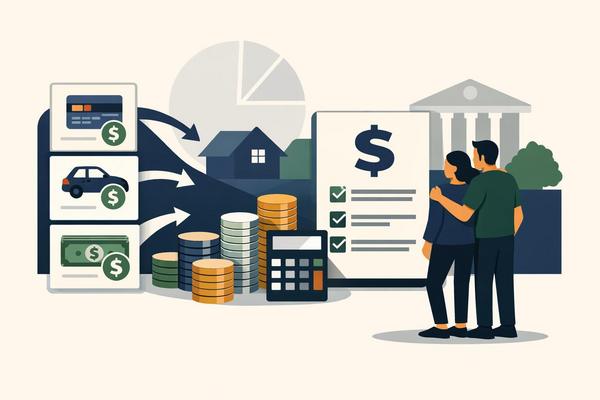
Your balances are spread across cards, loans, and due dates, and keeping up with all of it is getting old.
Debt consolidation means rolling multiple debts into one payment, usually with the goal of lowering your interest rate, simplifying your monthly bills, or both. If you’re juggling three credit cards, a personal loan, and maybe a medical bill on a payment plan, consolidation can sound like a reset button. One payment. One due date. Less chaos. That part is real. The catch is that simpler doesn’t always mean cheaper. Sometimes consolidation helps you get out of debt faster. Other times it just stretches the same problem over more years and costs you more in the end.
What Debt Consolidation Actually Is
At its core, you’re taking several debts and replacing them with one new loan or payment structure. Instead of sending money to a bunch of lenders every month, you send it to one. People usually consolidate debt in a few common ways.
- A balance transfer credit card that moves high-interest card balances to a lower-rate promotional card
- A personal loan used to pay off several credit cards or other unsecured debts
- A home equity loan or HELOC, which uses your house as collateral to pay off other debt
- A debt management plan through a nonprofit credit counseling agency, where you make one payment and the agency distributes it
Those options are not interchangeable. A balance transfer card works very differently from a home equity loan, and a debt management plan is not the same thing as taking out a new loan. The right choice depends on what kind of debt you have, what rate you’re paying now, and whether your budget can support a real payoff plan.
Why It Feels So Appealing When You’re Buried
When debt is spread all over the place, the stress isn’t just about the total amount — it’s also about the mental load. You’ve got different due dates, different minimums, and different interest rates eating away at your money. One late payment can trigger a fee, raise your rate, and ding your credit score. Consolidation cuts through that noise. Instead of wondering which bill to pay first after rent, groceries, and gas, you know exactly what the debt payment is. For some people, the biggest win isn’t magical savings — it’s finally having a system they can actually stick to.
Still, lenders know that simplicity sells. A lower monthly payment can look like relief even when it comes with a longer repayment term. That’s where people get tripped up.
When Consolidating Makes Sense
Consolidation usually makes sense when it lowers your interest rate without dragging the debt out so long that you pay more overall. That’s the basic test. If the new setup gives you a lower rate, a manageable payment, and a clear payoff timeline, it can be a smart move. Here are the situations where it tends to work best.
Your Credit Card Rates Are Brutal
If you’re paying 24% to 30% on revolving credit card debt, even a modestly lower rate can make a real difference. More of your payment goes toward principal instead of interest, and that gives you actual traction.
You Can Stop Adding New Debt
Consolidation works best when it’s paired with a real behavior change. If you pay off three credit cards with a consolidation loan and then run those cards back up, you’ve made the hole deeper — now you’ve got the new loan and fresh card balances on top of it. That’s how a cleanup move turns into a bigger mess.
Your Cash Flow Is Tight, But Not Broken
If you’re falling behind because your due dates are scattered and the minimum payments are hard to track, one fixed payment can help. This works especially well when your income is steady and the problem is disorganization or high interest — not a full-blown budget shortfall. Consolidation can simplify repayment, but it can’t fix a budget that doesn’t cover your basic life.
You Have a Payoff Target, Not Just a Payment Target
A lower monthly payment sounds good. A clear repayment timeline is better. Before you consolidate, you should know how long it’ll take to be done. If the new loan saves you $150 a month but adds four extra years of payments, that tradeoff may not be worth it.
Ways Debt Consolidation Can Backfire
The Payment Drops Because the Timeline Gets Stretched
A five-year loan will usually have a lower monthly payment than a two-year one — that doesn’t make it a better deal. If you’re paying interest for a lot longer, the total cost can rise even if the monthly bill feels easier. A lower payment is only a win if the math still works in your favor.
Fees Wipe Out the Benefit
Balance transfer cards often charge a transfer fee. Personal loans may come with origination fees. If the upfront cost is high and the rate improvement is small, the savings can disappear fast. Always check the annual percentage rate, not just the advertised rate.
You Turn Unsecured Debt Into Secured Debt
Using home equity to pay off credit cards can lower your rate, but it raises the stakes considerably. Credit card debt is unsecured. Your house is not. If something goes wrong and you can’t make the payment, you’ve moved the risk from your cards to your home — and that’s not a small detail.
The Real Problem Is Income, Not Structure
If your paycheck simply doesn’t cover your essentials and your debt payments, consolidation may buy time, but it probably won’t solve the issue. You may need a broader plan that includes expense cuts, more income, hardship options, or credit counseling. A cleaner bill setup won’t fix a structural shortfall.
How to Do This Without Making It Worse
If you’re thinking about consolidating, slow down and run the numbers. You don’t need a finance degree — you just need to compare your current reality with the new offer in plain terms.
- List every debt, its balance, minimum payment, interest rate, and payoff timeline if you only paid the minimum
- Add up your total monthly payments and note how much is going to high-interest credit cards
- Compare any consolidation option by APR, fees, monthly payment, and total interest over the full term
- Check whether the new payment fits your budget without relying on more credit for basics
- Make a plan for the old accounts — whether that means keeping them open for credit score reasons or closing them if spending is the bigger risk
Also be honest about your own patterns. If available credit tends to become spent credit, convenience can work against you. In that case, the best consolidation plan is the one that reduces temptation, not just interest.
A Quick Real-Life Example
Say you’ve got $12,000 on credit cards at an average rate of 26%. Your minimum payments add up to $360 a month, and a big chunk of that is just interest. You qualify for a personal loan at 11% for three years. Your payment might land higher than the card minimums, but you’ll likely pay the debt off much faster and with less total interest — that’s a solid use of consolidation. Now flip it: you take a five- or six-year loan because the monthly payment looks more comfortable. The rate is lower, but you’re in debt for much longer. If you also keep using the cards, the deal stops helping — and that’s the whole point.
The Bottom Line
Debt consolidation is not automatically good or bad. It’s a tool. Used well, it can simplify your payments and lower your interest costs. Used poorly, it can stretch your debt out, pile on fees, and make you feel better before it actually makes you better off. The best time to consolidate is when it gives you a lower rate, a realistic monthly payment, and a clear path to being done — not just a smaller bill next month.
If this made sense, the next thing worth understanding is how minimum payments keep credit card debt hanging around a lot longer than most people expect.