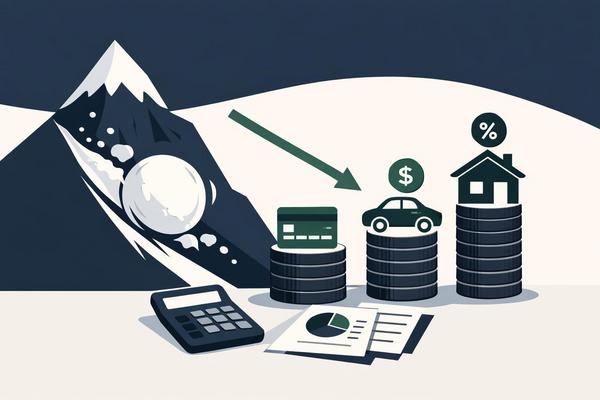
Your balances barely move because interest keeps eating your payment every month.
If you’re paying on multiple debts and still feel stuck, the debt avalanche method is built for exactly that problem.
It isn’t the most exciting payoff strategy. You probably won’t get the quick emotional win that comes from wiping out the smallest balance first. What you do get is math on your side. The avalanche method minimizes the total interest you pay, which means more of your money goes toward killing debt instead of feeding it.
That’s the whole idea in plain English. You make the minimum payment on every debt. Then you throw every extra dollar at the debt with the highest interest rate. Once that one’s gone, you roll that payment into the debt with the next-highest rate, and keep going until everything is paid off.
Why Debt Can Feel Impossible Even When You’re Paying
A lot of people think they have a spending problem when they really have an interest-rate problem.
When you carry balances on high-rate debt — especially credit cards — a chunk of every payment gets siphoned off by interest before your balance really drops. That’s why making payments can feel like running on a treadmill. You’re moving, but not getting anywhere.
Say you have a few common debts:
- Credit card A: $3,000 at 27% APR
- Credit card B: $1,200 at 19% APR
- Personal loan: $5,000 at 11% APR
- Car loan: $9,000 at 6% APR
If you spread your extra payment money around evenly, or focus on whatever balance annoys you most, you may feel productive. But from a cost standpoint, that usually isn’t the smartest move. The 27% card is doing the most damage every month. That’s the fire you put out first.
How the Debt Avalanche Strategy Actually Works
The steps are simple, even if sticking with them takes discipline. Here’s how to set it up in real life:
- List every debt you have, along with the balance, minimum payment, and APR.
- Rank the debts from highest interest rate to lowest.
- Pay the minimum on all of them every month.
- Put any extra money toward the debt at the top of the list.
- When that debt is paid off, roll its full payment into the next one.
That last part matters. You’re not starting over each time. Your payment power builds as each balance disappears. The difference from other methods is that the order is based on interest rate, not balance size.
Here’s a quick example. Say your minimum payments add up to $340 a month and you can afford $540 total. That gives you $200 extra to attack one debt. With the avalanche method, that $200 goes to the highest-rate balance every single month until it’s gone. After that, the amount you were paying on that debt doesn’t disappear into your checking account — it gets redirected to the next target. That’s how payoff speed starts to build.
What Makes This Strategy Cheaper
Interest is basically the price you’re paying to carry a balance. A 27% credit card costs you a lot more over time than a 6% car loan of the same size. By knocking out the highest-rate debt first, you cut down the total interest that can pile up across your entire payoff timeline.
This is why the avalanche method usually saves more money than the debt snowball method. The snowball focuses on the smallest balance first, which is great for motivation. But if your smallest balance also has a lower interest rate, you’re leaving a more expensive debt active longer — and that extra time usually means extra interest.
You don’t need a finance degree to see the logic. If one balance is charging you the most, that’s the one you want gone fastest.
The Hard Part: It Doesn’t Always Feel Rewarding
This method is efficient, not emotional. That’s why some people struggle with it. If your highest-rate debt also has a big balance, you might spend months attacking it before you get the satisfying moment of crossing one account off the list. That can feel discouraging, especially if you need visible progress to stay motivated.
The snowball method gets a lot of love for that reason. It gives you quick wins. You close accounts faster. You feel momentum sooner. That’s not fake psychology — it matters.
Still, if your main goal is paying the least amount of interest possible, avalanche wins. It asks you to tolerate slower emotional rewards in exchange for a lower total cost. The snowball method is often easier to stick with. The avalanche method is usually cheaper. The best choice is the one you’ll actually follow through on, but the math clearly favors avalanche.
When the Avalanche Method Makes the Most Sense
This strategy really shines when your debt includes high-interest credit cards. If you’ve got a mix of credit cards, store cards, buy-now-pay-later balances, and personal loans, interest rates can vary wildly. One account may be quietly draining way more money than the others. The avalanche method helps you identify that account and make it the priority.
It also works well if you’re organized enough to track multiple payments, you care more about total cost than quick psychological wins, you have steady extra cash each month even if it’s not a huge amount, and you want a plan that’s simple and mathematically sound.
Ways to Make It Easier to Stick With
A few practical moves help. Track your total debt every month, not just whether one account is paid off yet. Set mini milestones, like knocking $500 or $1,000 off your highest-rate balance. Automate minimum payments so you don’t miss due dates while focusing on one target. Send extra money right away when you get a tax refund, bonus, side gig payment, or cash back.
And stop adding new balances — that one’s huge. A payoff plan only works if the balances are moving in one direction. If you’re charging groceries, gas, and random Amazon orders back onto the cards while trying to pay them down, the math gets ugly fast.
What This Looks Like Month to Month
Figure out how much you can put toward debt every month after rent, groceries, utilities, insurance, and the other basics are covered. Even if it’s just $75 or $150 above your minimums, that’s enough to make the strategy work. More speeds it up. Less just means it takes longer.
Then keep the system boring. No constant reshuffling. No guessing. No paying extra on a lower-rate loan just because the balance looks smaller. Follow the order and let the math do its job. If your highest-rate debt has a promotional rate expiring soon or a variable APR that’s climbing, factor that in too. The point isn’t blind loyalty to a formula — it’s aiming your extra payment at whatever debt is costing you the most.
The debt avalanche method isn’t the most satisfying way to pay off debt, but it’s the one that usually costs you the least.
If this made sense, the next thing worth understanding is how the debt snowball method compares when motivation matters more than pure math.