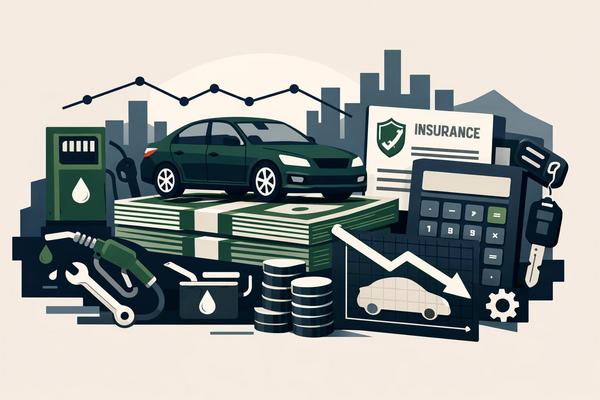
Your car payment looks manageable — but the real hit shows up in gas, insurance, repairs, and lost value before you even see it coming.
If you’re trying to figure out what a car really costs, the sticker price is only the opening number. A car drains money in ways that are easy to ignore when you’re focused on the monthly payment, and that’s exactly why the true cost of owning a car is always higher than it looks on the lot.
The Price Tag Is the Easy Part
When most people shop for a car, they zero in on the sale price or the monthly payment. That makes sense — those numbers are front and center. The dealership talks in monthly terms, the lender talks in monthly terms, and your budget probably does too. What gets buried is everything that keeps the car on the road after you drive it off the lot.
You’re not just buying a vehicle. You’re buying years of fuel, insurance premiums, registration fees, maintenance, repairs, tires, and depreciation. The monthly payment is just one slice of what owning a car actually costs you.
Where the Money Actually Goes
If you want to understand the full picture — depreciation, insurance, gas, maintenance — it helps to break it into buckets.
Depreciation Quietly Does the Most Damage
Depreciation is the value your car loses over time. You don’t pay it as a bill every month, so it’s easy to ignore. But it’s real money. If you buy a car for $35,000 and a few years later it’s worth $22,000, that $13,000 difference is part of what the car cost you. New cars usually get hit hardest in the first few years, which is one reason a new car can cost far more to own than a used one — even if both seem affordable month to month. Most people don’t feel it until they try to sell or trade in the car, and by then it’s too late to factor it into the original decision.
Insurance Can Blow Up Your Budget Fast
For a lot of drivers — especially younger people, city drivers, or anyone financing a newer car — insurance isn’t just a background expense anymore. It’s a major line item. Your rate depends on your age, ZIP code, driving history, car model, and coverage level, and a vehicle that looks affordable can turn expensive the minute you get a quote. That matters because lenders often require full coverage on financed cars, so you don’t always get to choose the bare-minimum option. If you haven’t priced insurance before buying, you haven’t really priced the car.
Gas and Maintenance Keep Charging Rent
Fuel is the part you feel every week. If you commute, drive kids around, or rack up weekend miles, gas adds up fast. A difference of even 8 to 10 miles per gallon can mean hundreds — sometimes thousands — of dollars over time.
Then there’s maintenance. Oil changes, brakes, tires, batteries, filters, wiper blades, alignments, and random repairs aren’t bad luck — they’re part of owning a car. Older cars may save you money upfront but cost more in repairs. Newer cars may need less work at first but come with higher depreciation and insurance. Either way, owning a car means signing up for ongoing costs that don’t stop after closing day.
Why People Keep Getting This Wrong
The car market is built around making the purchase feel affordable. Dealers advertise monthly payments. Lenders stretch loans out for longer terms. Buyers compare down payments instead of total ownership costs. That setup pushes your attention toward what gets you into the car, not what it takes to keep it.
There’s also a psychology piece. People treat some costs as “normal life stuff” instead of part of the car decision. Gas feels separate. Insurance feels separate. Repairs feel random. But they all belong in the same math. If a cost only exists because you own the car, it’s part of the car’s true cost.
How to Actually Calculate What a Car Will Cost You
You don’t need a fancy spreadsheet. You just need to stop thinking like a borrower and start thinking like an owner. Here’s the basic framework:
- Purchase price or total loan cost, including interest
- Estimated depreciation over the years you plan to keep the car
- Insurance premiums
- Gas based on your actual driving habits
- Routine maintenance — oil changes, tires, brakes
- Repairs and unexpected fixes
- Registration, taxes, inspection, and fees
- Parking or tolls, if those are part of your regular life
Add those up, then divide by the number of months you expect to own the car. That gives you a much more honest monthly number than the payment alone. A car with a $450 monthly payment might really cost you $800 or more per month once everything else is included. That doesn’t mean you should never own a car — it means you should compare cars based on total cost, not just financing.
Before You Buy Your Next Car
If you’re shopping right now, run the numbers before you commit. Get insurance quotes before you sign anything. Look up fuel economy based on your actual commute, not some ideal highway estimate. Research common repair issues and maintenance schedules for the specific model you’re considering. Think about how long you’ll keep the car, because depreciation hits very differently if you sell in three years versus ten.
Also worth asking: how much car do you actually need? A lot of Americans end up buying more vehicle than their life requires. Bigger, newer, and nicer usually means pricier to insure, fuel, repair, and replace — and that extra cost can crowd out other goals like paying off credit cards, building an emergency fund, or putting more into your 401(k). Cars don’t just affect your transportation budget. They shape how much room you have for everything else.
The Bottom Line
A car is one of the biggest ongoing expenses in most households, and a lot of that expense stays hidden if you only look at the purchase price. Once you factor in depreciation, insurance, gas, maintenance, and fees, the real number gets a lot clearer. The sticker price is the beginning of what a car costs you — not the end.
If this made sense, the next thing worth understanding is how interest rates change what you actually pay over the life of a car loan.