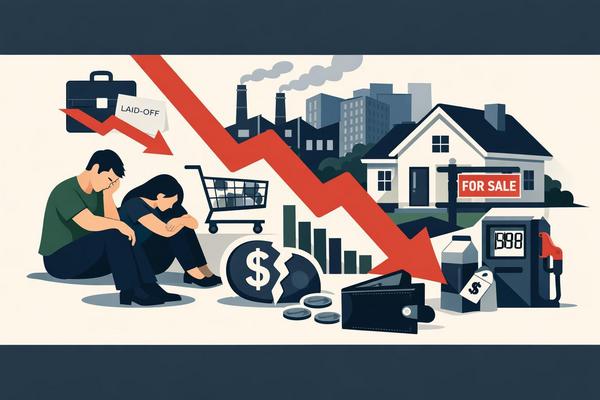
Your hours get cut, prices still feel high, and suddenly every money decision feels a lot less forgiving.
A recession can feel confusing because it doesn’t hit all at once. One person loses a job, another sees fewer customers, and someone else just notices that friends have stopped going out. What happens during a recession is pretty simple at the core: people and businesses pull back, and that slowdown spreads through jobs, spending, housing, and everyday life. Once you understand that chain reaction, a lot of headlines start making more sense.
What a Recession Actually Means
A recession is a broad slowdown in economic activity. Businesses sell less, companies invest less, and employers get more cautious about hiring and pay. It’s not just the stock market having a bad month — it’s the real economy cooling down in a way regular people can actually feel.
Sometimes the trigger is high interest rates. Sometimes it’s a financial shock, weak consumer demand, or a bigger crisis that makes companies and households nervous. The important part is that money starts moving more slowly through the economy, and the effects show up almost everywhere.
Why Jobs Usually Take the Hit First
If businesses think sales are about to weaken, they don’t wait around hoping for the best. They freeze hiring, cut overtime, reduce hours, delay raises, and then — if things keep getting worse — start laying people off. That’s usually how a recession affects jobs, and it often starts quietly. Fewer job postings. Contract work dries up. Bonuses disappear. Managers stop replacing people who leave. Then layoffs spread from the most vulnerable companies to stronger ones trying to protect profits.
Even people who keep their jobs often feel the recession through slower wage growth and shakier job security. That matters because job confidence drives spending. If you’re worried about getting laid off, you’re less likely to book a trip, replace your car, or spend freely at restaurants and stores.
What Job Weakness Looks Like in Real Life
- More part-time work when people want full-time hours
- Longer job searches after a layoff
- Fewer promotions and raises
- Companies cutting back on travel, training, and new projects
- Workers staying put because switching jobs feels too risky
That’s why recessions can feel heavy even before unemployment gets really high. People sense the caution early.
Spending Changes Fast When People Get Nervous
The U.S. economy runs heavily on consumer spending. When people buy less, businesses earn less. When businesses earn less, they cut back. That feeds right back into job losses and weaker income. It’s a loop.
During a recession, households usually stop spending on things that can wait — vacations, home upgrades, new cars, random shopping. People focus more on rent, groceries, gas, insurance, utilities, and debt payments. Spending gets more defensive, and businesses that depend on optional purchases get hit first: furniture stores, travel companies, new home construction, higher-end retail. But the pullback doesn’t stay contained. Once enough businesses see lower demand, they respond with their own cuts.
If You’ve Ever Wondered Why Everything Just Feels Slower
You might see emptier restaurants on weeknights. Friends start saying no to plans because money feels tight. Local shops shorten hours. Big retailers push more discounts to get people in the door. People talk more about emergency funds and less about upgrades. Daily life in a recession often feels more cautious than dramatic — until the slowdown gets deep enough that it’s impossible to ignore.
Housing Gets Squeezed from Both Sides
Housing doesn’t always move the same way in every recession, but it’s almost always affected. If rates are high, monthly payments get harder to afford even if home prices haven’t dropped much. If job losses rise, fewer people want to buy because taking on a mortgage feels risky. Sellers may have to cut prices, wait longer, or pull listings. Builders slow down new construction.
Renters feel it too. Some people double up with family or roommates to save money. Others stay put because moving costs too much. Home prices may soften in one area while rents stay stubbornly high in another. Mortgage rates might fall later if the Fed cuts rates, but that doesn’t automatically make housing easy when your income feels uncertain.
The Real Questions If You’re Renting or Buying Right Now
- Can you comfortably handle the monthly payment if your income changes?
- Do you have savings for repairs, deposits, or moving costs?
- Would a layoff or cut in hours turn a manageable payment into a problem?
Those questions matter more in a recession than trying to perfectly time the market.
The Gap Between Keeping Your Job and Feeling Okay
A lot of people assume a recession only matters if they get laid off. That’s not how it works. You can still feel it through stress, delayed plans, and a constant need to be more careful. Maybe your employer cuts your hours. Maybe your side hustle slows down. Maybe your credit card balance gets harder to pay off because interest is chewing up more of your budget. Maybe your 401(k) drops right when you’re already feeling nervous.
A recession changes behavior because uncertainty itself acts like a financial cost. People postpone moves, weddings, big purchases, and career risks. Recent grads have a tougher time landing a first job. Older workers may delay retirement if their savings take a hit. It all adds up to a more defensive version of everyday life.
How to Use This Before a Recession Hits Hard
You can’t control the business cycle, but you can control how exposed you are to it. The smartest move is usually to get more flexible before you feel forced to. That doesn’t mean panicking — it means getting honest about risk.
- Build up cash reserves if you can, even slowly
- Trim fixed monthly costs that would be hard to carry after a job loss
- Pay close attention to high-interest debt, especially credit cards
- Keep your resume updated and your network warm
- Be careful about taking on big new payments unless you have real room in the budget
- Think through what expenses you’d cut first if your income dropped
The goal isn’t to predict the exact month a recession arrives. It’s to make sure a slowdown doesn’t catch you flat-footed.
The Bigger Picture
Recessions don’t just lower numbers on charts. They change how people hire, spend, borrow, move, and plan — which is why they can feel personal so quickly. One slowdown ripples from layoffs to reduced spending to weaker housing demand to more caution across entire communities. Understanding what changes helps you make smarter decisions before it hits.
If this made sense, the next thing worth understanding is how the Fed’s interest rate decisions shape borrowing, savings, and the job market.