Your grocery bill is still high, borrowing costs hurt, and you’re wondering whether the Fed can actually cool things down without breaking something in the process.
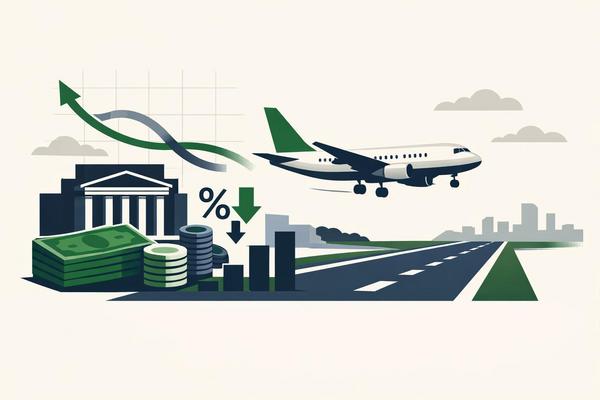
When people talk about a “soft landing,” they’re talking about one of the hardest things in economics. It means the Federal Reserve slows inflation and cools the economy without tipping the country into a recession. That sounds simple enough on cable news. In real life, it means raising interest rates just enough to take pressure off prices — but not so much that hiring freezes, layoffs spread, and consumers pull back all at once. If you’ve been trying to make sense of Fed headlines, that’s the basic idea.
What a Soft Landing Means in Plain English
A soft landing is what happens when the economy slows down from “too hot” to “more normal.” Prices stop rising as fast. Wage growth cools a bit. Businesses stop scrambling to hire at any cost. Consumers get more cautious. But the economy doesn’t fall off a cliff.
Think of it like tapping the brakes on the highway. You want the car to slow down smoothly. You do not want to slam the brakes, skid, and hit the guardrail. That’s the Fed’s challenge. Its main tool is interest rates — and when the Fed raises them, borrowing gets more expensive across the board. That hits credit cards, auto loans, mortgages, business investment, and hiring decisions. The goal is to reduce demand enough that inflation cools off. The risk is that demand cools too much.
Why This Is Much Harder Than It Sounds
The Fed doesn’t control the economy with a dial. It’s more like steering a huge ship through fog with delayed instruments. By the time rate hikes fully hit the economy, months may have passed — which means the Fed is always reacting to data that tells an old story. That delay is a big reason soft landings are rare.
If inflation is still running hot, the Fed may feel pressure to keep tightening. But those moves might not have fully shown up yet in hiring, spending, or business investment. That’s how policymakers can overshoot.
There’s another problem. Not all inflation comes from the same place. If prices are rising because consumers are spending too aggressively, higher rates can help cool that off. But if prices are rising because of supply shocks — energy spikes, war, shipping problems, housing shortages — the Fed has a lot less control. It can weaken demand, but it can’t drill for more oil or build apartments overnight. The Fed can slow the parts of the economy that depend on credit. It can’t directly fix every reason prices went up in the first place.
Jobs Are Usually Where the Pain Shows Up First
When people hear “soft landing,” what they really want to know is whether they’ll keep their job. That’s the right instinct. The labor market is often where the line between a slowdown and a recession becomes real for families.
If companies simply post fewer openings and stop bidding up wages as aggressively, that’s a manageable cooldown. If companies start cutting staff in large numbers, that’s a different story. In theory, job openings can fall without layoffs exploding. Employers can become more selective without slashing payrolls. That’s one version of a soft landing. Still, labor markets can turn faster than people expect. Once businesses get nervous, they don’t all wait politely — they cut budgets, pause expansion, and protect cash. That shift can snowball quickly.
Can the Fed Actually Pull It Off?
The honest answer is yes, but never with much certainty. There have been periods when inflation cooled without a severe recession. There have also been plenty of times when rate hikes ended with a much rougher landing. A soft landing is possible, but it depends on timing, luck, and a lot of moving parts the Fed doesn’t fully control.
For the Fed to thread the needle, a few things usually need to go right:
- Inflation has to keep easing without new shocks pushing prices back up.
- The job market has to cool gradually instead of cracking suddenly.
- Consumers need to slow spending without going into panic mode.
- Businesses need to pull back carefully, not all at once.
- Financial markets need to stay stable enough that credit keeps flowing.
That’s a narrow path. Even if the Fed does everything mostly right, it can still get hit by things outside its control — an oil spike, banking stress, geopolitical trouble, or a sudden drop in consumer confidence. That’s why anyone who talks about a soft landing like it’s guaranteed is oversimplifying. The Fed has real influence. It does not have total control.
What It Actually Looks Like in Your Everyday Life
You probably won’t wake up one morning and say, “Ah, yes, the soft landing is here.” It shows up more quietly than that. Rent and grocery prices are still high, but they stop rising as fast. Mortgage rates stay elevated for a while, then begin easing later. Raises get smaller and job hopping gets tougher. Layoffs happen in pockets, but not across the whole economy. GDP growth slows, but stays positive or close to it.
That kind of outcome wouldn’t feel amazing. It would feel more like relief than prosperity. And that’s an important distinction — a soft landing isn’t the same thing as a booming economy. It’s a controlled slowdown that avoids something worse.
How to Think About Your Money During All This
You don’t need to become a Fed watcher to make smarter money decisions. You just need to understand what kind of environment a soft landing creates. If the Fed is trying to slow the economy without crashing it, expect money to stay tighter than it felt during the easy-credit years. That matters for your next moves.
In this kind of environment, it helps to be careful with high-interest debt — especially credit card balances. Keep a bigger emergency cushion if your job or industry feels shaky. Don’t assume rates will fall fast and bail out a bad loan decision. Treat big purchases with more skepticism, especially if the monthly payment only works under best-case assumptions. Focus on job stability and cash flow more than flashy investment narratives.
If a soft landing happens, great. If it doesn’t, those habits still protect you. That’s the real value of understanding this topic — it’s less about guessing the next Fed meeting and more about seeing why the economy can feel strange for a while. Inflation may improve while rates still feel painful. Growth may slow even if the headlines avoid the word recession. The middle ground is real, even when it’s uncomfortable.
The Part Most People Miss
People often frame the Fed’s job like it’s just a matter of choosing whether to fight inflation. That misses the actual balancing act. A soft landing is when the Fed slows the economy without crashing it — and that’s much harder than it sounds because every move works with delays, tradeoffs, and risks the Fed can’t fully predict.
It’s not just abstract policy. It’s about whether inflation cools without your job market getting wrecked in the process. The Fed can guide the landing. It can’t guarantee one. If this made sense, the next thing worth understanding is how the Fed’s rate decisions ripple directly into your savings account and what that means for your money right now.