Your grocery bill keeps climbing, your company froze hiring, and the news makes it sound like the economy is doing something different every single week. You’re not imagining it.
One month, jobs are everywhere and people are spending like normal. The next, rates are high and everybody starts throwing around the word recession. That’s the economic cycle at work — and understanding it gives you a better way to think about your money.
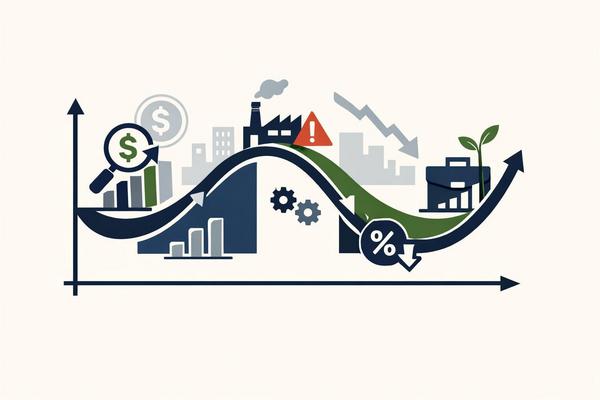
The economy doesn’t move in a straight line. It expands, slows down, contracts, and eventually recovers. Those shifts affect your paycheck, your job options, your debt, your savings, and even how confident you feel about making big decisions. If you know which phase you’re in, you can stop reacting to headlines and start making smarter calls.
What the Business Cycle Actually Means
The business cycle is just the pattern of ups and downs in economic activity over time. That sounds technical, but the idea is simple. People spend, businesses hire, wages rise, and investment picks up during stronger periods. Then something changes. Maybe borrowing gets more expensive, inflation eats into buying power, companies get cautious, or consumers pull back. Growth slows, layoffs can show up, and the whole system cools off.
Think of it like traffic on a highway. Cars speed up, then bunch together, then slow down, then gradually get moving again. The road is still there, but the pace changes. That’s how the economy works too — every economy moves in cycles because people, businesses, banks, and government policy all react to each other.
Four Phases, One Repeating Pattern
Expansion: Things Usually Feel Pretty Normal
Expansion is the phase where the economy is growing. Businesses are selling more, employers are more willing to hire, and consumers feel decent enough to spend on meals out, travel, home projects, and all the regular stuff of life. Asset prices often rise too. Stocks may do well, home prices can climb, and credit is usually easier to get when lenders feel confident.
This is the part of the cycle where people start believing good times are just the default. That belief is where mistakes happen — people stretch for a bigger car payment, businesses overhire, investors assume markets only go up. Expansion can last a while, but it doesn’t last forever.
Peak: The Economy Looks Strong, But Pressure Is Building
The peak is the turning point, and it doesn’t always look dramatic when you’re living through it. Jobs may still be strong. Consumer spending may still hold up. But underneath that, cracks start forming. Inflation may run hot, interest rates may be rising, and businesses may see profits get squeezed. Consumers start leaning harder on credit cards because everything costs more.
At the peak, the economy isn’t falling apart yet — but it becomes more fragile. This is often when the Fed is raising rates to cool things down, which makes borrowing more expensive for households and companies alike. The economy starts losing momentum.
Recession: Money Gets Tighter and Confidence Drops
A recession is the contraction phase. Economic activity declines, companies cut back on hiring or start layoffs, and consumers spend less — especially on non-essentials. Business investment slows down. People worry more about stability than growth.
This is usually the phase people notice most because it hits daily life fast. Raises get harder to find. Job openings dry up. Big purchases feel riskier. If you’re carrying a lot of debt, the pressure gets real. Not every recession looks the same — some are short and sharp, others drag on, some hit housing hard, some hit tech or small business first. But the basic pattern is the same: less spending, less hiring, more caution.
Recovery: Quiet at First, Then Stronger Than It Looks
Recovery starts when the economy begins climbing out of the downturn. That doesn’t mean everything suddenly feels great. Usually it starts quietly — layoffs slow down, hiring picks back up, consumer confidence improves a little, and businesses begin investing again.
Recovery often feels underwhelming at first, which is why people miss it. By the time everyone agrees things are getting better, a lot of the opportunity has already passed. That’s true in the job market, in investing, and in business.
Why These Phases Matter to Your Money
If you treat every phase of the economy the same, you’re more likely to make bad decisions — not because you’re reckless, but because the right move changes with the environment.
During expansion, it may make sense to build skills, increase savings, and avoid lifestyle creep while income is steady. During a peak, it’s smart to get more cautious, especially if your budget only works when everything goes right. During a recession, protecting cash flow matters more than trying to look impressive. During recovery, you may have a chance to reposition before things feel fully comfortable again.
You’re not trying to predict the exact month the economy turns. You’re trying to stop making decisions as if conditions never change.
If the Economy Is Slowing, What Should You Actually Do?
You don’t need to overhaul your whole life every time a scary headline pops up. You do need to pay attention to risk. When the economy looks weaker, practical moves matter more than clever ones.
- Check how much of your monthly income is already spoken for by rent, car payments, minimum debt payments, and subscriptions.
- Build or rebuild your emergency fund, even if it’s smaller than you’d like.
- Be more careful about taking on new fixed payments.
- Think about job security, not just salary.
- Keep investing if it fits your plan, but don’t confuse long-term investing with short-term gambling.
If the economy is expanding and your income is stable, that’s a good time to strengthen your position before the next slowdown shows up. Pay down high-interest debt, bump up your 401k contributions if you can, and don’t assume easy conditions will stick around. The best time to prepare for a tougher phase is usually when things still feel okay.
You’re Not Imagining the Mixed Signals
Gas prices may ease while rent stays high. The stock market may rise while your company cuts bonuses. Unemployment may stay low even while people feel squeezed. That doesn’t mean the cycle isn’t real — it means different parts of the economy move at different speeds. Housing, jobs, inflation, consumer spending, and interest rates don’t all turn at once.
The goal isn’t to find a perfect label for the moment. It’s to notice which direction conditions are moving. Are businesses hiring more aggressively or pulling back? Are consumers spending freely or relying more on credit cards? Are rates rising to cool things down, or falling to support growth? Those clues matter more than any single headline.
The Bottom Line
The economic cycle isn’t abstract. It shows up in your rent, your job market, your borrowing costs, and how safe or shaky your next money decision feels. Knowing which phase you’re in changes how you should think about your finances — and that’s worth paying attention to.
If this clicked for you, the next thing worth understanding is how the Fed’s rate decisions ripple into your savings account, your mortgage, and your monthly budget.