Your monthly payment changed fast, and the Fed never sent you a letter explaining why.
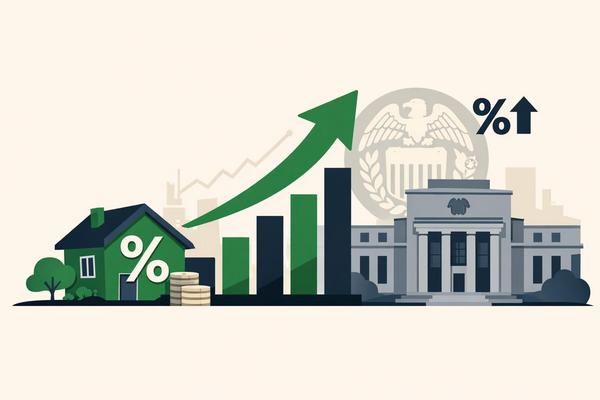
If you’ve been checking home prices, mortgage quotes, or refinancing numbers lately, you’ve probably felt like the ground shifted overnight. One week the payment looks doable. The next week it’s a few hundred dollars higher. That kind of jump makes people assume the Federal Reserve directly sets mortgage rates — but it doesn’t. Still, when the Fed raises rates, home loan costs usually move too, and that’s the part that hits your budget.
The cleanest way to think about it: the Fed controls very short-term interest rates, while mortgage rates are shaped by the broader bond market. Those two things aren’t the same, but they’re closely connected. When the Fed moves, your monthly payment tends to move with it.
What the Fed Actually Changes
The Federal Reserve mainly adjusts the federal funds rate — the short-term rate banks charge each other for overnight lending. That rate has nothing to do with a 30-year mortgage on its face. You’re not borrowing overnight, and your lender isn’t pricing your loan off some single Fed chart. But the Fed’s moves send a signal through the entire financial system.
When the Fed hikes rates, it’s usually trying to slow inflation and cool down spending. That affects expectations across markets. Banks, investors, and mortgage lenders start pricing money differently because borrowing is getting more expensive and because they expect economic conditions to shift. That’s why rate hikes can show up in everything from credit cards to car loans to home financing.
Mortgage lenders pay close attention to longer-term Treasury yields — especially the 10-year Treasury — along with investor demand for mortgage-backed securities. Those market rates shift based on inflation expectations, recession fears, Fed policy, and plain old market nerves. Your mortgage rate is market-driven, but the Fed is one of the biggest forces pushing that market around.
Why 30-Year Mortgage Rates Rise When the Fed Hikes
Mortgage rates tend to climb during Fed hiking cycles because investors expect higher inflation, tighter credit, or both. If inflation looks sticky, investors demand higher returns to lock up money for years. If the Fed signals that rates will stay higher for longer, bond yields often rise — and when yields rise, mortgage rates usually follow.
There’s also a risk premium built into mortgages. A lender making a 30-year fixed loan is taking on a lot more uncertainty than a bank making a short-term loan. If investors think prepayments, defaults, or volatility could rise, mortgage-backed securities become less attractive unless they offer better yields. That pushes mortgage rates up further.
This is why you’ll sometimes hear that the Fed raised rates by 0.25%, but mortgage rates moved by more than that, less than that, or barely at all. The market doesn’t mechanically copy the Fed. It reacts to what the Fed is doing, what it might do next, and what that means for inflation and growth. The mortgage market is always looking ahead.
When Mortgage Rates Fall Even Though the Fed Is Still High
This is the part that throws a lot of people off. The Fed can keep its policy rate elevated, and mortgage rates can still drift lower. That usually happens when investors think inflation is cooling, the economy is slowing, or future Fed cuts are coming. Markets price the future, not just the present.
That’s also why mortgage rates sometimes jump before the Fed even acts. If markets are already convinced a hike is coming, lenders may adjust early. By the time the Fed makes the move official, a lot of the change is already baked in. Your loan quote may have shifted long before the press conference ended.
What This Means for Your Monthly Payment
On a large loan, even a one-point increase can mean hundreds more per month. Say you’re borrowing $350,000 on a 30-year fixed mortgage. A rate that’s one percentage point higher can add a meaningful chunk to your principal-and-interest payment every single month. Over the life of the loan, that difference can add up to tens of thousands of dollars. That’s why people suddenly feel priced out even when home prices themselves haven’t moved much.
The same logic applies if you already own a home. If you’re looking to refinance, tap equity, or buy a different house, the rate environment matters a lot. A homeowner with a 3% mortgage may think twice before moving into a new loan at 6% or 7%. Fed-driven shifts in the broader rate market don’t just affect buyers — they reshape the whole housing market.
If You’re Buying Soon, Focus on What You Can Control
You can’t control the Fed, inflation data, or the bond market, but you do have a few levers that matter. Trying to perfectly time rates is usually a losing game. Getting your own numbers in shape is more useful.
- Improve your credit score before applying if you can — stronger credit usually means a better rate.
- Compare multiple lenders, since pricing can vary more than people expect.
- Watch the total monthly payment, not just the interest rate — including taxes, insurance, and HOA fees if they apply.
- Set a payment ceiling based on your real life, not the maximum a lender says you can handle.
- Think about how long you expect to stay in the home before choosing between loan options.
A lot of buyers get hung up on headlines that say rates are up or down this week. Those headlines matter, but not as much as your budget, cash reserves, and job stability. A mortgage should fit your life after closing day, not just get you through underwriting.
Waiting for the Fed to Cut Rates Isn’t a Full Strategy
Plenty of people tell themselves they’ll buy as soon as the Fed starts cutting. Maybe that works out. Maybe it doesn’t. If cuts happen because inflation cools and bond yields fall, mortgage rates may improve. But if lower rates bring a rush of buyers back into the market, home prices could heat up again — and you might save on financing while paying more for the property itself. You could also face more competition, fewer concessions, and less room to negotiate. The monthly payment is what counts, and that number depends on both the rate and the price.
The Right Way to Read Fed News
When you hear that the Fed raised rates, don’t translate that into “my mortgage just went up by the same amount.” That’s too simplistic. Read it as a signal about where borrowing costs are likely headed and how markets are thinking about inflation and growth.
If inflation looks stubborn, mortgage rates may stay elevated even if home sales are slowing. If the economy weakens and investors expect future cuts, mortgage rates may ease before the Fed actually changes course. That’s why the relationship feels messy from the outside — because it is. But the basic takeaway is straightforward: the Fed doesn’t hand your lender a mortgage rate sheet, but its decisions ripple through the bond market, and that’s what changes what you pay every month.
If this made sense, the next thing worth understanding is how Treasury yields quietly shape everything from mortgage rates to what your savings account actually earns.