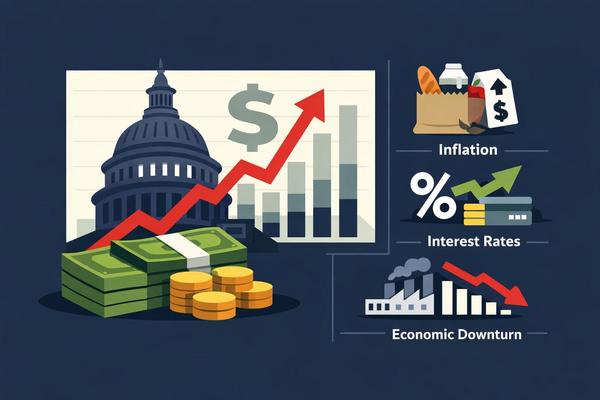
Your grocery bill is higher, borrowing costs more, and it feels like your money doesn’t stretch the way it used to.
When people argue about the US national debt, it can sound like background noise from Washington. You hear giant numbers, politicians point fingers, and somehow it all feels far away from your actual life.
It isn’t far away at all. Growing national debt can push on interest rates, shape inflation, and slowly change what your paycheck can buy.
That doesn’t mean every dollar of debt is automatically a disaster. The US can borrow a lot because investors still trust Treasury bonds, and debt can help the government get through recessions, wars, and emergencies. The problem starts when debt keeps rising faster than the economy can comfortably support — especially when higher borrowing costs pile on top of it.
Why the National Debt Isn’t Just Washington’s Problem
The national debt is the total amount the federal government owes after years of spending more than it collects in taxes. To cover that gap, the Treasury issues bonds, bills, and notes, and buyers lend money to the government in exchange for interest.
On paper, that sounds simple. In real life, it matters because the federal government is borrowing in the same financial system that affects your mortgage, your car loan, your credit card rate, and your savings account.
When government borrowing gets bigger, it doesn’t stay sealed off in some federal spreadsheet. It becomes part of the demand for money and credit across the whole economy. If investors are eager to buy Treasuries, rates can stay manageable. If debt keeps climbing and investors want better compensation for the risk of inflation or future fiscal strain, yields can rise — and once Treasury yields rise, borrowing costs across the economy tend to follow.
How Growing Debt Pushes Interest Rates Higher
Think of Treasury rates as a foundation. They influence what banks, businesses, and consumers pay to borrow. The Federal Reserve, inflation expectations, economic growth, and global demand all matter too — but debt plays a real role.
When the government runs large deficits year after year, it has to issue more debt. That means more Treasury securities hitting the market. If demand doesn’t keep up easily, the government may need to offer higher yields to attract buyers. Here’s the chain reaction in plain English:
- The government borrows more money.
- More Treasury debt gets issued.
- Investors may demand higher yields.
- Higher Treasury yields raise the baseline for other interest rates.
- Households and businesses face more expensive borrowing.
If you’re trying to buy a house, that can mean a mortgage payment that’s hundreds of dollars more per month than it would’ve been at lower rates. If you carry a credit card balance, interest charges eat up more of your budget. If businesses face higher financing costs, they may delay hiring or expansion — and that’s how a debt issue in Washington turns into slower economic momentum on Main Street.
Does National Debt Actually Cause Inflation?
This is where people often oversimplify things. Debt by itself doesn’t automatically create inflation. Inflation happens when too much demand chases too few goods and services, or when supply shocks push prices higher, or when people start expecting prices to keep rising and act accordingly.
Debt matters because it can feed those conditions. If the government is spending heavily while the economy is already running hot, that adds more demand into the system. If that demand shows up faster than supply can respond, prices rise. There’s another piece too — if investors start worrying that policymakers will tolerate more inflation to reduce the real burden of debt, inflation expectations can drift up on their own.
Once inflation expectations move higher, your purchasing power can erode even before your wages catch up. That’s the part you feel at the grocery store, at the gas pump, and when the rent renewal notice shows up. Your dollars still look the same, but they buy less.
What High Debt Does to the Broader Economy Over Time
High and rising national debt creates pressure in a few directions at once, and some of those effects show up slowly — which is why people miss them.
One issue is crowding out. If government borrowing absorbs more available capital, less may be left for private investment, or private borrowers may have to pay more to get it. That can mean fewer productivity gains over time and weaker wage growth down the road.
Another issue is the federal interest bill itself. As debt grows and rates rise, the government has to spend more just to cover interest payments. The more tax revenue that goes toward interest, the less room there is for everything else without even more borrowing. That squeezes future budgets and makes the country more vulnerable during the next recession or emergency.
There’s also a confidence angle. The US still has major advantages — including the dollar’s global role and the Treasury market’s importance worldwide. But confidence isn’t something policymakers should treat like an unlimited resource. If markets start believing debt is on an unsustainable path, borrowing costs can climb faster and fiscal choices get uglier in a hurry.
What You Actually Feel in Everyday Life
You don’t need to watch bond auctions to feel the effects. A higher mortgage rate can price you out of a home you could’ve afforded two years ago. A business facing higher interest costs may hold off on raises or new hires. Persistent inflation forces you to spend more on basics and save less for retirement. And government budget pressure shapes future debates around taxes, Social Security, and spending priorities that affect everyone.
How to Use This in Your Own Financial Life
You can’t control federal debt policy, but you can make smarter decisions when you understand what it does. Start by paying attention to interest rate risk in your own life. If you carry variable-rate debt, know that higher rates can stick around longer when inflation and borrowing pressures stay elevated.
When debt pressure contributes to higher rates and weaker purchasing power, flexibility becomes more valuable. That can mean paying down high-interest credit card debt faster if you can, being cautious about stretching for a home payment at the edge of your budget, keeping an emergency fund so rising costs don’t force you into expensive borrowing, and making sure your savings are actually keeping up with inflation over time.
This also helps you read the news more clearly. When you hear that debt is rising, the useful question isn’t whether the number sounds scary. The useful question is how that borrowing interacts with rates, inflation, growth, and the government’s future interest burden — because that’s where the real impact on your life shows up.
The Bottom Line
The national debt isn’t just a political talking point or an abstract number nobody can picture. It affects the price of borrowing, the path of inflation, and the strength of the economy over time. The real risk isn’t just what the government owes — it’s what you end up paying through higher interest rates and weaker purchasing power.
If this made sense, the next thing worth understanding is how the Fed’s rate decisions ripple into your savings account and what that means for your money right now.