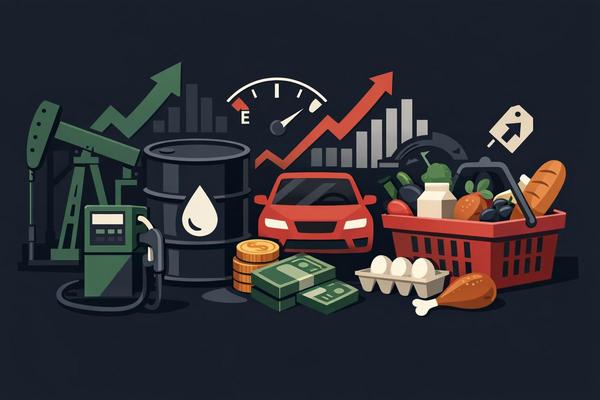
Your gas bill jumps, groceries cost more, and shipping fees sneak into everything you buy — and it all traces back to one thing: crude oil.
You usually notice it at the pump first. The sign out front changes fast, and suddenly filling up costs $15 or $20 more than it did a few weeks ago. What’s easy to miss is that oil doesn’t stop hitting your wallet once you leave the station. Crude oil is baked into the cost of moving, growing, packaging, and selling a huge share of what you buy. That’s why when oil prices rise, businesses across the supply chain start paying more — and most of them eventually pass at least part of that cost on to you. When crude falls, that pressure can ease, but prices in stores don’t always drop right away. They tend to be sticky on the way down.
Why Crude Oil Reaches Way Beyond Gasoline
Crude oil gets refined into gasoline, diesel, jet fuel, and other petroleum products. That part’s obvious. Less obvious is how much of the economy runs on those fuels every single day. Oil is really a transportation and production cost hiding inside other prices.
Think about the path of an ordinary grocery item. Food has to be planted, fertilized, harvested, processed, packaged, stored, shipped, unloaded, stocked, and sometimes delivered to your door. At several points in that chain, oil shows up through diesel fuel, plastics, chemicals, and freight costs. Even if the food itself isn’t made from oil, getting it to you definitely depends on energy. The same goes for clothes, furniture, appliances, and building materials. A lot of packaging comes from petroleum-based products too. If energy gets more expensive, the final sticker price usually follows.
The Gas Station Is Just the Beginning
Gasoline prices usually react faster than most other consumer prices because they’re directly tied to refined oil products. When crude spikes, refiners and stations adjust pretty quickly — even though local taxes, seasonal blends, and refinery issues also play a role. For most households, gas is the first and clearest place oil price changes show up.
If you commute, drive kids around, or live somewhere without much public transit, that hit lands fast. You don’t have a lot of room to dodge it. You still need to get to work. You still need groceries. A rise in gas prices acts like a small pay cut because more of your income has to go toward the same routine driving you were already doing.
And it doesn’t stop with your own tank. Businesses that rely on vehicles feel it too — delivery fleets, contractors, landscapers, ride-share drivers, trucking firms. Those businesses usually try to recover that money through higher prices, delivery fees, or fuel surcharges that show up on your receipt.
Why Your Grocery Bill Moves When Oil Moves
A lot of people think food inflation is only about bad weather or supply shortages. Those matter, but oil plays a major role too. Modern agriculture is energy-intensive from start to finish. Farm equipment runs on fuel. Irrigation systems use energy. Food processing plants use energy. Refrigerated trucks use fuel. Supermarkets pay shipping costs and utility bills that can rise with broader energy markets. Then there’s packaging, which often depends on petroleum-based materials. A higher crude price can touch every layer of what ends up in your cart.
This doesn’t mean every item in the store jumps overnight. Fresh produce shipped long distances can react differently than locally grown goods. Meat and dairy can reflect feed, transport, and refrigeration costs all at once. Packaged foods can get hit by both ingredient costs and packaging costs at the same time. And once a higher price gets accepted in the market, it often takes a while to come back down — even after oil cools off.
The Chain Reaction Behind Broad Price Increases
This is the part that makes inflation feel confusing. You hear that oil went up, but your first thought might be, “Why does that make my everyday stuff more expensive?” The answer is that businesses don’t operate in isolation. Oil price changes spread through the economy in layers, not in one big obvious move. Here’s what that chain reaction typically looks like:
- Crude oil gets more expensive
- Gasoline, diesel, jet fuel, and petrochemicals rise in cost
- Shipping, farming, manufacturing, and packaging get more expensive
- Businesses raise prices or tack on fees to protect their margins
- Consumers pay more for goods and services across the board
That ripple effect helps explain why inflation can feel broad-based. It’s not always that companies are randomly raising prices. A lot of them are responding to higher input costs they can’t avoid. The pressure just works its way outward until it reaches your cart, your bills, and your monthly budget.
When Oil Falls but Your Prices Don’t
This part frustrates people for good reason. When oil jumps, prices often go up quickly. When oil falls, businesses are slower to lower them. Companies may have inventory bought at older, higher costs. Shipping contracts may already be locked in. Wages and rent don’t fall just because oil does. And if customers have already accepted a higher price, some businesses won’t rush to cut it unless competition forces them to. Lower crude prices can relieve pressure, but they don’t guarantee immediate relief at the checkout line.
What You Can Actually Do With This
You can’t control global oil markets, but you can make better sense of your own money when prices start moving. If oil is climbing, it’s smart to expect pressure not just at the pump, but in food, delivery, travel, and everyday goods. A few practical moves can help:
- Leave more room in your monthly budget for gas and groceries when oil is rising
- Batch errands and cut unnecessary driving if fuel costs start eating into your cash flow
- Compare store brands and local options when food prices climb
- Expect shipping-heavy purchases to carry higher delivery costs
- Be cautious about locking yourself into tight monthly payments when essentials are getting more expensive
This also helps you read economic news more clearly. If headlines say inflation is picking up and oil is surging at the same time, those stories are usually connected. If oil is falling but your grocery bill is still high, that doesn’t mean something’s off — it may just mean the full effect hasn’t worked through the system yet. Oil isn’t just gas at the pump. It’s embedded in the price of nearly everything you buy.
If this clicked, the next thing worth understanding is how interest rate changes work their way into credit cards, car loans, and mortgage payments.