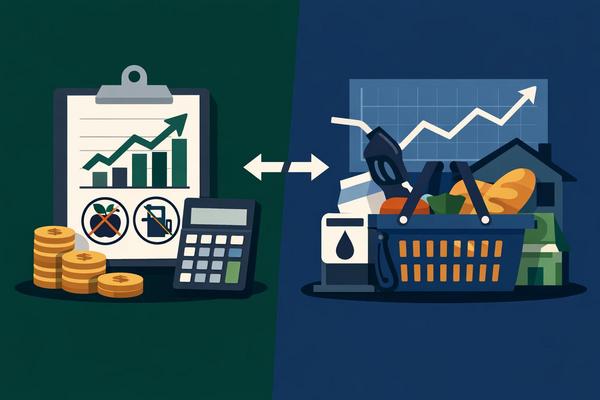
Your grocery bill is higher, gas keeps jumping around, and every inflation headline seems to contradict the last one. Once you understand the difference between headline CPI and core inflation, those headlines start making a lot more sense.
What CPI and Core Inflation Actually Mean
When you hear that inflation was up or down, the number usually starts with CPI — Consumer Price Index. It’s a broad measure of what households pay for everyday stuff: rent, food, gas, medical care, clothing, and transportation. If headline CPI rises 3% from a year ago, a typical basket of consumer prices is 3% higher than it was twelve months earlier.
Core inflation is different. It’s usually CPI without food and energy prices, because those two categories swing around a lot from month to month. A hurricane can hit energy supply. A drought can push up food prices. Oil can fall fast even when rent and services are still climbing. Headline CPI shows the full price picture, while core inflation tries to show the underlying trend — that’s the difference in plain English. Headline includes everything. Core strips out the noisiest categories to get a steadier signal.
Why the Fed Doesn’t Panic Over Every Gas Price Spike
You care about gas and groceries because you actually have to pay for them. The Fed knows that. This isn’t about pretending food and energy don’t matter — it’s about figuring out whether inflation is spreading through the whole economy or just getting pushed around by a temporary shock.
Think of it this way. Headline CPI is the weather today. Core inflation is closer to the climate trend. The Fed sets interest rates slowly and deliberately, so it cares a lot more about the trend than one hot day. If gas jumps for one month because of a supply disruption, that hurts your wallet right away — but it doesn’t always mean inflation is becoming entrenched across housing, wages, and services.
A Quick Real-Life Example
Say gas prices jump 12% because of global supply issues. Headline CPI may spike that month. But if used car prices cool off, rent growth slows, and medical services barely move, core inflation may look a lot calmer than the headline number suggests. The reverse happens too. Gas prices fall and make headline CPI look like good news, while rent, insurance, child care, and restaurant prices keep creeping up. Core inflation stays uncomfortably high even while the top-line number looks better on TV. That’s why a lower headline doesn’t always mean the inflation problem is solved.
How This Hits Your Wallet
If you’re wondering why any of this matters outside of economic debates, here’s the short answer: it affects interest rates, borrowing costs, savings yields, and how long high prices stick around. That reaches into your budget pretty fast.
When core inflation stays high, the Fed is more likely to keep interest rates higher for longer. That can mean more expensive credit card interest, higher car loan rates, mortgage rates that stay elevated, and businesses pulling back on hiring. On the flip side, it also means better yields on savings accounts and CDs than you saw a few years ago. Core inflation has a bigger influence on the rate environment shaping your financial life over the next six to twelve months than any single headline number does.
When Prices Feel Bad Either Way
A spike in gas can wreck your month, but it may fade on its own. Rising shelter costs, insurance, health care, and services tied to wage growth are a different story — those categories don’t snap back quickly. Sticky inflation is what keeps the Fed on edge, and core inflation is one way it tries to measure that stickiness. If the sticky stuff is still running hot, rate cuts may come later than people hope, which affects refinancing decisions, home shopping plans, and whether it makes sense to keep carrying high-interest debt.
What Headline CPI Still Gets Right
None of this means headline CPI is useless. It captures what you’re actually paying, including food and energy. For a lot of households — especially lower-income families — those categories take up a huge chunk of the budget. You can’t tell your kids they’re excluded from your expenses because economists call those prices volatile.
This is the tension people feel when they hear policymakers say inflation is cooling. Maybe the trend is improving under the surface. Maybe core is easing. But if your food bill is still ugly and your utility bill just jumped, it won’t feel like relief. That’s a real disconnect, not a misunderstanding on your part.
A Simple Way to Read Inflation Headlines
You don’t need to become an economics expert. You just need two basic questions when you see an inflation report: what is moving, and is it likely to stick? That frame cuts through a lot of noise.
- If headline CPI jumps because of gas, it may hit your wallet now but not change the bigger rate outlook much
- If core inflation stays elevated because rent and services are rising, the Fed may stay tough longer
- If both headline and core are cooling together, that’s usually a stronger sign that inflation pressure is easing broadly
This can help you make more grounded money decisions. If core inflation is still sticky and rate cuts keep getting pushed out, paying down variable-rate debt may deserve more attention than waiting for cheaper borrowing. If inflation is cooling broadly, it becomes easier to plan for refinancing, a home purchase, or shifting from emergency cash into longer-term savings goals.
You experience inflation in the prices you pay this week. The Fed responds to the inflation trend it thinks will still be around next year. Those are related, but they’re not the same thing — and once you see that split clearly, the headlines get a lot less confusing.
If this made sense, the next thing worth understanding is how the Fed’s rate decisions ripple into your savings account and what that means for where you park your money right now.