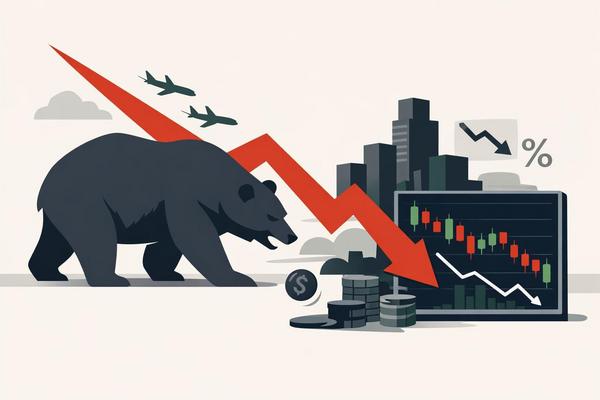
Your 401(k) is down, the headlines are ugly, and every market bounce feels like a trap.
What a Bear Market Actually Means
A bear market means stocks have fallen 20% or more from a recent high, and the mood has shifted from confidence to caution. That 20% number is the standard definition, but the real experience is bigger than a math threshold. It shows up in your retirement account, your brokerage app, business hiring freezes, and dinner-table conversations. People pull back. Companies get more careful. Consumers start second-guessing big purchases. That shift in behavior matters just as much as the market drop itself.
Most bear markets happen when investors start believing future profits will be weaker than expected. That can come from rising interest rates, a recession, stubborn inflation, a financial shock, or stocks that got too expensive and finally snapped back. The trigger changes. The pattern usually doesn’t. Optimism fades, prices fall, and fear starts driving decisions.
What Happens to Stocks During a Downturn
Stocks don’t fall in a neat straight line. They drop, bounce, disappoint you, and then often drop again — which is exactly why downturns feel so disorienting. You’ll get days when the market jumps 2% or 3% and it looks like the worst is over. Then another ugly inflation report or weak earnings season hits, and the slide starts again.
Different parts of the market get hit differently. Growth stocks often fall hard because their prices depend on future earnings, and those future earnings get discounted more heavily when rates rise or confidence drops. Tech names can get crushed fast for that reason. Smaller companies also tend to struggle because they have less financial cushion. Meanwhile, defensive sectors like utilities, consumer staples, and health care sometimes hold up better — people still pay their electric bill, buy toothpaste, and fill prescriptions even when the economy gets shaky.
In a real downturn, a few things tend to happen at once:
- High-flying stocks lose the most air
- Index funds drop because the whole market is under pressure
- Dividend stocks may fall too, just usually less
- Volatility spikes, so price swings get more dramatic
- Investors move toward cash, bonds, or safer assets
That last point is what makes bear markets feel personal. Even solid companies get dragged down when everybody wants less risk at the same time. The market doesn’t grade each stock fairly in a panic — it reprices almost everything.
How Long Does a Bear Market Last?
This is the part everybody wants a clean answer on, and the honest answer is you don’t get one. Bear markets are temporary, but temporary can mean very different things depending on the cause. Some last only a few months. Others drag on much longer, especially when the economy is dealing with deeper problems like a recession, banking stress, or a long fight against inflation.
Historically, bear markets have often lasted somewhere around a year, give or take — but averages can mislead you. They smooth over the emotional reality. One fast crash and recovery can sit in the same data set as a slow grinding decline that wears people out over years. If you’re living through one, it doesn’t feel average. It feels endless.
That’s why duration matters less than readiness. If you build your plan around the idea that a market drop should be over in a few months, you’re setting yourself up to panic when it isn’t. A downturn can outlast your patience, your confidence, and definitely the hot takes on financial TV.
Why Some Bear Markets End Faster Than Others
The length usually depends on what’s broken and how fast it can be fixed. If the market falls because investors overreacted to a short-term shock, recovery can happen relatively quickly. If the downturn is tied to a recession, job losses, falling corporate earnings, and tight credit, it takes longer — the market needs a believable path back to growth, and that doesn’t appear just because people want it to. Interest rates play a big role here too. When the Federal Reserve is still fighting inflation, it may keep borrowing costs high even while markets are hurting, which delays the easy comeback people hope for.
Why Downturns Mess With Your Head
A bear market is part math and part psychology. When your account drops month after month, your brain starts treating a temporary decline like a permanent life change. You want to sell just to stop feeling bad. That’s completely normal — and it’s also how a lot of people lock in losses at the worst possible moment.
Bear markets are painful but temporary. The real challenge is that temporary rarely feels temporary while you’re in it. It feels like maybe this time is different. Maybe the market won’t come back. Maybe you should just get out and wait for things to calm down. That instinct is understandable. It’s also expensive if you miss the recovery.
Markets often turn before the economy feels good again — that’s the part that catches people off guard. Stocks can start recovering while layoffs are still happening, confidence is still low, and headlines still sound terrible. If you wait for everything to feel safe, you usually show up late.
What This Means for Your Real Life
The practical question isn’t whether bear markets happen. It’s whether your money setup can handle one without forcing bad decisions. That means your investing plan and your day-to-day cash flow both matter. If you’re living paycheck to paycheck and also carrying market risk you can’t absorb emotionally or financially, a downturn gets a lot harder to sit through.
Here are the basics that matter during a bear market:
- Keep enough cash for near-term bills and emergencies so you don’t have to sell investments at a bad time
- Know what your 401(k) or IRA is actually invested in instead of guessing
- Match your stock exposure to your timeline, not your optimism
- Revisit high-interest credit card debt — it gets more painful when everything else is under stress
- Avoid making big portfolio changes based purely on fear
If you’re decades from retirement, a bear market is painful but not necessarily a disaster. New contributions to your 401(k) are buying shares at lower prices, which changes the long-term story even if it doesn’t make the losses fun. If you’re close to retirement, sequence risk is more serious, and your mix of stocks, bonds, and cash matters a lot more. Different situations call for different levels of caution.
Prepared Beats Optimistic Every Time
You don’t need to predict the exact bottom to handle a bear market well — you need a plan that assumes downturns will happen and may last longer than you’d like. That’s the difference between investing and gambling. Investing makes room for ugly stretches. Gambling assumes the ugly stretch won’t show up right after you place the bet. When you understand what a bear market is, how long it can last, and what it does to stocks along the way, the market still feels rough. It just feels less mysterious — and less mystery usually leads to fewer panic moves.
If this made sense, the next thing worth understanding is how recessions and bear markets overlap without actually being the same thing.