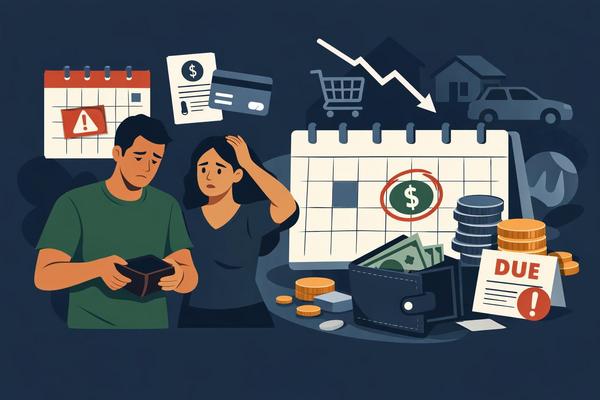
Your rent, groceries, gas, and debt payments hit fast — and somehow there’s never much left to save.
If you feel like your paycheck disappears the minute it lands, you’re not imagining it. A lot of Americans struggle to save money each month not because they’re reckless, but because their cash flow is built to keep them behind. That’s an important difference.
When people talk about living paycheck to paycheck, the conversation usually turns into income versus discipline. Either you don’t make enough, or you need to budget better. Real life is messier than that. For a lot of households, the bigger issue is timing, fixed bills, debt drag, and how every dollar already has a job before you even get a chance to save it.
It Doesn’t Always Come Down to Income
Yes, low income makes saving harder — there’s no point pretending otherwise. But plenty of people with decent salaries still feel broke by the end of the month. They earn enough on paper, yet their money flow leaves no room to breathe.
That’s why two people with similar pay can have completely different financial lives. One has lower fixed costs, no credit card balance, and a little cushion in checking. The other is carrying rent that’s too high, a car payment, rising insurance, and minimum payments on old debt. Same paycheck. Very different outcome. If your bills are rigid and your income is already spoken for, earning more doesn’t automatically turn into saving more.
Where the Money Actually Goes Each Month
Most people don’t lose their savings to one giant mistake. They lose it to a system of monthly outflows that leaves almost nothing unclaimed. Here are some of the biggest reasons why Americans struggle to save money each month.
- Housing takes too much of the check — whether it’s rent, a mortgage, utilities, or all three at once.
- Food costs are higher than they used to be, especially if you’re feeding a family or buying convenience because you’re busy.
- Transportation is expensive in ways people underestimate, from car payments to insurance to gas to repairs.
- Debt payments eat the future, especially credit cards, personal loans, and buy now, pay later balances.
- Health costs show up unpredictably through premiums, prescriptions, copays, and bills you didn’t plan for.
- Child care and family support can wipe out any margin you thought you had.
- Subscription creep and convenience spending quietly fill the cracks.
None of these categories feels optional when you’re living through them. That’s what makes the problem structural. You can cut a streaming service. You can cook more often. Those things help a little, but they usually don’t solve the bigger issue when your largest expenses are locked in and rising faster than your paycheck.
The Real Trap: Fixed Costs Plus Bad Timing
This is the part people miss. Even if your income covers your bills in theory, the timing can still wreck you. Maybe you’re paid every other Friday, but rent is due on the first. Maybe your car insurance renews the same week your credit card payment is due. Maybe one bigger grocery trip lands right before payday, and now you’re using a card to bridge the gap.
Once you start using debt to smooth out timing problems, small shortfalls turn into permanent monthly pressure. That’s how people get stuck — not with one disaster, but with repeated gaps. A late fee here. Interest charges there. An overdraft. A balance that follows you into next month. After a while, part of each paycheck is no longer paying for your current life. It’s paying for the cost of having been short last month.
When Every Bill Is Monthly but Life Is Weekly
A lot of your biggest expenses are due in chunks — rent, car insurance, day care. Meanwhile, spending on gas, groceries, school stuff, and random household needs keeps happening week by week. That mismatch matters. If you don’t have a buffer, regular life starts feeling like an emergency. And when normal expenses feel urgent, saving becomes the first thing that gets pushed aside.
Why Budgeting Often Feels Like It’s Not Working
A budget can help. It just can’t override math. If your fixed obligations are too high, a color-coded spreadsheet won’t create margin out of thin air. That’s why some budgeting advice feels insulting — you’re told to cut coffee when your real problem is that housing, insurance, and debt are swallowing half your take-home pay.
The issue usually isn’t that you don’t know where your money went. It’s that most of it was committed before the month even started. Once you see that clearly, you can stop treating this like a motivation problem and start treating it like a cash-flow problem.
What to Actually Change in Real Life
You probably can’t fix everything this month, and that’s not the goal. The goal is to create a little more breathing room in the system. Start by looking at the few categories that actually move the needle.
- List your fixed monthly costs first: housing, car, insurance, debt, phone, child care, subscriptions.
- Separate those from variable spending like food, gas, and household extras.
- Check your paydays against due dates to spot weeks where you’re always short.
- Build a small buffer in checking — even if it’s just enough to cover one bill or one grocery run.
- Focus extra money on removing one recurring pressure point, usually high-interest debt or an oversized fixed expense.
The fastest way to stop living paycheck to paycheck is usually not chasing perfection, but lowering the number of dollars already promised away. That might mean refinancing if possible, negotiating bills, moving when a lease ends, selling a car that’s crushing your budget, or using any raise to reduce debt instead of expanding your lifestyle. None of that is easy — but it’s more realistic than pretending a few small cuts will solve a structural squeeze.
If Saving Feels Impossible Right Now
Think smaller. Forget the big emergency fund target for a minute and try to create one layer of protection between you and the next shortfall. That could be $100. It could be one utility bill sitting in your account before it’s due. It could be enough to avoid putting a tire repair on a credit card. Saving starts working when it changes the flow of next month’s money — not when it looks impressive on paper.
The Bottom Line
Living paycheck to paycheck is often described like a personal failure. Most of the time, it’s really a money-flow problem. Your income comes in, fixed costs grab their share, debt fills the gaps, and savings gets whatever is left — which is often nothing. It’s not always about income. The structure of how money flows in and out is what keeps most people stuck. Once you understand that, you can stop blaming yourself for every bad month and start looking for the pressure points that actually matter.
If this clicked, the next thing worth understanding is how high-interest debt quietly reshapes your entire monthly budget.