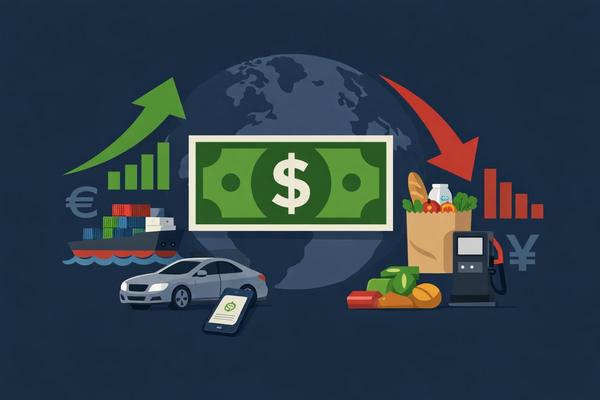
Your grocery bill, gas costs, and online prices can all shift when the dollar gets stronger or weaker — but the way it plays out in real life is a lot messier than the headlines make it sound.
If you keep hearing that the dollar is “strong,” it probably sounds like good news. A stronger dollar makes the U.S. look powerful, and in some ways it is good news. You might get a break on some imported goods. At the same time, big American companies can earn less overseas, factories can feel pressure, and the benefits don’t always show up at your local store right away.
What Does a Strong Dollar Actually Mean?
The dollar is “strong” when it buys more of another country’s currency than it used to. If one U.S. dollar gets you more euros, yen, or pesos than before, the dollar has strengthened. That matters because the U.S. buys a lot from other countries and sells a lot to them too.
When the dollar gets stronger, imported goods become cheaper for Americans, while U.S. exports become more expensive for foreign buyers. Think of it like this: if you’re shopping online from a foreign brand, your dollars stretch further. But if an American company is trying to sell tractors, software, or sneakers overseas, customers in other countries may feel like those products suddenly got pricier.
Why the Dollar Moves in the First Place
The dollar doesn’t rise or fall randomly. It usually moves because investors around the world are reacting to interest rates, inflation, economic growth, and fear. When U.S. interest rates are higher than rates in many other countries, global investors often move money into dollar-based assets like Treasury bonds, which pushes up demand for the dollar. If the U.S. economy looks steadier than Europe or China, that can boost it further. And during global uncertainty, people often treat the dollar like a safe parking spot.
A strong dollar often says as much about the rest of the world being shaky as it does about America being strong. That’s one reason the headline can be misleading. A stronger dollar isn’t always a sign that regular people are doing great.
You Notice It Most Through Imports
If the dollar strengthens, imported products should get cheaper in dollar terms. That can include electronics, clothing, appliances, furniture, car parts, and some food. Oil is a little more complicated, but currency moves can still play a role in energy prices too.
In theory, this should help cool inflation. If stores pay less to bring in goods from overseas, some of those savings can make their way to you. In real life, it’s slower and less complete than people expect. Retailers may keep part of the savings. Shipping, labor, insurance, and rent may still be high. A company might use a stronger dollar to protect its profit margins instead of cutting sticker prices.
You might notice it more when buying a TV or a laptop than when paying for daycare, rent, or a haircut. Those local service costs are driven more by wages, housing shortages, and domestic demand than by exchange rates.
When “Good News” Turns Into Pressure at Home
This is the part that gets skipped in a lot of quick explanations. A stronger dollar can hurt parts of the U.S. economy. If American goods become more expensive overseas, exporters lose business — and that affects manufacturers, farmers, and multinational companies. If a company earns money in Europe or Japan, those foreign profits are worth less when converted back into dollars, which can drag on earnings, hiring, and investment.
A stronger dollar can lower some prices for consumers while quietly squeezing workers and businesses tied to exports. You may save a little on imported stuff while someone else feels the impact through weaker demand, reduced overtime, or slower raises.
If You’re Traveling or Shopping Abroad
This is one area where a strong dollar is easier to appreciate. Your money goes further on hotels, meals, and shopping in many countries when the exchange rate moves in your favor. Even online purchases from foreign sellers can look better. Still, don’t assume everything overseas gets cheaper overnight — local inflation in those countries can offset some of the currency benefit, and credit card fees and travel demand matter too.
Where You’ll Actually Feel It Day to Day
For most people, dollar strength shows up indirectly. It’s not like your paycheck gets bigger just because the currency is stronger. The effects usually come through prices, jobs, investment markets, and interest rate expectations. Here are the places you may feel it most:
- Imported goods may rise in price more slowly, or sometimes get cheaper
- Travel abroad may become more affordable
- Big U.S. companies with overseas sales may report weaker earnings
- Export-heavy industries may face more pressure
- Inflation may cool a bit, though not evenly across your budget
If your spending is mostly rent, groceries, healthcare, insurance, utilities, and child care, a stronger dollar may not feel dramatic. If you’re buying a phone, computer, or imported car, you may notice more of the benefit. What matters isn’t whether the dollar is strong in the abstract — it’s where your money goes and how you earn it.
How to Read the News Without Overthinking It
You don’t need to track currency markets every morning. What helps is knowing how to interpret the headlines. When you hear that the dollar is up, don’t translate that into “everything is getting better.” Ask a few practical questions instead:
- Does this mostly affect imported goods or services I actually buy?
- Could it hurt industries or employers tied to exports?
- Is this happening because the U.S. economy is strong, or because the rest of the world looks weak?
- Will businesses pass savings on to consumers, or hold prices where they are?
That mindset keeps you from treating one economic indicator like a full report card. The dollar is important, but wages, housing costs, debt payments, and job security still matter more to your day-to-day life.
The Bottom Line
A stronger dollar can lower some import costs and help American travelers, which sounds like an obvious win. But it can also weigh on exports, corporate profits, and parts of the job market. The real story depends on what you buy, where you work, and how much of the savings actually reach you.
If this made sense, the next thing worth understanding is how the Fed’s rate decisions ripple into borrowing costs, savings accounts, and the dollar itself.