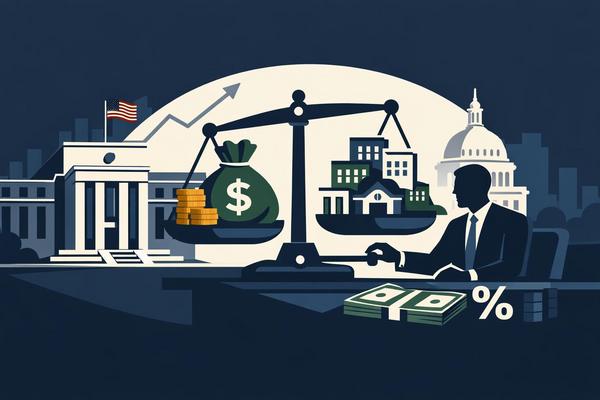
Your credit card APR is brutal, mortgage rates feel out of reach, and every Fed headline suddenly feels personal — because it is.
If the Federal Reserve feels confusing, that’s because it really is an unusual institution. It’s not just another government agency, and it’s not a normal bank either. It sits in the middle of both worlds. That’s exactly why its decisions reach into your everyday life — from car loans to job openings to how fast your savings account grows.
When people say “the Fed raised rates” or “the Fed is trying to cool inflation,” they’re talking about one of the most powerful forces in the U.S. economy. Not because it controls everything directly, but because it influences the price of money itself. Once you get that, the rest starts to make a lot more sense.
What the Federal Reserve Actually Is
The Federal Reserve is the central bank of the United States, but that label doesn’t tell the whole story. Congress created it in 1913 after years of banking panics, when people would rush to pull their money out of banks and the whole financial system would seize up. The idea was to build something stable enough to support banking, but independent enough to make tough calls without chasing every political mood swing.
The Fed has a public side and a banking side, which is why it’s hard to pin down. Its Board of Governors is a federal agency based in Washington, D.C. At the same time, it includes 12 regional Federal Reserve Banks spread across the country — New York, Cleveland, Chicago, Dallas, San Francisco, and others.
Those regional banks are set up differently from normal federal offices. Member banks hold shares in them, but not the way investors own stock in a public company. They don’t control the Fed like shareholders control a business, and they can’t cash out for a profit. This setup is part of why the Fed is often described as “independent within government” — not fully outside it and not fully inside it either.
Why the Fed Has So Much Influence Over Your Life
Think about what happens when borrowing gets more expensive. People put off buying homes. Businesses slow down hiring. Credit card balances get harder to carry. At the same time, savings accounts and CDs finally start paying something decent. That one shift changes behavior all over the country.
The Fed doesn’t set the rate on your mortgage or your Visa card directly. What it controls is a key short-term interest rate called the federal funds rate — the rate banks charge each other for overnight lending. It sounds technical and far away, but it becomes the starting point for most other rates in the financial system. When the Fed raises that benchmark, borrowing gets more expensive across the board. When it cuts, money gets cheaper and easier to access. That ripple hits banks, bond markets, business loans, auto loans, home equity lines, and eventually your wallet.
The Fed’s Main Jobs Are Simpler Than They Sound
- Manage monetary policy to support stable prices and strong employment
- Supervise and regulate many banks
- Help keep the financial system stable during stress
- Provide banking services to the U.S. government and financial institutions
- Support the payment system that moves money around the economy
The part you hear about most is monetary policy. That’s where the Fed tries to balance two big goals: keeping inflation under control and supporting maximum employment — what people call the Fed’s “dual mandate.” Those goals can pull against each other. If inflation is running hot, the Fed may raise rates even if that slows hiring. If unemployment is climbing and inflation is calm, it may cut rates to encourage borrowing and spending. That’s why the Fed gets blamed no matter what it does. Somebody always feels the downside first.
How the Fed Actually Works in Practice
The Fed works mostly by sending signals and changing incentives, not by ordering anyone around. The key decision-makers sit on the Federal Open Market Committee, or FOMC — the seven members of the Board of Governors plus a rotating group of regional Fed bank presidents, with New York always holding a vote. They meet regularly to decide whether rates should go up, down, or stay put.
Once the FOMC sets policy, financial markets react fast. Banks adjust. Investors adjust. Businesses adjust. Consumers eventually adjust too, usually after they notice a new loan quote, a higher monthly payment, or a better return on their cash savings.
There’s also a huge expectations game here. If the Fed signals it’s serious about fighting inflation, companies may pull back on price hikes and workers may lower expectations for rapid wage increases. If markets believe rate cuts are coming, borrowing conditions can loosen before the Fed even acts. A lot of the Fed’s power comes from credibility, not just action.
Why Being Independent From Politics Matters
If elected officials fully controlled interest rates, there’d be constant pressure to keep money cheap in the short run. That might feel good before an election, but it can create bigger inflation problems later. The Fed’s structure gives it room to make unpopular calls when the economy needs them.
That doesn’t mean the Fed is unaccountable. Congress created it and can change the law. Fed leaders testify before Congress regularly. Its decisions are watched constantly by markets, journalists, economists, and the public. Still, it has more independence than a cabinet department, and that separation is a big part of how it operates.
What Fed Decisions Mean for Your Money
You don’t need to memorize Fed jargon, but you do need to understand which direction rates are moving.
If the Fed is raising rates, expect pressure on variable-rate debt — credit cards, some personal loans, and new borrowing in general. Housing often cools because mortgage payments jump. Businesses get more cautious, which can show up in hiring and wage growth. If the Fed is cutting rates, borrowing may get easier over time, which can help homebuyers, small businesses, and anyone refinancing debt. The tradeoff is that your savings account yield may drift lower too.
- If you’re carrying high-interest debt, Fed hikes are a signal to pay it down faster if you can
- If you’re shopping for a home or car, rate moves matter almost as much as the sticker price
- If you keep cash savings, higher-rate periods can finally reward you for parking money in the bank
- If you’re worried about your job, pay attention to whether the Fed is actively trying to cool the economy
The Fed isn’t fully government and it isn’t fully banking — it’s the bridge between them, and that’s why it has so much control over the U.S. economy. When it changes rates, it’s changing financial pressure throughout the entire system. That pressure eventually lands somewhere in your life.
If this made sense, the next thing worth understanding is how the Fed’s rate decisions ripple directly into your savings account and what you’re actually earning on your cash.