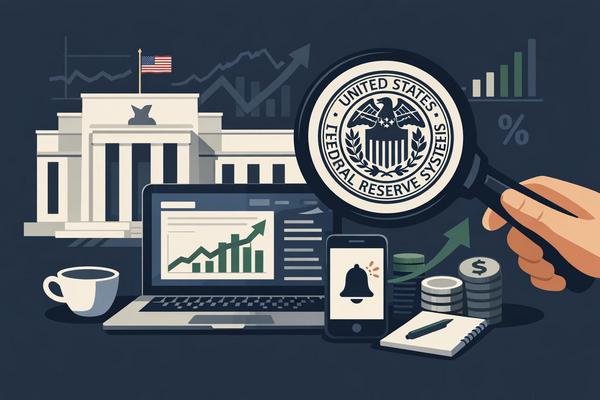
Your mortgage rate quote changed again, your credit card APR is still brutal, and every Fed headline reads like it was written for a Wall Street trading desk. You’re not alone in that.
You Don’t Need to Read Every Fed Headline
The Federal Reserve talks in a style that makes simple ideas sound way more complicated than they really are. Meanwhile, the stuff you actually care about is pretty basic. Are borrowing costs going up or down? Will savings rates stay decent? Is inflation cooling off enough that prices stop jumping every time you hit the grocery store or renew a lease?
The good news is you don’t need a finance degree to follow Federal Reserve news. You just need a simple filter for what matters, where to look, and how to connect it to your own money.
What the Fed Is Actually Doing
Here’s the everyday version. When inflation is running hot, the Fed raises interest rates to make borrowing more expensive. That tends to slow spending, cool down some business activity, and take pressure off prices. When the economy looks weak or unemployment is rising, the Fed can cut rates to make money cheaper and encourage more borrowing and spending.
This matters because those moves ripple outward. Credit card APRs, car loans, mortgage rates, savings account yields, business hiring plans — all of it can react to Fed decisions. The Fed doesn’t directly set your mortgage rate or your auto loan rate, but it strongly influences the whole rate environment. That’s why one Fed meeting can end up affecting your monthly payment, your job options, and how far your paycheck goes.
The Simple Way to Track Fed Decisions
You can follow the Fed with three things: the decision, the tone, and the market reaction.
That’s it. You don’t need to read fifty takes on social media or decode every economist thread on X. Start with the actual decision — did the Fed raise rates, cut rates, or leave them alone? Then check the tone. Was the statement more worried about inflation, or more worried about slower growth and rising unemployment? Even when rates stay the same, the tone can signal what’s coming next. After that, look at the market reaction. Did Treasury yields jump or fall? Did mortgage rate coverage start talking about rates easing? Did the stock market take the message as good news or bad?
You’re not trying to become a trader here. You’re just using the reaction as a shortcut to understand how the rest of the financial world heard the message.
Where to Look Without Getting Buried
Here’s a simple tracking routine that works.
- Check the Federal Reserve’s official rate statement after each meeting.
- Read a short plain-English summary from a major financial or national news outlet.
- Skim the chair’s press conference recap only if you want more detail.
- Skip the hot takes until you know the actual decision first.
The official statement tells you what happened. The plain-English summary helps translate what changed. The press conference gives extra context, but for most people it’s optional. If you want to keep this really simple, mark Fed meeting dates on your calendar and check coverage only on those days and the morning after. You don’t need to monitor every rumor in between.
What Fed News Usually Means for Your Wallet
Here’s the practical translation for the three most common outcomes.
When the Fed Raises Rates
Borrowing stays expensive or gets more expensive. That means higher costs on credit cards, tougher car loan math, and less relief for homebuyers. Savings yields may stay attractive for a while. If you’re carrying revolving debt, this is a reminder to pay close attention to what that interest is actually costing you.
When the Fed Holds Rates Steady
A hold doesn’t always mean nothing changed. The statement might suggest the Fed is waiting for more inflation data, or it might hint that cuts are still far off. For you, that means current borrowing conditions may stick around longer than you hoped. If you were counting on quick relief on loans, a hold can still be meaningful news.
When the Fed Cuts Rates
That can eventually help with borrowing costs, though not always right away. Credit cards may stay painful for a while, but new loan rates can improve over time. Savings account yields will likely start drifting down, so if you have cash parked in a high-yield savings account or a CD, this is when it makes sense to watch for lower returns.
The bigger point is this — Fed news isn’t just about the economy in some abstract way. It can shape real decisions about refinancing, paying down debt, locking in a CD rate, shopping for a home, or deciding whether now is a smart time to take on a car payment.
A Two-Minute Filter You Can Use Every Time
Every time the Fed makes news, run it through these four questions.
- What did they do with rates?
- What problem seemed bigger in their statement — inflation or a slowing economy?
- What part of my financial life is most sensitive to rates right now?
- Do I need to act now, or just keep watching?
That last question matters more than people think. Not every Fed move requires you to do something. Sometimes the right move is just understanding why your savings rate, mortgage quote, or credit card bill is behaving the way it is — and that alone can keep you from making a rushed decision you’ll regret.
Say you’ve got credit card debt and a high-yield savings account. If the Fed signals rates may stay higher for longer, the useful takeaway isn’t to panic about the stock market. It’s to recognize that your card interest is likely to stay brutal while your savings yield may hold up a bit longer. That points you toward debt payoff math. Or maybe you’re planning to buy a house. If the Fed holds rates but sounds less worried about inflation, that could be an early sign that lower rates may come later — even if mortgage relief isn’t immediate. You’re not trying to time the market perfectly. You’re just understanding the direction of things. That’s the win.
Why a Simple Filter Beats Constant News Consumption
The internet makes it easy to confuse volume with understanding. You can watch ten commentators argue about one Fed sentence and still come away with nothing useful. Or you can track a few core signals and know exactly why your financial world feels tighter or looser right now.
Once you know where to look and what to ignore, the whole thing gets a lot less intimidating.
The Fed matters because it sets the tone for borrowing costs, savings yields, and broader economic conditions — all things that show up in your actual life. You don’t need a finance degree to follow it. You just need the right filter.
If this made sense, the next thing worth understanding is how the Fed’s rate decisions ripple into your savings account and what that means for where you’re parking your cash.