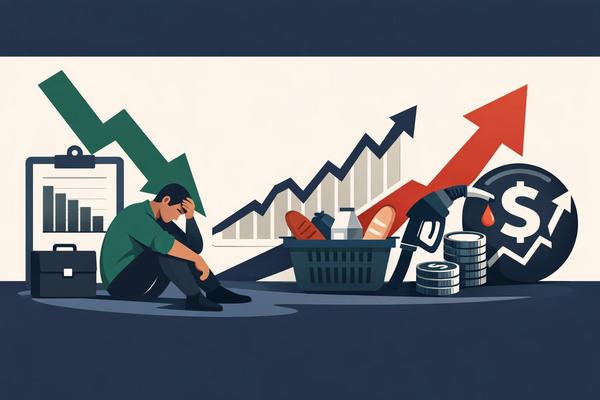
Your grocery bill is higher, hiring signs are everywhere, and somehow prices keep climbing anyway.
If you’ve looked around and thought, “How can inflation still be a problem when so many people are working?” — you’re asking the right question.
The short version is pretty simple. When unemployment is low, employers have to fight harder for workers, wages go up, people spend more, and some of that pressure ends up showing up in prices.
That doesn’t mean every price increase comes from a strong job market. Gas spikes, supply chain messes, rent shortages, and company pricing decisions all play a role. Still, the relationship between the unemployment rate and inflation is one of the basic ideas that helps explain why the economy can feel good and expensive at the same time.
Why a Strong Job Market Can Make Life More Expensive
Low unemployment sounds like an obvious win — and in a lot of ways, it is. More people have paychecks, fewer workers are sitting on the sidelines, and it’s usually easier to find a job or ask for a raise.
The tradeoff is that when nearly everyone who wants a job already has one, businesses run short on workers. Restaurants need servers, warehouses need drivers, hospitals need nurses, and construction companies need crews. When there aren’t enough people to fill those roles, employers usually have two options: raise pay or watch positions stay open.
Higher wages are great for workers, but they also raise costs for businesses. Some companies absorb those costs for a while. Others pass them on through higher prices. At the same time, workers with better paychecks tend to spend more — on takeout, travel, cars, home repairs, and everyday stuff like groceries and clothes. If demand rises faster than supply can keep up, prices get pushed higher.
What the Unemployment Rate Is Really Telling You
The unemployment rate sounds straightforward, but it’s really a snapshot of how tight the labor market is. A low rate usually means most people who want jobs can find them — and that employers don’t have a deep bench of available workers to pull from.
You see it in job openings. You hear it in business owners complaining they can’t hire. You notice it when fast-food chains advertise starting pay on the drive-thru sign.
Low unemployment doesn’t cause inflation by magic — it creates conditions where wage and spending pressure can build. This is why economists watch the labor market closely when trying to figure out where inflation might go next. If unemployment is falling and wages are rising fast, that’s often a sign the economy is heating up. If unemployment rises and hiring slows, inflation pressure tends to cool because households get more cautious and businesses lose some pricing power.
A Quick Real-Life Example
Picture a local economy where almost everyone who wants work already has a job. A grocery store needs cashiers, a delivery company needs drivers, and a hotel needs housekeepers. To fill those spots, each employer offers a little more money. Workers now have bigger paychecks, which helps them cover rent, go out more, or finally replace an old car.
That extra spending is good for business — but now the grocery store has higher payroll costs, the delivery company has higher labor costs, and the hotel does too. Some of those costs get passed along. Hotel rates rise, delivery fees creep up, and grocery prices edge higher. That’s the relationship in plain English.
When the Pattern Breaks Down
If this were the only thing driving inflation, the economy would be easy to read. It isn’t. Prices can rise even when the job market isn’t especially hot — think oil price spikes, a drought hitting food supply, or rents surging because there aren’t enough apartments. Those things push inflation up without much help from wages.
On the flip side, low unemployment doesn’t always lead to runaway inflation. Productivity can improve, businesses can invest in technology, and consumers can pull back even while they still have jobs. The basic pattern is real, but it’s not a one-button explanation for every inflation story.
This is also why you hear economists talk about core inflation, wage growth, job openings, and consumer spending all at once. They’re trying to figure out whether inflation is coming from broad demand, supply shocks, or some mix of both.
Where the Fed Fits Into All of This
Once you understand the connection between low unemployment and inflation, the Federal Reserve makes a lot more sense. The Fed’s job isn’t to make everyone happy in the short run — it’s trying to keep inflation under control while supporting a healthy labor market. That’s a tough balance.
When the economy runs too hot, the Fed often raises interest rates. Higher rates make borrowing more expensive, which can slow down business investment, home buying, and consumer spending. If demand cools, hiring usually cools too, which reduces wage pressure and helps bring inflation down.
This is why strong employment news can sometimes make Wall Street nervous instead of excited. If hiring stays too strong for too long, investors may assume the Fed will keep rates higher because inflation could stick around — and that feels backward until you realize a red-hot job market can also mean the economy still has too much spending momentum behind it.
What This Means for Your Money
You don’t need to be an economist to use this in real life. You just need to know what signals matter.
If unemployment is very low and wages are climbing fast, there’s a decent chance inflation pressure could hang around — and that affects your budget, savings, debt, and career decisions. A few practical ways to think about it:
- If the job market is tight, you may have more leverage to ask for a raise or shop around for better pay.
- If inflation is still running hot, a raise that looks good on paper may not stretch as far at the grocery store or when your lease renews.
- If interest rates stay high because the Fed is fighting inflation, credit card balances and new loans get more expensive fast.
- Watch wage growth and inflation together — not separately — when you’re budgeting.
The biggest mistake is looking at a strong job market and assuming your finances are automatically getting easier. Sometimes more jobs and higher wages are exactly what households need. Other times, rising prices eat up the benefit.
The real question isn’t just whether unemployment is low — it’s whether your income is outrunning inflation.
The Bottom Line
When unemployment is low, that’s usually a sign the economy is strong and workers have more bargaining power. Once employers have to compete hard for workers, wages rise, spending grows, and businesses face more pressure on costs and demand at the same time. That’s when inflation can start to build.
If this made sense, the next thing worth understanding is how the Fed’s rate decisions ripple into your savings account and what that means for everyday borrowing costs.