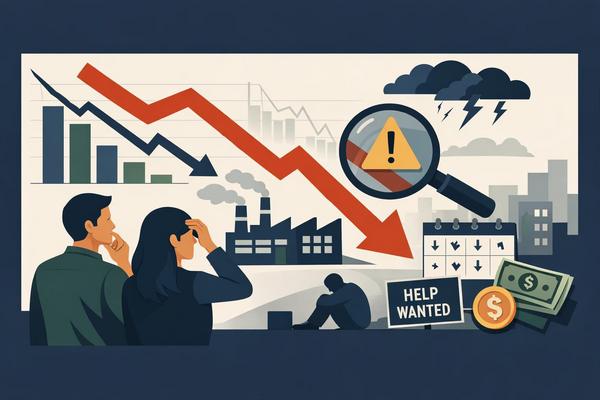
Your hours feel less secure, layoffs are in the news, and you’re wondering if the economy is about to get rough.
A recession is one of those words people throw around long before anyone agrees it’s actually happening. That matters because by the time a recession is officially recognized, regular people have usually been feeling it for months.
If you’re trying to make smart money decisions, the real question isn’t just what a recession is — it’s how to spot the slowdown early enough to prepare before it hits your paycheck, your job options, or your monthly budget.
What a Recession Actually Means
The simple definition of a recession is a broad slowdown in economic activity. That usually shows up in a few places at once: businesses sell less, employers hire less, workers lose hours or jobs, and people pull back on spending.
You’ll often hear the rule of thumb that a recession means two straight quarters of negative GDP growth. That’s useful, but it’s not the full story. In the U.S., recessions are officially dated by the National Bureau of Economic Research, or NBER. They look at a wider set of data — income, employment, industrial production, and consumer spending.
In plain terms, a recession is when the economy weakens enough that a lot of people feel it at the same time. It’s not just the stock market having a bad month. It’s not just inflation being annoying. It’s a broader pullback that affects jobs, business activity, and household finances across the country.
Why Nobody Announces a Recession While It’s Happening
There’s no siren that goes off the minute the economy enters a recession. No one sends you a text saying, starting today, conditions are officially worse. The reason is simple: economic data comes in slowly, and a lot of it gets revised later. GDP reports are estimates. Jobs reports get adjusted. Consumer spending numbers take time to build. Even the experts are piecing the picture together after the fact.
That’s why a recession is usually confirmed after it has already started — not before.
For regular people, waiting for an official label isn’t all that useful. If your company freezes hiring, your landlord still wants rent on the first. If your industry starts cutting staff, your credit card balance doesn’t care whether economists have made it official yet. That’s why early signals matter more than headlines.
Warning Signs That Usually Show Up First
You don’t need to predict the exact month a recession starts. You just need to recognize when the economy is losing momentum — that gives you time to adjust while your options are still better.
The Job Market Starts Cooling Off
One of the biggest warning signs is a weaker labor market, and it doesn’t always start with mass layoffs. Sometimes it starts smaller: job openings shrink, hiring takes longer, overtime disappears, and temp workers get cut first. Then layoffs spread beyond a few headlines. When employers get cautious, that’s often one of the clearest early signals that demand is slowing down. If you’re seeing more people talk about rescinded offers, longer job searches, or hiring freezes, pay attention — those shifts often show up before any official recession call.
Consumers Start Pulling Back
The U.S. economy runs heavily on consumer spending, so when households get nervous, businesses feel it fast. People skip big purchases, hold onto older cars longer, eat out less, and trade down at the grocery store. They put off vacations, home upgrades, and anything that feels optional. Sometimes it’s not even a choice — high prices, rising debt payments, or stalled income force the pullback.
When millions of households tighten up at once, the slowdown can feed on itself. Less spending means less business revenue, which often means less hiring, fewer raises, and more cuts.
Businesses Shift Into Defensive Mode
Companies usually react before the average person sees the full picture. If executives think sales are about to weaken, they start protecting cash — smaller inventory orders, reduced expansion plans, delayed equipment purchases, lower hiring. Public companies may talk about softer demand on earnings calls. Small businesses may quietly cut shifts or stop replacing workers who leave. Manufacturing slows, freight demand drops, construction cools off. When businesses move from growth mode to protection mode, they’re responding to real signals that customers and the broader economy are losing steam.
Your Finances Feel It Before the Headlines Say So
Most people don’t experience a recession through GDP charts. They experience it through daily life. A friend gets laid off. Your bonus gets cut. Your side hustle brings in less. Rent keeps rising while your income stalls. Credit gets harder to qualify for. Suddenly your margin for error is gone.
That’s why the practical definition of a recession is often simple: life feels less stable, and money gets tighter in more households at once. The official data matters, but your preparation shouldn’t depend on waiting for economists to settle the debate.
What to Do When the Warning Signs Start Showing Up
You don’t need to panic. You do want to get realistic fast. If recession risk looks like it’s rising, focus on flexibility — that usually matters more than trying to outguess the market.
- Build or rebuild your emergency fund, even if you’re starting small.
- Pay close attention to high-interest credit card debt.
- Delay major purchases if they’d leave you cash-poor.
- Update your resume before you urgently need it.
- Strengthen work relationships and keep an eye on your industry’s hiring trends.
- Cut recurring expenses you wouldn’t miss much if your income dropped.
The goal isn’t to hide from a recession. It’s to give yourself more room if the economy weakens and your paycheck gets less predictable. An extra few hundred dollars in savings, a lower monthly bill, or a more current resume can make a rough stretch a lot easier to get through.
The Part Most People Miss
A recession isn’t a ceremony — it’s a process. The economy starts weakening, warning signs pop up, and only later does the official label catch up. Arguing over whether we’re technically in a recession can miss the point entirely. By the time it’s announced, it’s already here — and knowing the signals beforehand is what gives you time to prepare.
If this made sense, the next thing worth understanding is how rising unemployment changes everything from wage growth to credit card delinquencies.