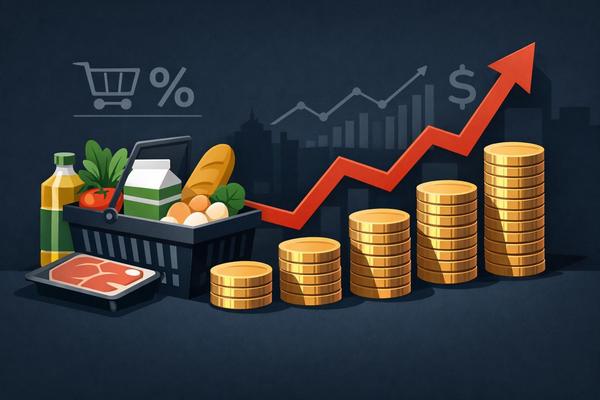
Your grocery bill is higher, your rent went up, and even a quick Target run feels more expensive than it did a year ago. You’re not imagining it.
When everyday prices keep climbing in America, that’s inflation showing up in your real life — not just in some economic report on TV. It hits the stuff you buy every week first, because those are the things you notice right away: eggs, cereal, ground beef, paper towels, gas, school lunch stuff, and the random basics you swear used to cost less.
The frustrating part is that it rarely feels dramatic all at once. It feels like a few extra dollars here, a smaller package there, and one more moment at the checkout where you think — how is this total that high?
Why Your Cart Costs More Even When You’re Buying the Same Stuff
Prices usually rise when the cost of getting goods to you rises. That sounds simple, but a lot is packed into it. Farmers pay more for feed, fuel, fertilizer, and labor. Food manufacturers pay more for ingredients, packaging, warehouse space, and shipping. Grocery stores pay more for rent, refrigeration, wages, insurance, and trucking. By the time that box of cereal reaches your cart, every step along the way may have gotten more expensive.
Companies don’t usually eat all those extra costs forever — they pass at least some of them on to you. That’s a big reason grocery prices rising has become such a normal part of daily life. Even if one piece of the supply chain gets better, another one may still be expensive. Diesel might stay high. Wages may stay up. Insurance costs may rise. Interest rates can make borrowing more expensive for businesses too, and those costs eventually show up on the shelf.
It’s Not Just Food — It’s the Whole Cost Structure Underneath
A lot of people hear “inflation” and think it means stores are just charging more because they can. Sometimes companies do protect their margins when they see customers getting used to higher prices. That’s real. But the bigger story is that the entire system underneath everyday goods has gotten more expensive.
Think about a loaf of bread. It’s not just flour. It’s wheat prices, trucking, labor at the bakery, plastic packaging, electricity, equipment maintenance, store overhead, and the financing costs of running the business. When everyday prices keep increasing in America, it usually means the pressure is broad — not isolated to one product.
That’s why inflation feels so personal. You can switch brands, skip snacks, or buy store labels, but if the whole cost structure is rising, your total still ends up higher than you expected. This is also why people feel poorer even if they’re still working and getting paid. If your paycheck goes up 3% but your real-world costs go up 5% or 6%, you didn’t really get ahead — your money just lost some buying power.
Why Prices Don’t Fall Back the Way People Hope
This part catches a lot of people off guard. They assume that once inflation cools down, prices should go back to where they were. Usually, that’s not how it works. Lower inflation means prices are still rising, just more slowly — it does not mean prices are returning to 2019 or 2021 levels. Once businesses reset prices higher, those prices often stick unless demand weakens hard or the economy runs into real trouble.
That’s why the weekly grocery shock can linger even after headlines say inflation is easing. You’re hearing about the speed of price increases slowing down, not a full rewind. For a lot of households, that still feels terrible because the new baseline is already expensive.
What’s Really Happening When Your Budget Feels Tighter Every Month
Inflation changes your budget in obvious ways and sneaky ways. The obvious part is paying more for groceries, gas, rent, and utilities. The sneaky part is that rising basic costs leave less room for everything else. You’re not just spending more at the store — you may be carrying more on a credit card, saving less, putting off car repairs, or cutting back on your 401(k) contributions because the cash has to go somewhere.
Inflation isn’t just a headline — it’s the reason your cart costs more every single week and your financial breathing room keeps shrinking. That’s the part policymakers talk about in percentages, but families live in actual tradeoffs. You skip name brands. You compare stores. You buy less meat. You delay replacing things that need replacing. And after all that, the total can still feel ridiculous.
What You Can Do When Prices Keep Moving Against You
You can’t control inflation, but you can respond to it more clearly once you understand what’s going on. The goal isn’t to outsmart the entire economy — it’s to protect your cash flow and make fewer money decisions on autopilot. Here are a few practical ways to deal with rising everyday prices:
- Track your true grocery baseline for a month. Not what you think you spend — what actually leaves your account.
- Separate essentials from habits. Milk, produce, and lunch food are one thing. Toss-in extras are where grocery creep hides.
- Watch unit prices, not sticker prices. Smaller packages and shrinkflation can make a “deal” more expensive than it looks.
- Batch your shopping. Fewer trips usually means fewer impulse buys.
- Audit subscriptions and recurring charges. Inflation hurts more when old monthly charges keep quietly draining your account.
- Build a little margin where you can. Even an extra $25 to $50 left unspent each pay period helps when basics keep climbing.
None of this magically makes eggs cheaper. It does help you stay honest about where your money is going — and that matters, because inflation can make people feel financially disorganized when the real issue is that prices moved faster than their income did.
The Bottom Line Most People Already Feel
If your budget feels harder than it used to, that feeling has a real cause. It’s not that you suddenly forgot how to shop. It’s not just one greedy company or one bad month. Everyday prices keep increasing in America because inflation raises costs across the system, and those higher costs eventually land in your cart, your bills, and your monthly budget. Groceries are where the economy gets personal — you don’t need a chart to know what inflation is doing. You can see it every time the total flashes on the register.
If this made sense, the next thing worth understanding is how interest rates affect your credit cards, savings accounts, and monthly payments.