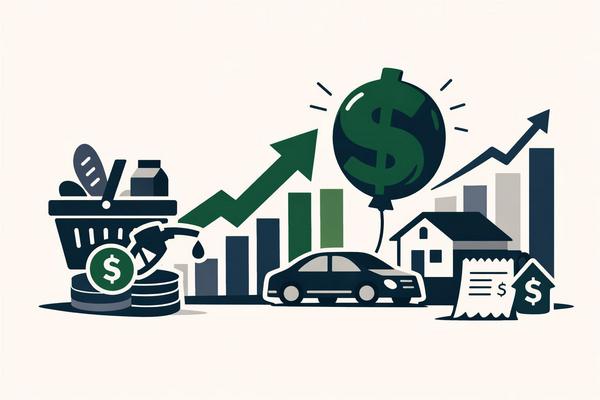
Your grocery bill is higher, your rent went up, and your paycheck didn’t move much — that’s not bad luck, that’s inflation.
When people ask what inflation is, they usually aren’t asking for an economics lecture. They’re trying to understand why life feels more expensive even when they’re buying the same stuff.
Inflation is the gradual rise in prices over time, which means each dollar you earn buys a little less than it used to. That’s the simple explanation of inflation for beginners.
It’s not always dramatic. Most of the time, it’s quiet — you notice it when eggs cost more, when your fast food order jumps a few bucks, or when your rent renewal hits your inbox and makes your stomach drop.
The important part isn’t just that prices go up. It’s that your money loses purchasing power. That’s the real story.
What Does Inflation Actually Mean in Real Life?
Think about a $20 bill. Inflation doesn’t change the number printed on it — it changes what that $20 can do for you. A few years ago, maybe it covered a couple bags of groceries, a basic takeout meal for two, or enough gas to get through the week. Now it may not stretch nearly as far.
That’s why people say inflation erodes your buying power. Erode is the right word because it usually happens slowly. Like water wearing down rock, it doesn’t always feel obvious day to day. Then one month you look at your budget and realize the basics are eating up way more of your paycheck than they used to.
If your income rises at the same pace as prices, inflation doesn’t hit as hard. If your income stays flat while prices climb, you feel poorer even if your paycheck is technically the same.
Why Do Prices Keep Going Up?
There isn’t just one reason. Inflation usually comes from a mix of forces moving through the economy at the same time — strong consumer spending, higher costs for wages and shipping, supply shortages, rising energy prices. When fuel gets more expensive, shipping gets more expensive, and then a whole chain of other things follow.
At the most basic level, inflation happens when the cost of goods and services across the economy keeps rising. Here are a few common drivers:
- Consumers are spending more, so businesses can charge more
- Rent, labor, materials, and transportation costs go up
- Supply shortages make everyday items harder to get
- Energy prices rise, pushing up costs across the board
- More dollars are chasing the same amount of goods
That last point sounds abstract, but the everyday version is simple. If fewer apartments are available and more people need a place to live, rent goes up. If more dollars are chasing the same amount of groceries, prices go up. It’s basic supply and demand playing out across your whole budget at once.
When a National Statistic Becomes a Household Problem
This is where a lot of people get tripped up. Inflation sounds like a number the government tracks, but you feel it at the kitchen table — when your paycheck lands and most of it is already spoken for, or when your savings account balance looks okay but what that money can actually buy keeps shrinking.
You may be doing the same job, driving the same car, and shopping at the same stores, yet your budget suddenly feels tighter. Nothing about your effort changed. The value of your money did.
This hits hardest when most of your income already goes to necessities. If you’re spending a big share of your paycheck on housing, food, gas, insurance, and child care, even moderate inflation can throw off your whole month. You have less room to absorb higher prices. That’s also why inflation can feel unfair — it doesn’t hit every household the same way. Retirees, renters, low-income families, and anyone living paycheck to paycheck usually feel it first.
A Quick Example That Makes It Click
Say you bring home $4,000 a month after taxes. Last year, your basic expenses looked like this:
- Rent: $1,400
- Groceries: $450
- Gas: $180
- Utilities: $200
- Insurance: $220
That’s $2,450. This year, those same categories cost:
- Rent: $1,500
- Groceries: $520
- Gas: $220
- Utilities: $230
- Insurance: $250
Now you’re at $2,720. That’s $270 more every month for roughly the same life. If your income didn’t rise by at least that much, the extra money has to come from somewhere — usually less saving, more credit card use, fewer extras, or putting off something important.
What You Should Actually Do With This
Understanding inflation won’t make prices fall, but it helps you make smarter money decisions. The biggest mistake is thinking in fixed dollar amounts for too long. If you’re still budgeting like groceries, rent, or your emergency fund target should stay where they were three years ago, you’re planning with stale numbers.
You need to think in terms of buying power, not just dollar amounts. That means rechecking your budget instead of assuming old numbers still work, asking whether your income is keeping up with rising costs, and adjusting savings goals when the cost of life changes. If your emergency fund used to cover three months of expenses but your monthly costs have climbed significantly, that same dollar amount covers less time now. If you got a 2% raise while your core expenses jumped more than that, you didn’t move ahead — you just lost ground more slowly.
Inflation Isn’t Always a Crisis, But It Always Matters
A little inflation is normal in a growing economy. What matters is the pace. When inflation runs hot, it squeezes households fast. When it’s lower, it still chips away at your money over time.
Either way, it’s the slow, invisible force that erodes what your dollars can actually buy. Once you see it that way, a lot of money decisions make more sense — why wages matter, why savings need context, why retirees worry about fixed income, and why the Fed gets so much attention when prices start climbing too fast.
Inflation isn’t mysterious once you strip away the jargon. It’s what happens when the cost of living rises and your money can’t keep up.
If this made sense, the next thing worth understanding is how the Fed’s interest rate decisions ripple into your savings account and your monthly bills.