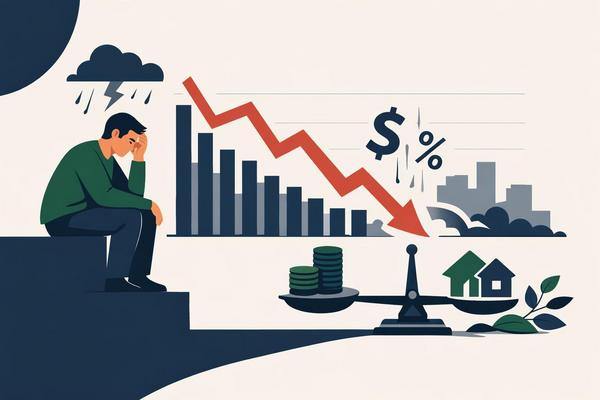
Your account balance is down, the headlines sound apocalyptic, and every part of you wants to do something right now.
When the stock market drops hard, it doesn’t feel like a normal part of investing. It feels like you’re watching your future shrink in real time. If you check your 401(k), IRA, or brokerage account and feel your stomach drop, you’re not being irrational — you’re reacting like a human being.
The problem is that market downturns turn normal human instincts into expensive investing mistakes. You want safety, clarity, and control. The market offers none of that in the moment. That’s why people sell after big declines, stop contributing when prices are lower, or jump into whatever looks “safe” after the damage is already done. Those decisions usually feel smart in the moment. Later, they often look like the exact moves that hurt long-term results.
Why Market Drops Mess With Your Head
Your brain reads a falling portfolio like a real-world emergency. If your account drops 20%, your body doesn’t calmly say, “This is a temporary repricing of productive assets.” It says, “Fix this now.” That’s loss aversion in plain English — losses feel worse than gains feel good. A $50,000 drop can stick in your head a lot more than the years of steady gains that came before it.
Then the news makes it worse. Financial media is built around urgency. Red banners, breaking news alerts, recession talk, layoffs, rate hikes, war, banking stress — all of it lands at once. Even if your actual plan hasn’t changed, the environment around you starts screaming that it should.
That’s how temporary price declines get turned into permanent investor damage. The biggest risk in many downturns isn’t just the market falling — it’s you locking in losses, then missing the rebound because you’re waiting to feel safe again. And the market usually starts recovering before the economy feels normal. That’s one reason emotional investing can be so costly.
What a Downturn Actually Is
A market drop is not automatically a sign that long-term investing stopped working. It’s the price you pay for investing in assets that grow over time. Stocks don’t go up in a straight line. They reprice constantly based on earnings, interest rates, fear, optimism, and a thousand other things. Sometimes those repricings are brutal. That’s not a glitch — that’s the deal.
Over long periods, the stock market has rewarded investors because businesses grow, profits compound, and the economy keeps adapting. But that long-term return comes with stretches that feel awful while you’re living through them. You don’t get the long-term upside without surviving the short-term pain.
Your return isn’t shaped only by what you own. It’s shaped by how you behave when owning it gets uncomfortable. Downturns feel like emergencies, but they’re actually the moments that define long-term investment outcomes. If you keep buying through lower prices, stay diversified, and avoid panic selling, you give compounding a chance to work. If you bail out near the bottom, you interrupt the process at the worst possible time.
So Your Portfolio Is Falling — What Do You Actually Do?
You don’t need a clever move nearly as much as you need a repeatable plan. During a downturn, the goal isn’t to outsmart the market by the hour. The goal is to avoid decisions you’ll regret once the panic fades. That usually means getting very boring, very fast.
Check Your Allocation, Not the Headlines
If your portfolio is down more than you can emotionally or financially handle, the problem may not be the downturn itself — it may be that you were taking more stock risk than you realized. A 90% stock portfolio behaves very differently from a 60/40 mix when things get ugly. Look at what you own and ask whether your allocation still matches your timeline, cash needs, and risk tolerance. Make allocation decisions based on your life, not this week’s fear.
Keep Contributing If Your Income Is Stable
For a long-term investor, lower prices aren’t automatically bad news — they mean new contributions are buying more shares. That’s hard to appreciate when your balance is falling, but it’s how downturns can actually help future returns. If you’re still getting a paycheck and your emergency fund is in decent shape, keep those 401(k) or IRA contributions going. Stopping contributions during a drop often means buying less when assets are cheaper and more when they’re expensive again.
Build a Wall Between Investing and Short-Term Cash
A lot of panic starts when money is in the wrong bucket. If your emergency fund is thin, or you might need investment money for rent, a car repair, or a medical bill in the next year or two, market volatility hits differently. That’s not weakness — that’s a planning issue. Keep near-term cash needs in cash or cash-like savings, not in stocks. That way, a market drop doesn’t force you to sell investments at the worst time just to cover real life. The more secure your cash cushion is, the easier it is to let long-term investments stay long term.
The Mistake People Make After the Drop
A lot of investors think the danger is selling in panic. That’s part of it. The other danger is failing to get back in. Someone sells after a big decline, tells themselves they’ll reinvest when things settle down, then waits. And waits. By the time the headlines sound better, stocks have often already moved up a lot.
Missing just a handful of the market’s strongest recovery days can wreck long-term returns. Those big up days tend to show up when things still feel shaky — you usually don’t get a clean all-clear signal. That’s why trying to time both the exit and the reentry is such a tough game. The market doesn’t reward you for feeling ready. It rewards you for staying invested through periods when ready is the last thing you feel.
A Simple Framework for the Next Time This Happens
Keep it simple enough to actually follow under stress:
- Don’t make major portfolio changes on the worst day of a selloff.
- Review your asset allocation and rebalance if needed.
- Keep automatic contributions going if your job and cash flow allow it.
- Protect your emergency fund so you don’t have to tap investments early.
- Check your accounts less often if constant monitoring pushes you toward bad decisions.
- Write down your investing rules now, before the next drop tests you again.
That last one matters more than it sounds. A written plan can keep future-you from acting like every downturn is brand new. The investors who come out ahead are often the ones who made fewer emotional moves, not more brilliant ones.
Market downturns are miserable while you’re in them — but they’re also where long-term investing gets decided. The biggest difference usually comes down to whether you panic or stay with the plan. If this made sense, the next thing worth understanding is how your asset allocation quietly drives more of your returns and stress level than your individual stock picks ever will.