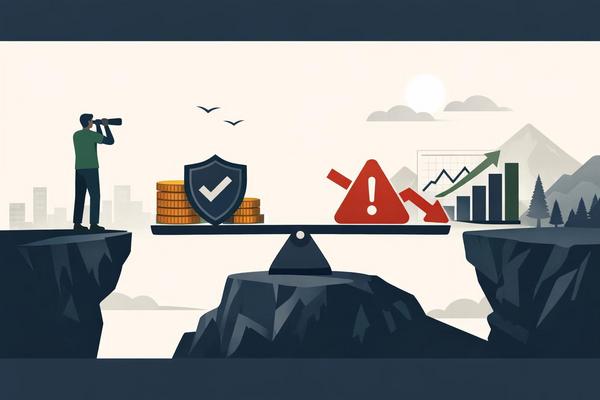
Your balance drops 15%, the headlines get ugly, and suddenly that “long-term investor” plan feels a lot harder to stick to.
If you’re new to investing, risk can sound like a math problem. Volatility, standard deviation, asset allocation — all of that makes it seem like risk is just something you measure on a chart. But in real life, investment risk for beginners is a behavior problem as much as a numbers problem. What matters isn’t only how much your portfolio could drop. What matters is what you’ll do when it drops.
That’s where a lot of people get tripped up. They build a portfolio that looks good during calm markets, then panic when things get rough. They tell themselves they can handle risk because they want higher returns. Then the market falls, their account balance shrinks, and they sell at exactly the wrong time.
Why Risk Tolerance Gets Misunderstood
Most beginners hear “risk tolerance” and think it means courage — like you’re either brave enough to invest in stocks or you’re not. That’s not really it. Risk tolerance is about your emotional and practical ability to stay invested when your money is temporarily losing value.
There are really two parts to this: financial capacity and personal behavior. Financial capacity means how much risk your situation can actually support. Behavior means how much uncertainty you can live with without making bad decisions. Those aren’t always the same thing.
A 28-year-old with a steady job, no high-interest debt, and decades until retirement may have a high capacity for risk. But if that same person checks their account every day and loses sleep over a market dip, their behavior doesn’t line up with that capacity. On the flip side, someone might feel fearless about investing but still not have much room for risk. If you need the money in two years for a house down payment, it doesn’t matter how confident you feel — that money probably shouldn’t be heavily exposed to stock market swings.
What a Market Drop Actually Reveals
It’s easy to say you’re okay with risk when your 401(k) is climbing and every dip bounces back in a week. Bull markets make everybody feel smarter and tougher than they really are. Your true risk tolerance usually shows up when the market drops and stays down for a while.
That’s when behavior kicks in. You start questioning your plan. You wonder if you should move to cash “just for now.” The financial news turns every red day into a crisis. Friends and coworkers start saying they’re waiting on the sidelines. For beginners, this is the danger zone — not because market declines are unusual, but because a bad reaction can do more damage than the decline itself. A temporary paper loss becomes a permanent loss when you bail out and never get back in.
That’s why the usual advice to “take more risk while you’re young” can be incomplete. Age matters. Time horizon matters. But if your portfolio is so aggressive that you abandon it during the first real sell-off, it wasn’t the right portfolio for you in the first place.
How to Match Your Risk Tolerance to Your Strategy
You don’t need a perfect personality test to figure this out. You need a realistic view of your life, your timeline, and your habits. A good investment strategy is one you can stick with during boring years and scary years alike.
Start With When You’ll Need the Money
This is the practical piece people skip. Money you might need soon shouldn’t be taking big market risk. If your timeline is short, your portfolio should be more stable, even if that means lower returns.
- Money for rent, bills, or your emergency fund should stay safe and liquid.
- Money for a home purchase in the next few years usually shouldn’t be sitting in an all-stock portfolio.
- Money for retirement decades away can generally handle more stock exposure.
Time gives you room to recover from downturns. A short deadline doesn’t.
What Would You Actually Do If It Dropped 20%?
A lot of people answer risk questions based on the person they want to be. That’s not useful. Think about how you’ve handled financial stress before. When your credit card bill jumps, when your job feels shaky, when the economy looks weird — do you stay calm, or do you react fast?
Pressure-test yourself with a simple question: if your investments fell 20% over six months, would you keep buying? Would you leave them alone? Or would you be tempted to sell and “wait until things settle down”? If a certain portfolio only works when you’re feeling confident, it’s probably too risky for you.
Build In Enough Safety to Keep You Invested
This part sounds less exciting and works better in real life. A strategy doesn’t need to maximize every possible return — it needs to reduce the odds that you’ll sabotage yourself. That can mean holding a mix of stocks and bonds instead of going all in on stocks. It can mean keeping a solid emergency fund so you’re not forced to sell investments when life gets expensive. It can mean setting up automatic contributions so you’re not constantly deciding whether now is a good time to invest. For beginners, a simpler setup is usually the stronger setup because it’s easier to maintain when markets get messy.
The Takeaway Most Beginners Need
Let’s say you’re 35, investing for retirement, and you’ve got a stable income. On paper, you may be able to handle a stock-heavy portfolio. But if a 25% drop would make you stop contributing or move everything to cash, then a slightly more balanced approach is probably smarter. That doesn’t mean you’re bad at investing — it means you’re building around actual human behavior instead of fantasy behavior.
The best portfolio isn’t the one that looks toughest on a spreadsheet. It’s the one you won’t abandon under pressure. Once you get that, you’re in a much better position to choose a strategy that fits your real life instead of your idealized self.
If this made sense, the next thing worth understanding is how asset allocation changes the way risk shows up in your portfolio.