Your grocery bill is higher, mortgage rates swing fast, and the stock market seems to react every time the Fed opens its mouth.
Quantitative easing, or QE, is one of those Fed moves that sounds abstract until you realize it can push around bond yields, stock prices, home values, and even what your cash earns at the bank. If you’ve heard that the Fed “prints money” and buys bonds, that’s basically the short version. The longer version matters because it helps explain why asset prices can surge even when the economy still feels shaky on the ground — and why the effects don’t hit everyone the same way.
This isn’t just a Wall Street topic. If you’re trying to decide whether to keep cash in savings, invest through your 401k, buy a house, or wait out a weird market, it helps to know what QE is actually doing behind the scenes.
What Quantitative Easing Actually Is
QE is when the Federal Reserve creates new bank reserves and uses them to buy bonds — mainly Treasury bonds and mortgage-backed securities.
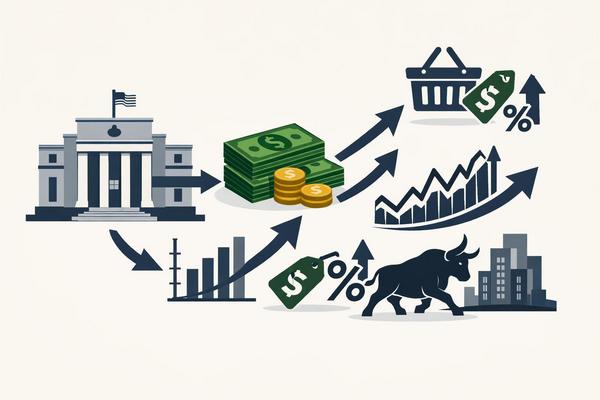
The Fed isn’t firing up a printing press and mailing cash to your house. It credits banks with newly created reserves, then takes bonds out of the market by buying them from banks and other financial institutions. That changes the financial system in a few ways at once: it increases demand for bonds, pushes bond prices up, pulls yields down, adds more liquidity into the banking system, and nudges investors toward riskier assets like stocks, corporate bonds, and real estate.
Think of it this way. The Fed is trying to make safe assets less rewarding so money spreads into other parts of the economy. That’s the whole point — lower borrowing costs, support spending, keep lending and hiring moving.
Why the Fed Uses QE Instead of Just Cutting Rates
The Fed usually turns to QE when its normal tool — short-term interest rates — isn’t enough. In a standard slowdown, the Fed cuts the federal funds rate to lower borrowing costs and support demand. But when rates are already near zero, there’s nowhere left to go. That’s when QE becomes the backup plan.
We saw this clearly during the 2008 financial crisis and again in 2020. In both cases, the Fed wanted to stabilize markets fast, keep credit flowing, and stop fear from turning into a deeper collapse. Buying huge amounts of bonds was a way to step in when private markets were freezing up. There’s also a signaling effect — when the Fed launches QE, it’s telling markets it plans to stay supportive for a while, and that alone can shift investor behavior well beyond the bonds it’s directly buying.
How It Actually Works, Step by Step
QE works through markets first, then the broader economy later. That’s why it can feel disconnected from everyday life at the start. The first place you usually see it is in Treasury yields, mortgage rates, credit markets, and stock prices. Only after that do the effects work their way into business investment, home buying, and jobs.
The Fed enters the market and buys Treasuries or mortgage-backed securities in large amounts, which supports bond prices. Because bond prices and yields move in opposite directions, more Fed buying pulls yields lower — and Treasury yields influence all kinds of borrowing rates across the economy. Once safer bonds pay less, investors often shift money into stocks, corporate bonds, real estate, or other assets, which can boost prices even before the real economy has fully recovered. Eventually, lower rates make it cheaper for companies to borrow, for homeowners to refinance, and for buyers to finance major purchases, which supports demand and helps prevent a deeper slump.
Why Your Home Value and 401k Can Jump Before Your Paycheck Does
One of the biggest effects of QE is that it tends to inflate asset prices before most people feel much relief in their day-to-day finances.
That’s a big reason QE gets criticized. When bond yields fall, investors hunt for better returns somewhere else. Stocks become more attractive. Housing becomes more attractive. Anything with a stream of future cash flows can look more valuable when interest rates are pushed down — that’s part math, part behavior. Lower rates make future profits worth more in today’s dollars, and cheap money makes people more willing to borrow and bid up prices. You saw that in housing during the pandemic era, when ultra-low mortgage rates helped fuel a massive jump in home prices.
That doesn’t mean QE is the only reason markets rise. Corporate earnings, government spending, consumer demand, and plain old speculation all matter too. But QE can absolutely pour fuel on those trends.
Does QE Cause Inflation?
QE can contribute to inflation, but it doesn’t automatically trigger a spike in consumer prices every time the Fed uses it. QE increases liquidity and loosens financial conditions, which can support more lending, spending, and asset buying. If that extra money and credit run into limited supply of goods, workers, or housing, prices can rise. But timing matters. If banks hold reserves, households save more, or businesses stay cautious, QE may boost asset prices more than everyday consumer prices at first.
That’s largely what happened after 2008. Financial assets recovered strongly while broad inflation stayed relatively tame for years. After 2020, the story looked different. QE happened alongside massive fiscal stimulus, supply chain breakdowns, labor shortages, and a sharp rebound in demand. That mix helped produce much hotter inflation. QE wasn’t the only cause, but it was part of a broader easy-money environment that made everything more expensive.
If You’re Trying to Make Smart Money Moves Right Now
When the Fed is doing QE, cash usually gets less attractive and asset prices often get more support than they otherwise would. That doesn’t mean you should chase every rally — it means you should understand the setup.
Savings yields tend to drop, so your cash can lose purchasing power faster. Long-term bonds may rise in price short-term, but future income from them gets weaker. Stocks can rally on easy money even when prices get ahead of fundamentals. And mortgage rates dropping can make housing more competitive fast, even if monthly payments look better at first glance.
The practical takeaway is straightforward: QE tends to reward people who already own assets more quickly than people who are still trying to build savings from scratch. That’s frustrating, but it’s real. Understanding that dynamic can help you avoid feeling like the market is moving for no reason — because it’s not. Fed policy changes the value of cash, the appeal of stocks, and the direction of borrowing costs. That matters whether you’re adjusting your emergency fund, rebalancing your 401k, or deciding if buying a home still makes sense right now.
Once you see that pattern, Fed headlines get a lot easier to read. They’re not just talking about bonds — they’re talking about the price of money, and that touches almost everything you do financially. If this made sense, the next thing worth understanding is how the Fed’s rate decisions ripple directly into your savings account and what you’re actually earning on your cash.