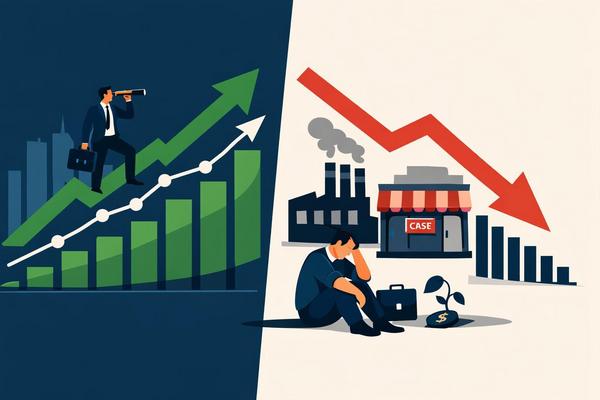
Your bills keep climbing, layoffs are in the news, and the stock market still acts like everything’s fine.
You’re not imagining the disconnect.
The stock market is not the economy — and when you treat them like the same thing, it gets easier to make bad money decisions.
That sounds obvious on paper, but it gets confusing fast when the S&P 500 is up while people are stressing about rent, groceries, credit card balances, and whether their company is about to cut jobs. If you’ve ever looked at a strong market and thought, “Wait, are things actually good right now?” — this is the missing piece.
Why the Market Can Rise While Regular Life Feels Worse
The stock market tracks the value of publicly traded companies. The economy is much bigger. It includes wages, jobs, small businesses, consumer spending, debt, housing, inflation, and whether households can actually keep up with everyday costs.
Stocks can go up even when a lot of Americans feel squeezed because markets are pricing company profits and future expectations — not your monthly budget. If investors believe large companies will keep making money, cut costs, raise prices, or grow later, stock prices can rise even if the broader economy feels shaky right now. Wall Street is looking ahead. Main Street is dealing with this month’s bills.
What Stock Prices Are Really Reacting To
People often talk about “the market” like it’s a scoreboard for the whole country. It really isn’t. Stock prices move based on what investors think companies will earn in the future and what they’re willing to pay for those earnings today. That means prices can rise for reasons that don’t always feel connected to real life.
- Big companies may still be profitable even if smaller businesses are struggling
- Corporations can boost earnings by cutting workers or reducing expenses
- Higher prices can help revenue, even when consumers hate paying more
- Investors may expect interest rate cuts, which can lift stock valuations
- A handful of giant companies can pull major indexes higher on their own
A rising index doesn’t mean most people are doing better. It may just mean investors think the biggest public companies are in a strong position.
When Five Companies Make the Whole Market Look Healthy
This is one of the biggest reasons the market and economy get mixed up. Major indexes like the S&P 500 are weighted by market value, so the largest companies have the biggest impact. If a small group of tech giants are doing great, they can push the index up even while plenty of other companies and households are under pressure.
You can have a market rally that’s real but narrow — and that’s not the same thing as broad economic strength. This is why headlines can feel so out of sync with your own life. The headline says stocks hit a new high. You’re thinking about your insurance premium, a higher car payment, and a grocery run that somehow cost $140.
Corporate Profits Don’t Always Mean Household Health
A company can improve its bottom line in ways that don’t help workers or families — sometimes the opposite happens. A company might lay off staff, freeze hiring, automate more work, or raise prices. Investors may reward that because profits improve. The local economy may feel worse because people lost jobs or spending power.
Good news for shareholders can be neutral or bad news for workers, renters, and consumers. That doesn’t make the market fake. It just means it measures something narrower than most people assume.
Markets Price In the Future, Even When the Present Is Rough
The market is constantly trying to guess what comes next. If investors think inflation will cool, the Fed will eventually cut rates, or a slowdown will be mild instead of severe, stock prices can rise before the economy actually feels better. That can make it seem like the market is ignoring reality — usually, it’s reacting to expected future conditions.
The market doesn’t wait for life to improve before moving. It moves when investors think improvement is coming. Sometimes they’re right. Sometimes they’re way off.
What This Means for Your Money Decisions
If you confuse a strong stock market with a strong economy, you may underestimate risk in your own life. You might assume your job is safer than it is, spend more aggressively because the headlines sound upbeat, or think your retirement account balance means everything underneath is healthy.
Your personal economy matters more than the market headline. That means paying attention to things like:
- Your job stability and industry outlook
- Your emergency fund
- Your credit card and other high-interest debt
- Your housing costs relative to your income
- Whether your paycheck is keeping up with actual expenses
If your 401k is up, that’s good. It just doesn’t cancel out a shaky budget, weak cash flow, or too much debt.
Use the Market as One Signal, Not the Only Signal
A lot of people get pulled into emotional decisions because they assume the market is telling them how the whole country is doing. That leads to two common mistakes: feeling richer and safer than your actual finances justify, or panicking when stocks fall even if your own situation is stable.
The better move is to separate investment news from household reality. You can have a solid long-term investing plan and still admit the economy feels rough. You can also recognize that bad economic news doesn’t automatically mean you should dump your investments. One question is about asset prices. The other is about your financial life.
The Clearest Way to Think About It
The stock market tells you what investors believe about the future profits of public companies. The economy tells you how people and businesses are doing in the real world right now. Sometimes those line up. Sometimes they really don’t.
When stock prices rise while the economy struggles, it usually means markets see resilience or recovery ahead for large companies — not that everyday financial stress has disappeared. That’s why a rally can happen during layoffs, high prices, weak wage growth, or shaky consumer confidence.
The market is a narrow lens. The economy is the wider picture. Keep those separate and you make better decisions — you stop treating market gains as proof that everything is healthy, and you stop assuming a bad headline means your long-term plan is broken. What actually moves your life forward is income, savings, debt, spending, and time.
If this clicked, the next thing worth understanding is how Fed rate changes hit stocks, jobs, borrowing costs, and your savings account in completely different ways.