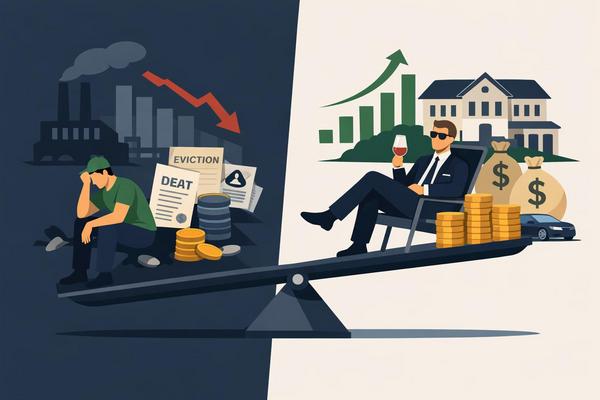
Your rent is due, groceries cost more than they used to, and one cut to your hours can wreck the whole month. When people say “the economy is in a recession,” it can sound like everyone’s in the same boat. That’s not how it plays out in real life. A recession may be declared for the whole economy, but the damage lands much harder on low-income workers than on wealthy Americans. If you’re living paycheck to paycheck, a slowdown isn’t just a headline — it’s fewer shifts, a tougher job market, higher stress, and less room to recover from even a small setback.
Why the Same Recession Feels Totally Different
Two households can live through the same recession and have completely different experiences. One family cuts back on vacations and delays a kitchen remodel. The other falls behind on rent after one missed paycheck. That’s the core of recession income inequality: the gap isn’t just about who earns more, but who has a cushion when things go sideways.
Low-income workers are more likely to depend on hourly pay, unpredictable schedules, and jobs that are easier for employers to cut when business slows down — think retail, food service, warehousing, hospitality, and home health. Those jobs matter a lot, but they’re often the first to feel layoffs, reduced hours, or weaker hiring. Wealthier Americans are more likely to work salaried jobs with benefits, remote flexibility, and stronger protections. They also tend to have emergency savings, home equity, 401(k)s, and lower borrowing costs. When the economy weakens, that financial padding matters more than ever.
What Gets Cut First When Businesses Get Nervous
During a recession, businesses usually look for ways to protect profits — freezing hiring, cutting overtime, reducing staff, or canceling expansion plans. The first losses often show up in jobs with the least security, not in the households with the most wealth. That creates a chain reaction for low-income workers. A cut from 40 hours to 28 hours may not sound dramatic on paper, but in real life it can mean missing a utility bill, putting groceries on a credit card, falling behind on car payments, skipping prescriptions, or taking on high-interest debt just to stay afloat.
Wealthier households can get hit too, especially if markets fall or a business slows down. But a portfolio drop is different from not being able to cover rent. One is painful. The other becomes a crisis fast.
Assets Protect the Wealthy in Ways Paychecks Can’t
If most of your money comes from wages, your financial life depends on staying employed and getting enough hours. If a big chunk of your wealth comes from assets — stocks, bonds, real estate, a business — you have more than one engine working for you. Yes, those assets can lose value during a recession. But people with wealth usually have time to wait for a recovery. They don’t have to sell at the worst moment just to cover the gas bill or buy groceries.
They may also be able to buy when prices are down. That’s the part people miss. A recession can be a buying opportunity for someone with cash. For someone without savings, it’s just more pressure. Housing works the same way — a homeowner with a fixed mortgage has more stability than a renter whose lease comes up during a weak job market. Even if home prices dip, the homeowner still has a place to live and equity built over time. A renter facing job loss and rising monthly costs has far less protection.
When Your Income Is Fragile, Debt Gets Heavier
Recessions don’t just reduce income — they make existing debt harder to carry. That’s especially true for lower-income households, which are more likely to rely on credit cards, auto loans, or payday-style borrowing to bridge gaps. When your income drops, every fixed bill gets heavier.
A wealthy household with a low-rate mortgage, strong credit, and cash reserves can usually keep making payments and avoid panic decisions. A lower-income household may already be juggling minimum payments before the recession even starts. Once hours get cut, the math stops working. This is why recessions tend to widen inequality — people with money use their cushion to avoid long-term damage, while people without it get pushed into expensive debt, missed payments, damaged credit, and housing instability.
The Recovery Doesn’t Lift Everyone at the Same Speed
Even after a recession technically ends, a lot of people don’t feel better right away. Job growth can return while wages stay weak. The stock market can recover long before laid-off workers find steady pay again. An official recovery doesn’t mean the pain is over for the households that took the hardest hit.
Wealthy Americans who kept their jobs and held onto investments may benefit early from rebounding asset prices. Low-income workers may still be rebuilding savings, catching up on bills, or trying to re-enter a weaker labor market. That difference compounds over time. One recession can knock a family off track for years — missed rent turns into eviction, a car repossession makes it harder to get to work, and a credit score hit raises borrowing costs for a long time after. These aren’t side effects. They’re part of how recession income inequality grows.
What This Means for Your Own Situation
You can’t control when the economy contracts. You can control how you think about risk in your own life. The smart move is to focus less on abstract GDP talk and more on your own shock absorbers. A few practical questions matter a lot: How dependent are you on every single paycheck? Would a cut in hours hurt you almost as much as a layoff? Do you have any cash cushion, even a small one? Are you carrying debt that becomes dangerous if income drops? How replaceable is your job if hiring freezes start?
If your margin is thin, a recession isn’t just an economics story — it’s a personal cash flow problem. That doesn’t mean you need to panic. It means you need to see the risk clearly. In practical terms, that often means building even a modest emergency fund, avoiding new high-interest debt when possible, keeping fixed expenses manageable, and protecting steady income however you can. For a lot of people, the goal during a downturn isn’t getting rich. It’s staying flexible enough not to get buried.
The Bottom Line
Recessions are talked about like broad economic weather, but they hit more like a pressure test. Households with savings, assets, and stable jobs usually bend without breaking. Households with low wages, little cushion, and fragile work arrangements take the hardest blow. That’s why recessions are declared for the whole economy, but the pain lands harder on some people than others.
If this clicked, the next thing worth understanding is how inflation and recessions can squeeze the same household at the same time — and why that combination is especially brutal when your budget is already tight.