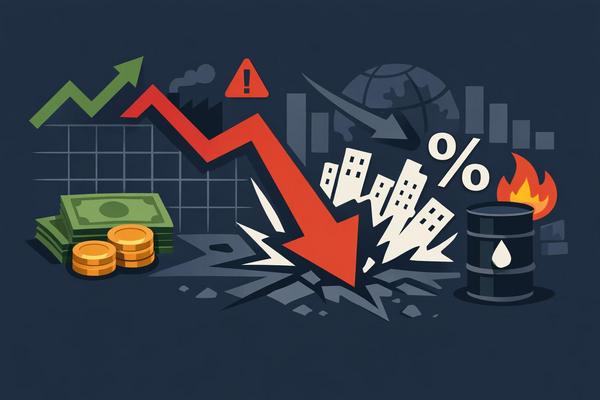
Your 401(k) drops fast, the headlines turn ugly, and suddenly it feels like the market is falling for no reason.
Why Crashes Feel Random When They Really Aren’t
A stock market crash usually looks sudden on the screen, but the setup starts building long before the big drop. That’s the part that throws people off. One week the market is hitting new highs. Then a bad inflation report, a bank problem, weak earnings, or some geopolitical mess shows up, and stocks start sliding. What looks like a random collapse is usually a pileup that was already in motion.
Stock prices are basically a running bet on future profits, future interest rates, and investor confidence. When those three things get worse at the same time, prices can fall hard. When fear gets added on top, the selling can feed on itself.
What Actually Causes a Stock Market Crash?
No single cause explains every crash, but the same ingredients show up again and again. Stocks get overpriced relative to reality. Investors borrow too much or take on too much risk. The economy weakens, or people realize profits won’t support those prices. Something triggers panic selling. Then tight credit or forced selling makes the drop even worse.
That’s why asking what causes a stock market crash is really asking how pressure builds inside the system. The trigger matters, but the vulnerability matters more.
When Prices Drift Too Far From Reality
Major crashes often start with a simple problem: prices got ahead of what businesses and consumers could realistically support. Sometimes that happens because investors get swept up in a new story. Railroads did it. Tech stocks did it. Housing did it. AI-related names can do it too if expectations outrun actual earnings. People stop asking what a company is worth and start asking whether they’ll miss out if they don’t buy now.
That kind of optimism can keep rolling for a while. Rising prices attract more buyers, and more buyers push prices even higher. Then reality shows up. Maybe earnings disappoint. Maybe rates rise. Maybe consumers pull back because rent, groceries, and credit card bills are already eating up too much of their paycheck. Once the story weakens, overpriced assets have a long way to fall.
How Borrowed Money Turns a Decline Into a Crash
Leverage is one of the biggest reasons stock market crashes happen so fast. Leverage means investors, banks, hedge funds, and even regular traders are using debt to amplify returns. That works great when prices go up. It gets dangerous when prices fall.
If you buy stocks with borrowed money and those stocks drop, your broker may force you to sell — that’s a margin call. Now imagine that happening across the whole system. Prices fall, people get forced out, forced selling pushes prices down more, and that creates even more margin calls. The spiral speeds up fast. It’s not just that investors get nervous. It’s that some of them no longer have a choice.
If You’ve Ever Wondered Why Fear Does More Damage Than the Trigger
A market crash usually needs a spark, but fear is what turns that spark into a fire. The trigger could be almost anything — a recession warning, a bank failure, a surprise rate hike, a war scare, a major company blowing up. Those events matter, but they don’t create fragility out of thin air. They expose it.
Once investors start believing that other investors will rush for the exits, behavior changes fast. People stop thinking long term and start protecting what’s left. Fund managers sell because clients are pulling money out. Traders sell because charts break down. Executives delay hiring because credit looks shaky. Consumers get spooked and spend less. That’s when a market drop can become a full crash — confidence disappears faster than fundamentals can stabilize.
Why a Weak Economy Makes Everything Worse
Crashes get more serious when the economy underneath the market is already shaky. If unemployment is rising, consumer spending is slowing, debt loads are heavy, and corporate profits are under pressure, stocks don’t have much to stand on. You can only tell a growth story for so long when households are stretched and companies are guiding lower.
Interest rates matter here too. When rates rise, borrowing gets more expensive for everyone. Mortgages cost more. Car loans cost more. Credit card interest stings harder. Businesses face higher financing costs, and on top of that, higher rates make future corporate earnings worth less in today’s dollars. The worst setups happen when the market is expensive, debt is high, and the economy is already losing steam — that combination leaves very little room for error.
What History Keeps Showing Us
The details change from crash to crash, but the pattern is surprisingly consistent. In 1929, speculation and borrowed money ran wild before confidence broke. In 2000, dot-com stocks soared way beyond realistic earnings. In 2008, housing debt, weak lending standards, and financial leverage cracked the whole system. In 2020, the pandemic was the shock, but fear and forced repricing drove the speed of the collapse. Different trigger, same basic structure: prices get stretched, risk builds quietly, something exposes it, and selling feeds on selling.
What separates a rough stretch from a true crash is how much leverage, fragility, and panic were already sitting there before the headline hit.
How to Use This Without Panicking
You don’t need to predict the next crash perfectly to make smarter money decisions. What you need is a better filter. Instead of reacting to every scary headline, ask a few basic questions: Are stock prices far ahead of earnings and economic reality? Is debt piling up across households, companies, or traders? Are interest rates squeezing spending and profits? Would a bad surprise force investors to sell fast?
If the answer to several of those is yes, the market is more fragile than it looks. That doesn’t tell you the exact day a crash will happen — nobody knows that consistently. It does tell you risk is rising.
For regular investors, this is less about clever market timing and more about sane behavior. Keep an emergency fund so you’re not forced to sell investments when life gets expensive. Don’t treat your retirement account like casino money. Be careful with debt. Make sure your stock allocation matches your real timeline and your actual stomach for volatility. Most people get hurt in crashes not just because stocks fall, but because they were overextended going in — they needed that money too soon, chased risk at the top, or borrowed against optimism. That’s the part you can control.
The Simple Way to Think About It
A stock market crash is usually the moment when inflated prices, too much debt, and a loss of confidence all collide at once. The market can ignore problems for a long time. Then all at once, investors realize the prices on the screen don’t match the world underneath them. When that happens in a leveraged system, the drop can get ugly fast. Crashes aren’t acts of nature — they’re chain reactions, and the chain usually starts with the same three things: fear, leverage, and bad fundamentals showing up together.
If this made sense, the next thing worth understanding is how Fed rate hikes spill into stocks, jobs, and your monthly bills.