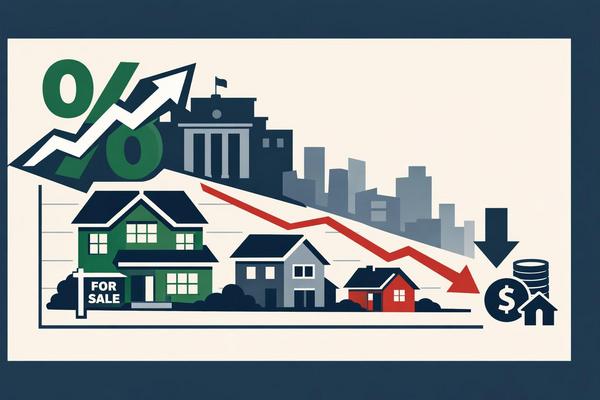
Your mortgage quote jumped, the monthly payment looks brutal, and homes in your area suddenly feel out of reach — and you’re not imagining it.
Why This Feels So Confusing Right Now
A lot of people hear that the Fed raised rates and assume that just means borrowing got more expensive. That’s true, but it’s only part of the story. When the Fed hikes rates, it pushes up borrowing costs across the economy, including mortgage rates, and that changes the math for buyers fast. A house that looked manageable at one interest rate can turn into a budget problem at a higher one, even if the listing price never changes. That’s why the housing market can slow down even when there still aren’t enough homes for sale. The issue isn’t just price tags — it’s who can still afford the monthly payment.
What a Fed Rate Hike Actually Does to Home Buyers
Higher mortgage rates hit your monthly payment harder than most people expect. If you borrow $400,000, a rate jump from 3% to 7% can add hundreds of dollars a month to your payment. For a lot of households, that wipes out their wiggle room. The same income now qualifies for a smaller loan, which means buyers don’t just shop more carefully — many get pushed into a lower price range, delay buying, or drop out completely.
People who could afford a three-bedroom home last year may now only qualify for a condo, a fixer-upper, or nothing at all. First-time buyers usually get hit the hardest because they don’t have home equity from a previous house to help absorb the higher payment. They’re already juggling rent, car insurance, groceries, and credit card balances. When mortgage rates jump, homeownership can go from tight to impossible.
The Monthly Payment Is the Real Battleground
Most buyers don’t shop based on the sticker price alone. They shop based on what fits into a monthly budget after taxes, insurance, and everything else life costs. A higher rate reduces purchasing power even if wages haven’t changed and even if home prices haven’t moved yet. Here’s the practical effect:
- You qualify for less house with the same income.
- You need a bigger down payment to keep the payment manageable.
- You may have to compete in a cheaper price tier with more buyers.
- You become more sensitive to property taxes, HOA fees, and insurance costs.
All of that slows demand — not because people suddenly stopped wanting homes, but because the financing no longer works.
Why Home Sales Slow Before Prices Fully Adjust
Sales usually freeze up before prices fall in a big way, because buyers and sellers react to rate hikes differently. Buyers see their monthly payment spike immediately. Sellers often look backward — they remember what the house next door sold for six months ago and want the same kind of number. That creates a standoff. Buyers say the payment is too high. Sellers say the price is still fair. During that gap, fewer deals happen, homes sit longer, price cuts start showing up, and builders offer incentives to move inventory.
The market doesn’t always crash. Sometimes it just gets stuck. A slower market doesn’t always mean prices collapse overnight — it can mean volume drops first, because fewer buyers can make the numbers work.
When Locked-In Owners Make the Slowdown Even Stranger
One reason housing can stay expensive even when rates rise is that current owners don’t want to give up their old mortgage rate. Someone with a 3% mortgage has a huge incentive to stay put. If they move, they may have to take on a 6% or 7% loan for their next place. That keeps inventory tight and fewer homes hit the market. So you get this strange mix: weaker demand from buyers, but also limited supply from sellers. That’s why rate hikes can cool home sales a lot faster than they cool home prices.
How Higher Rates Change What Homes Are Worth
A home’s value isn’t just about granite countertops, square footage, or a good school district. It’s also about the pool of buyers who can actually afford it. When rates rise, that buyer pool shrinks, and less competition usually means less upward pressure on prices. In some markets, that leads to outright declines. In others, it means slower appreciation, longer time on market, and more negotiation room for buyers.
The effect isn’t evenly spread either. Higher-priced homes often feel it sooner because their payments are more sensitive to rate changes. Entry-level homes can stay relatively firm if demand is still strong and listings are scarce. New construction may react differently, since builders can buy down rates or offer other incentives. But the big picture is simple: when financing gets tougher, prices have to adjust somehow — if not through obvious price drops, then through weaker bidding wars, concessions, and slower sales.
If You’re Buying, Selling, or Waiting — Here’s How to Think About It
If you’re buying, don’t anchor on what rates used to be. Look at what payment fits your real budget today, factoring in taxes, insurance, maintenance, and the fact that life still throws expenses at you. If you’re stretching to make the payment work, the house may be too expensive even if the bank says you qualify.
If you’re selling, understand that buyers are shopping with tighter financing than they had during the low-rate years. You may still get a good price, but you probably can’t count on the same frenzy that existed when money was cheap. If you’re waiting, keep in mind that lower home prices don’t automatically make homes affordable if rates stay high — and if rates drop later, more buyers could come back in and support prices again.
Before making any housing decision, run your numbers through this filter:
- Can you afford the monthly payment without depending on every paycheck being perfect?
- Would the house still make sense if repairs, insurance, or taxes come in higher than expected?
- Are homes in your area sitting longer, or getting multiple offers right away?
- Are sellers cutting prices and offering concessions, or holding firm?
- If rates dropped later, would refinancing help — or are you already overpaying for the house itself?
That gives you a much clearer picture than national housing headlines ever will.
The Bottom Line
Fed rate hikes slow down home sales because they squeeze affordability, and that eventually affects housing prices by changing who can buy and what they can pay. Higher rates don’t just raise borrowing costs on paper — they reshape demand, freeze some sellers in place, pressure valuations, and make the whole market move differently. If this made sense, the next thing worth understanding is how the Fed’s rate decisions ripple into your savings account and what that means for your money sitting in the bank.